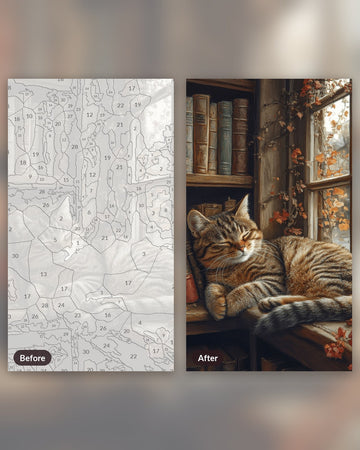
A painted dinosaur is one of those projects that looks easy until you pick up the brush. Where does the skin end and the shadow begin? What colour is a jungle that nobody has seen for millions of years? This guide walks through how we would approach it on canvas, and shows two ways to get there: a numbered kit, or a kit made from a drawing your child already did.
Quick picks
- A ready scene: Dinosaur in the Prehistoric Jungle.
- More jungle for the same wall: Tiger in the Jungle or Waterfall in the Green Jungle.
- A dinosaur nobody else has: a custom kit from your child's drawing.
Painted dinosaur on canvas: the scene first
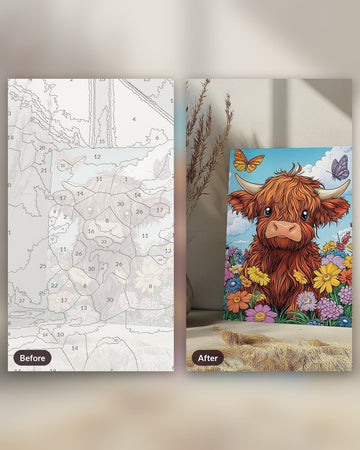
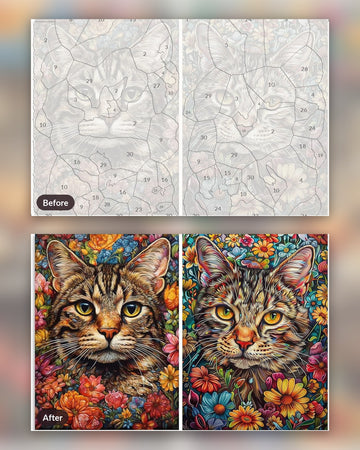
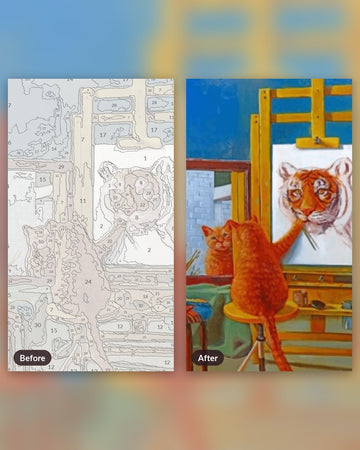
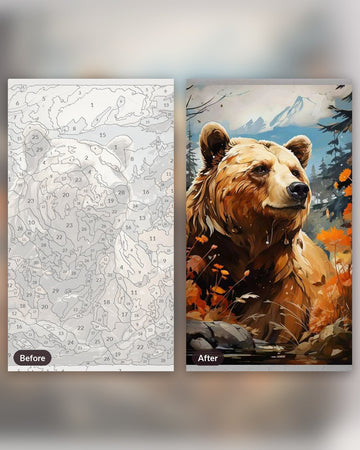
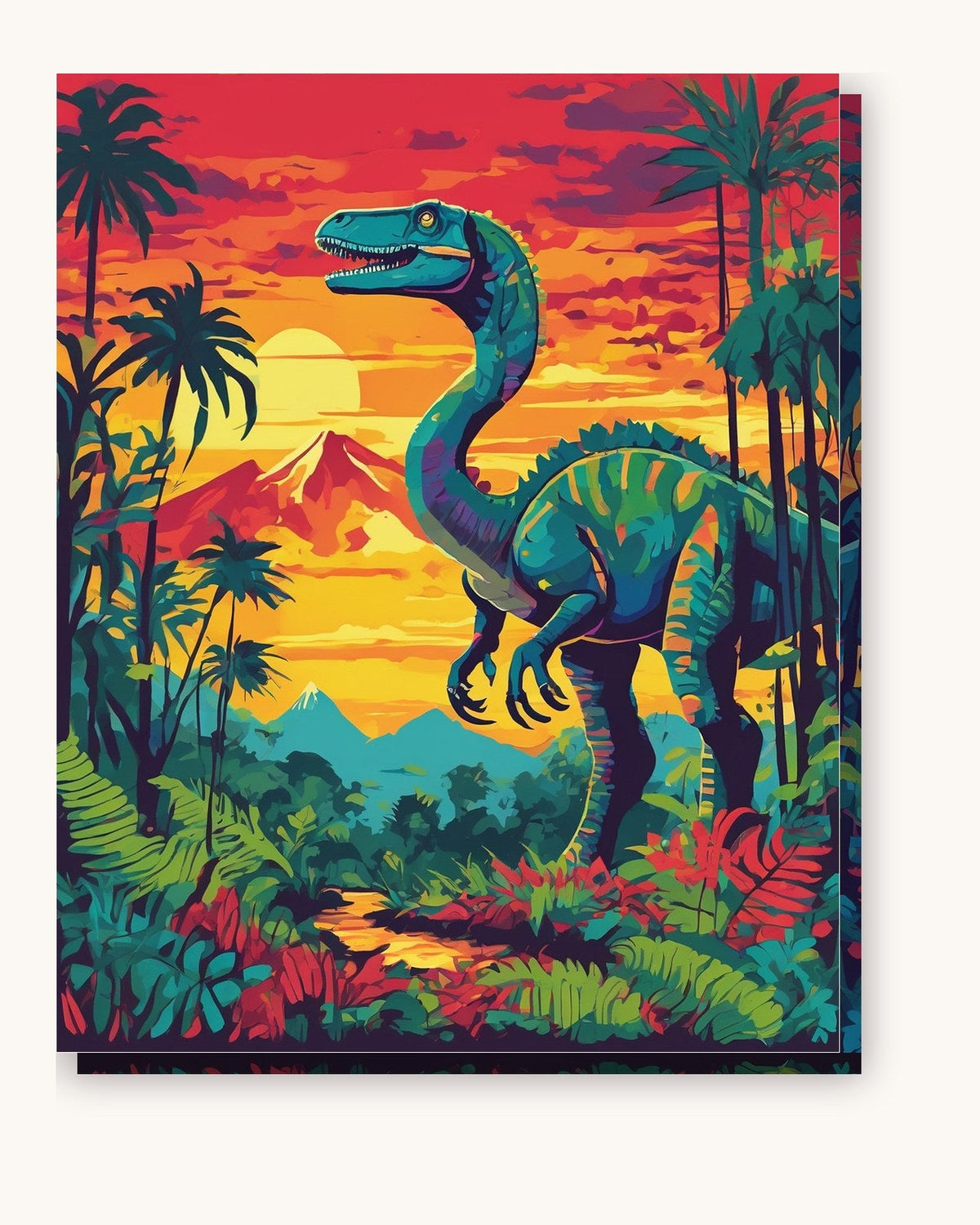
Most of the work is not the animal. It is the world around it. Dinosaur in the Prehistoric Jungle puts a dinosaur in front of dense green plants with a volcano in the background, and the numbers split that picture into flat areas you can fill one colour at a time. Start with the large patches of foliage. When the jungle is done, the dinosaur stands out on its own, and that is the moment most people say the picture finally looks like something.
Palette and skin textures
Real dinosaurs left no colour record, so you are free to choose, and that is the fun part. A few habits help whatever you paint.
- Keep the back darker than the belly. A deep green or brown on top and a lighter tone underneath makes the body look round.
- Repeat one accent colour in two or three places, for example a rust orange on the crest and again on the feet. It ties the animal together.
- Skin texture comes from small marks, not detail. Dab a dry brush for rough patches, draw short curved strokes for scales, and leave some areas smooth so the eye can rest.
- Add a thin line of shadow where the body meets the ground. It keeps a heavy animal from floating.
On a numbered canvas, most of this is decided for you. You still choose how firmly to press and how much paint to leave on the brush, and that is what changes the texture.
Painting the jungle behind it
A prehistoric jungle is mostly green, but not one green. Leaves close to the viewer should be darker and more saturated, leaves further back softer and bluer. If you want to practise that idea on its own, Waterfall in the Green Jungle is mostly palm leaves and water, and Tiger in the Jungle sets a big cat among ferns. Macaws in the Rainforest adds bright colour against the same dark foliage.
A family way to paint a dinosaur
This subject suits a table with more than one person at it. One person can take the sky and the volcano, another the leaves, and whoever has the steadiest hand gets the eyes. A canvas this size can be shared without anyone waiting for their turn. Our guide to painting together has more on how to split a canvas fairly.
If the dinosaur is for a child's room, look at Nursery Safari Parade for a softer companion, or Vibrant Turtle and Giraffe With Sunflowers if the animals should keep going on the wall.
A dinosaur from your child's drawing
Children draw dinosaurs with a confidence we lose as adults: three horns, an extra row of spikes, a tail that goes off the page. A custom kit keeps all of that. You send a photo or scan of the drawing, and it becomes a numbered canvas with its own paint colours. A few things make it work better.
- Photograph the drawing flat, in daylight, with no shadow across the paper.
- Use a picture of at least 1500 px on its longest side, and about 2500 px if you want the 50x65 cm size.
- Thick felt pen or crayon outlines turn into clean paint areas more easily than faint pencil.
Our guide to making a kit from your own image covers the photo side in more detail. The child can then paint their own dinosaur, which is a different thing from being handed a finished picture.
Which size and how many colours
40x50 cm (16x20 in) is the usual choice and a good first size for a shared canvas. 50x65 cm gives small details like eyes and claws more room. 30x30 cm is a quick option for one sitting. You also choose 24, 36 or 48 paint colours: fewer colours mean bigger areas and a faster finish, more colours mean finer shading in the leaves and the skin. Each kit comes with the numbered canvas, matched acrylic paints, brushes and instructions. The canvas ships unframed, and the DIY Frame Kit option adds wooden bars you assemble yourself.
Where to go from here
If you liked the animal side, the Animals collection has more to choose from. For a drawing, a photo or a pet, the Custom Paint by Numbers collection is where to start. Whichever you pick, start with the biggest green areas and leave the eyes for last.