Table of Contents
- The five sizes we actually sell
- 30x30 cm, the square
- 30x40 cm, the small portrait
- 40x50 cm, the one most people order
- 50x65 cm, the statement canvas
- 60x60 cm, the jumbo square
- Matching the canvas to the wall
- Why the small canvas is the hard one
- How long each size takes
- Framing, by size
- Questions we get asked
Almost every size guide on this topic lists canvas dimensions that the shop writing the guide does not stock. This one lists five, because five is what we sell. Every design in the catalogue comes in the same five, and the choice you are actually making is between a square you can finish in a weekend and a canvas that will sit on your table for a month.
The five sizes we actually sell
Each size comes in three versions: 24 colors, 36 colors or 48 colors. Same picture, more or fewer numbered regions. The price below is the 24 color version, which is the floor for that size.
- 30x30 cm (12x12 in) square, 900 sq cm, from $19.95
- 30x40 cm (12x16 in) small portrait, 1200 sq cm, from $20.95
- 40x50 cm (16x20 in) the default, 2000 sq cm, from $24.95
- 50x65 cm (20x26 in) large, 3250 sq cm, from $29.95
- 60x60 cm (23.5x23.5 in) jumbo square, 3600 sq cm, from $46.95
Surface area is the number worth looking at, because it is what your brush has to cover. The jumbo square is four times the 30x30. Not four times harder, four times longer, which is a different problem and the one people underestimate.
Want to paint this yourself?
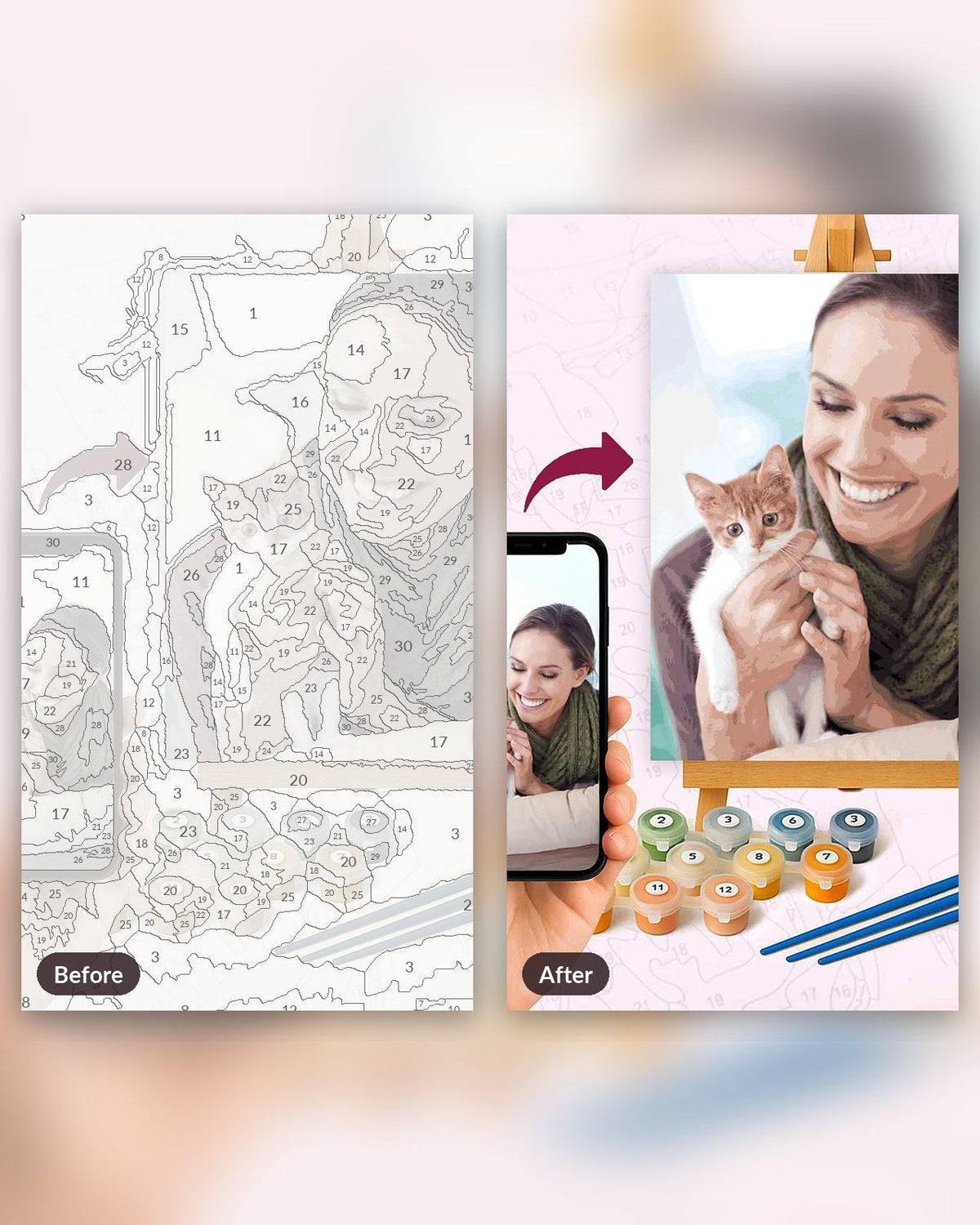
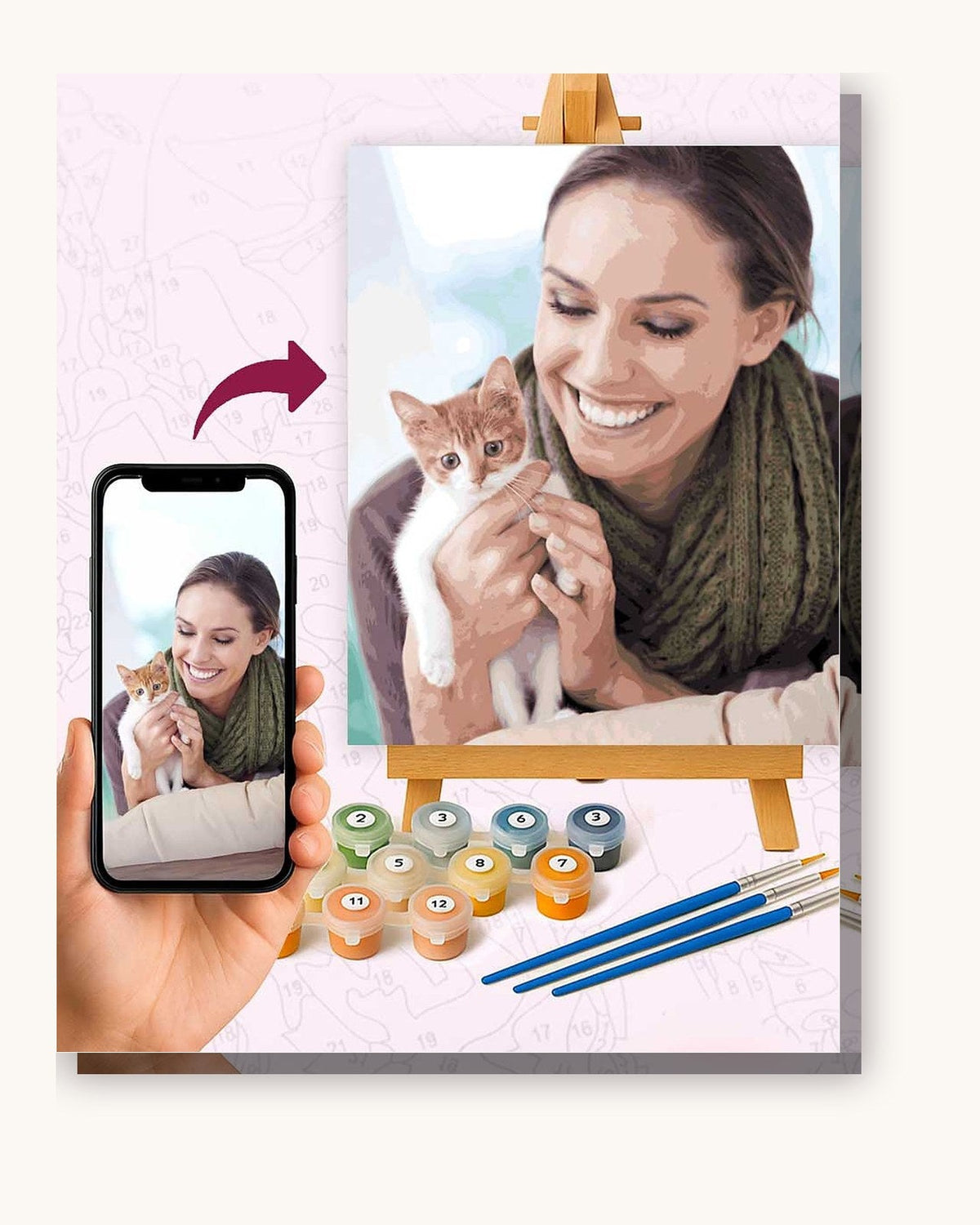
Turn one of your own photos into a numbered canvas (from $19.95). We trace it, mix the paints to match, and ship the kit with brushes.
Or pick a ready-made design
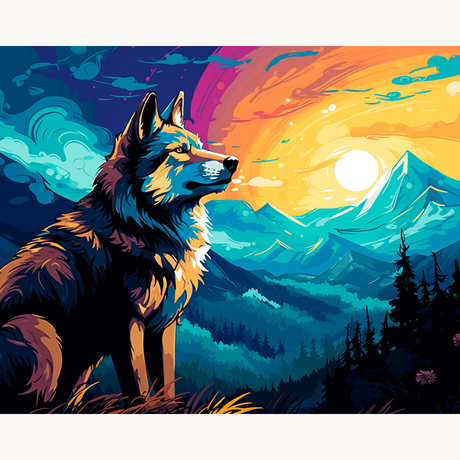
- Sunset Over the Great Wall Art Painting Kit (from $19.95)
30x30 cm, the square
The cheapest canvas we print and the fastest to finish. A weekend, two evenings if the design is simple and you do not stop to let layers dry properly.
It is also the one that catches people out. A square this size holds the same number of regions as the design was drawn with, so at 48 colors the regions are genuinely small and you will be working with the fine brush most of the time. If you want a quick, relaxed first kit, order the 24 color version of this size, not the 48.
Where it works: a shelf, a desk, a narrow strip of wall beside a door, or three of them hung in a row. Where it does not: above a sofa, where it reads as an afterthought.
30x40 cm, the small portrait
A third more canvas than the square for a dollar more, and the proportions suit most photographs, which are rarely square. If you are painting a landscape or a portrait rather than a pattern, this is the small size to take.
Ten to fifteen hours for most people. It fits on a lap tray, which matters more than it sounds: a canvas you can pick up and put down gets finished, and one that needs the dining table cleared does not.
Good for a home office wall, a hallway, a bathroom with two coats of varnish on it. Less good as the only painting on a large wall.
Ready to start painting? Browse our best sellers: Buy 2 Get 1 Free with free shipping to the US, Canada, the UK, the EU, Australia and New Zealand.
40x50 cm, the one most people order
This is the size marked Recommended in our own dropdown, and it is the one we would pick for someone who has never done this before. From $24.95.
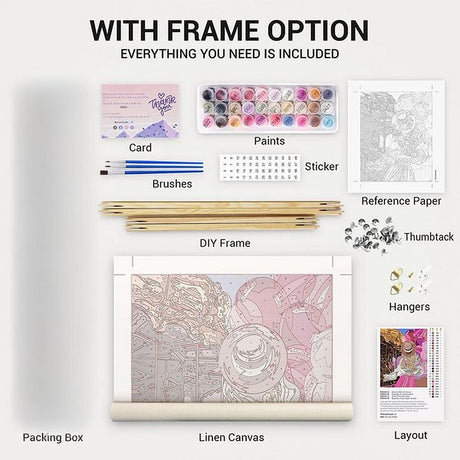
Two things make it the default. The regions are comfortable at every color count, so even the 48 color version can be painted without a magnifier. And 16x20 inches is a frame size sold in every craft shop, so framing it costs very little and takes no research. Our canvases ship unframed, so that matters, unless you add the DIY frame kit at checkout, which adds between $5 and $16 depending on the size and brings the wooden bars cut to fit.
Ten to twenty five hours of painting depending on the color count. Long enough to be a project, short enough that you finish it.
The full range is widest here: landscapes, animals, florals, abstract, and the photo conversions. If you are choosing between a rolled canvas and a stretched one, that decision is covered here.
The one drawback is scale. Above a full width sofa it will look slightly small on its own. Hang it with two others or go up a size.
50x65 cm, the statement canvas
From $29.95, and the point where the finished painting stops looking like a craft project. Gradients have room to blend, and the regions are larger than the same design at 40x50, so the painting itself is easier. What gets harder is staying with it: twenty to thirty five hours spread over three to five weeks, and there is a middle stretch where the canvas looks like a mess and nothing is finished.
It needs most of a table, and it needs to stay there. If your painting surface has to be cleared for dinner every evening, take the 40x50 instead.
60x60 cm, the jumbo square
The largest canvas we make, 23.5 inches on each side, from $46.95. Thirty to fifty hours, four to eight weeks for most people, and at 48 colors it runs to several hundred regions.
Practical points before you order one. Measure the wall first: a square this size wants roughly 70 cm of clear space so it does not look wedged in. It is heavy enough to want a proper anchor rather than a picture hook. And because it is square, it hangs well on its own but badly in a row with rectangles.
Ready to start painting? Browse our best sellers: Buy 2 Get 1 Free with free shipping to the US, Canada, the UK, the EU, Australia and New Zealand.
Matching the canvas to the wall
Measure the wall before you choose the design. It is the step everyone skips and the reason finished paintings end up in a cupboard.
Above a sofa 50x65 cm, or 60x60 cm if the wall is tall rather than wide. The usual decorating rule is that the art spans about two thirds of the furniture below it. A 40x50 works here only as part of a group.
Above a bed 40x50 or 50x65. Something quiet: landscapes in blue and green, or florals in muted tones.
Home office 30x40 or 40x50, hung where you can see it from the chair. Abstract designs hold up to being looked at every day better than busy scenes do.
Bathroom 30x30 or 30x40, and varnish it twice. Humidity is what kills acrylic on canvas.
Hallway Three 30x30 squares from the same collection, evenly spaced, five to eight centimetres apart. The repetition is the effect.
Children's room 30x40 or 40x50 with animal subjects. Hang it lower than you would for an adult room.
Why the small canvas is the hard one
The common assumption is that a big canvas is a harder canvas. It is the wrong way round, and it leads people to order the size that will frustrate them.
A design at 24 colors has the same number of regions whether it is printed at 30x30 or at 60x60. On the large square each region is four times the area: more room for the brush, more tolerance at the edges, printed numbers you can read without leaning in. On the small square the same regions are cramped, and the numbers are small enough that some people reach for a magnifier.
Size does add difficulty, but it adds it as duration, not as technique. A 60x60 takes three to four times longer than a 30x40. The skill it demands is finishing.
So if you are worried about whether you can do this at all, go up a size rather than down, and take a lower color count. That combination gives you large regions and few of them.
How long each size takes
These are estimates, scaled by surface area and color count from what we hear back from customers, not stopwatch data. Treat them as the right order of magnitude rather than a promise.
First kit, 24 colors
- 30x30 cm: 5 to 9 hours
- 30x40 cm: 10 to 15 hours
- 40x50 cm: 15 to 22 hours
- 50x65 cm: 25 to 35 hours
- 60x60 cm: 30 to 45 hours
After three or four kits, 48 colors
- 30x30 cm: 6 to 10 hours
- 30x40 cm: 9 to 14 hours
- 40x50 cm: 15 to 25 hours
- 50x65 cm: 24 to 34 hours
- 60x60 cm: 35 to 50 hours
Experience cuts perhaps a third off the time, and nearly all of that gain arrives between the first kit and the second. Doubling the color count roughly adds the same amount back, which is why the two tables above look closer than you would expect.
Framing, by size
Every kit ships unframed. Decide how it will hang before you order, because framing a large canvas afterwards at a professional framer costs more than the kit did.
30x30 and 30x40 Both are standard off the shelf frame sizes. A frame with a glass or acrylic front suits a small painting, and a mount board border makes it look deliberate rather than small.
40x50 16x20 inches, the easiest size in the world to frame. A floating frame in black, white or bare wood is the usual choice. Or add the DIY frame kit and hang it stretched, with no outer frame at all.
50x65 and 60x60 Most people hang these stretched and frameless. If you do want a frame, a thin strip frame adds the edge without the bulk, and it is the only style that does not make a canvas this size look heavy.
Ready to start painting? Browse our best sellers: Buy 2 Get 1 Free with free shipping to the US, Canada, the UK, the EU, Australia and New Zealand.
Questions we get asked
Which size should a first-time painter buy?
40x50 cm at 24 colors. Comfortable regions, a frame you can buy anywhere, and fifteen to twenty hours of work. The 30x30 looks like the safe choice because it is small and cheap, and it is the one people give up on.
Can I order a size that is not on this list?
No. Those five are what we print, for ready-made designs and for photo kits alike. Pick the closest one and measure your wall against it rather than the other way round.
Does a bigger canvas come with more paint?
Yes. The paint pots are filled for the surface area of the canvas you order, with enough spare for a second coat over the patches that go on thin. If you do run short on a color, tell us and we will send a replacement pot.
What size makes the best gift?
40x50 cm, for the same reasons it suits a beginner: it fits any wall and any level of patience. The 50x65 is the better gift if you know the person has painted before and has the wall for it.
Can I hang different sizes together?
Yes, and it usually looks better than a matched set. Keep them in one collection or one palette so the colors agree, then let the sizes differ. A 50x65 in the middle with two 30x30 squares stacked beside it is the arrangement that works most often.