










Half our reviews mention stress, anxiety or "switching off". It would be easy to turn that into a wellness pitch. We would rather tell you what the published research actually shows, because it is more modest and more useful than the marketing version.
What studies have measured
The best-known work is on structured coloring. In a 2005 study in the journal Art Therapy, Curry and Kasser had undergraduates induce anxiety and then spend twenty minutes either coloring a mandala, coloring a plaid pattern, or drawing freely. Anxiety dropped significantly in the two structured conditions and much less in the free-drawing group. Later studies replicated the pattern: a structured, repetitive, attention-absorbing task reduces self-reported anxiety in the short term. Paint by numbers is exactly that kind of task.
A 2016 paper by Kaimal and colleagues at Drexel measured cortisol in saliva before and after 45 minutes of art making in adults with no art training. Roughly three quarters of participants showed lower cortisol afterwards, regardless of skill or prior experience. Skill did not matter. That matches what our customers say: you do not need to be good at this for it to work.
What the evidence does not say
None of this is treatment. The studies measure a drop in anxiety or cortisol over an hour, not a change in a clinical condition. Paint by numbers is not art therapy, which is a clinical practice delivered by a trained therapist. If you are dealing with persistent anxiety or depression, a kit is a good evening, not a plan. We say this plainly because a few competitors do not.
Why the structure helps
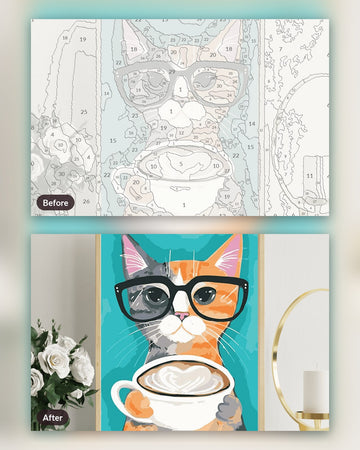
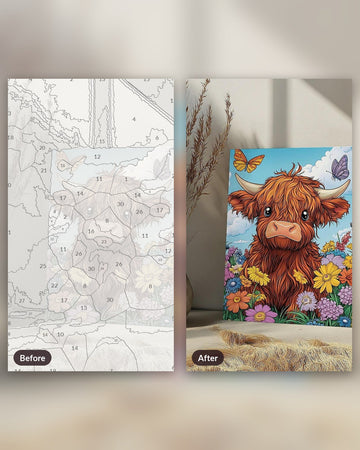
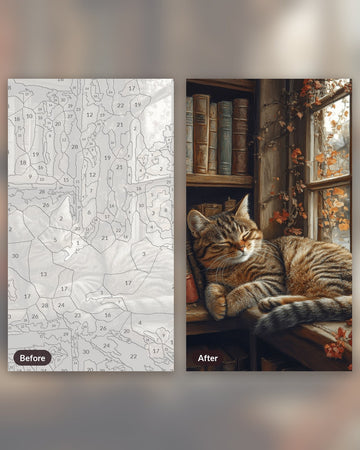
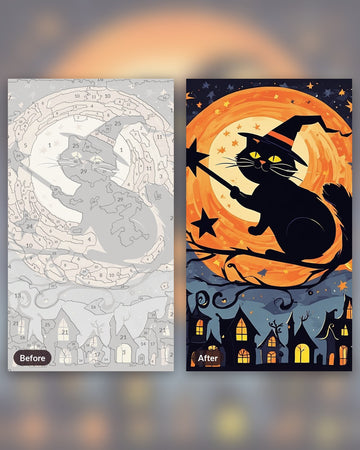
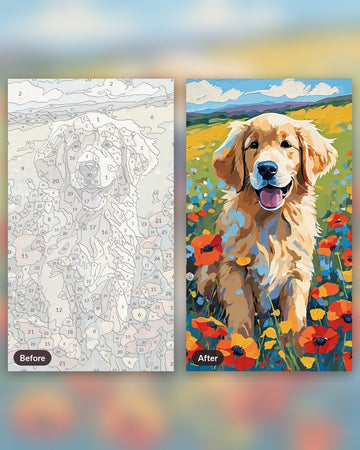
The likely mechanism is attention. Finding the next zone marked 14, filling it, finding the next: the task occupies working memory just enough to crowd out rumination, without demanding decisions. Free painting asks "what should I do?" at every stroke, which for an anxious mind is more fuel. Numbers remove the decisions. Psychologists describe the resulting state as flow; most people describe it as losing track of time.
Setting up a session that works
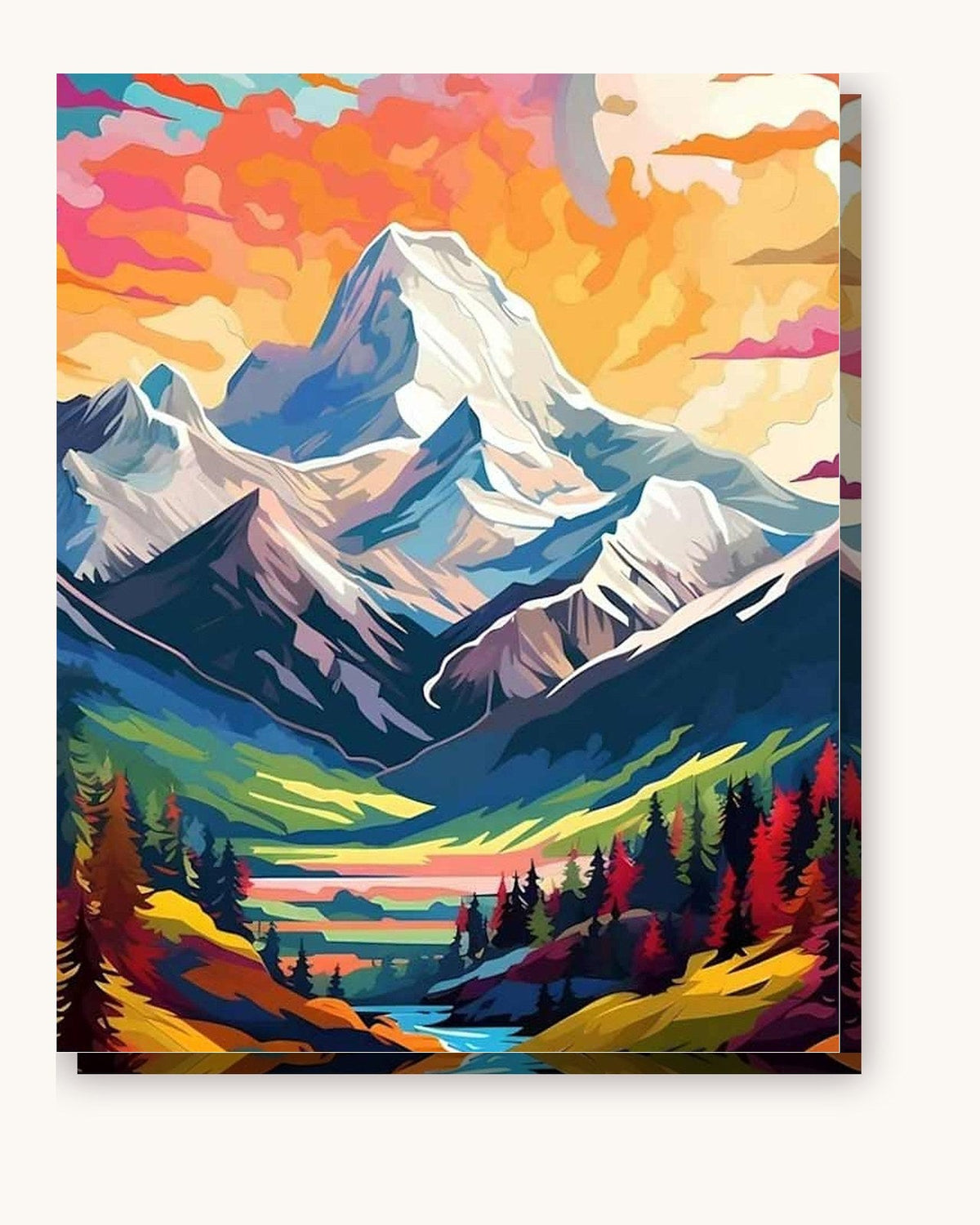
- Pick a design with large zones and a calm palette. Water, skies and snow are better than dense foliage for this purpose.
- Choose 24 or 36 colors rather than 48. Fewer pots, fewer tiny zones, less hunting.
- Decide the stopping time before you start. Forty-five minutes to an hour. Open-ended sessions become another thing to finish.
- Phone in another room. The whole benefit is undivided attention.
- Do not aim to improve. The research found no link between skill and benefit.
A canvas chosen for this
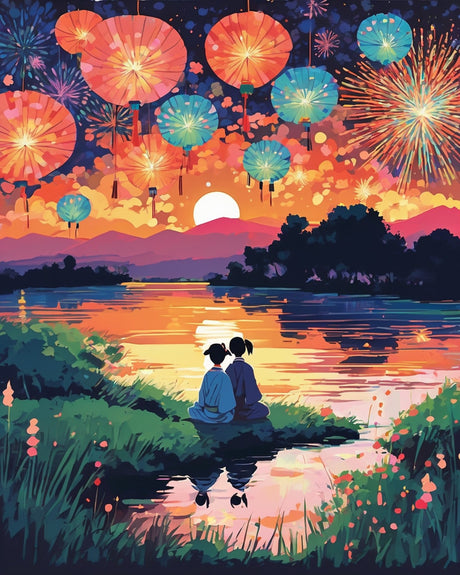
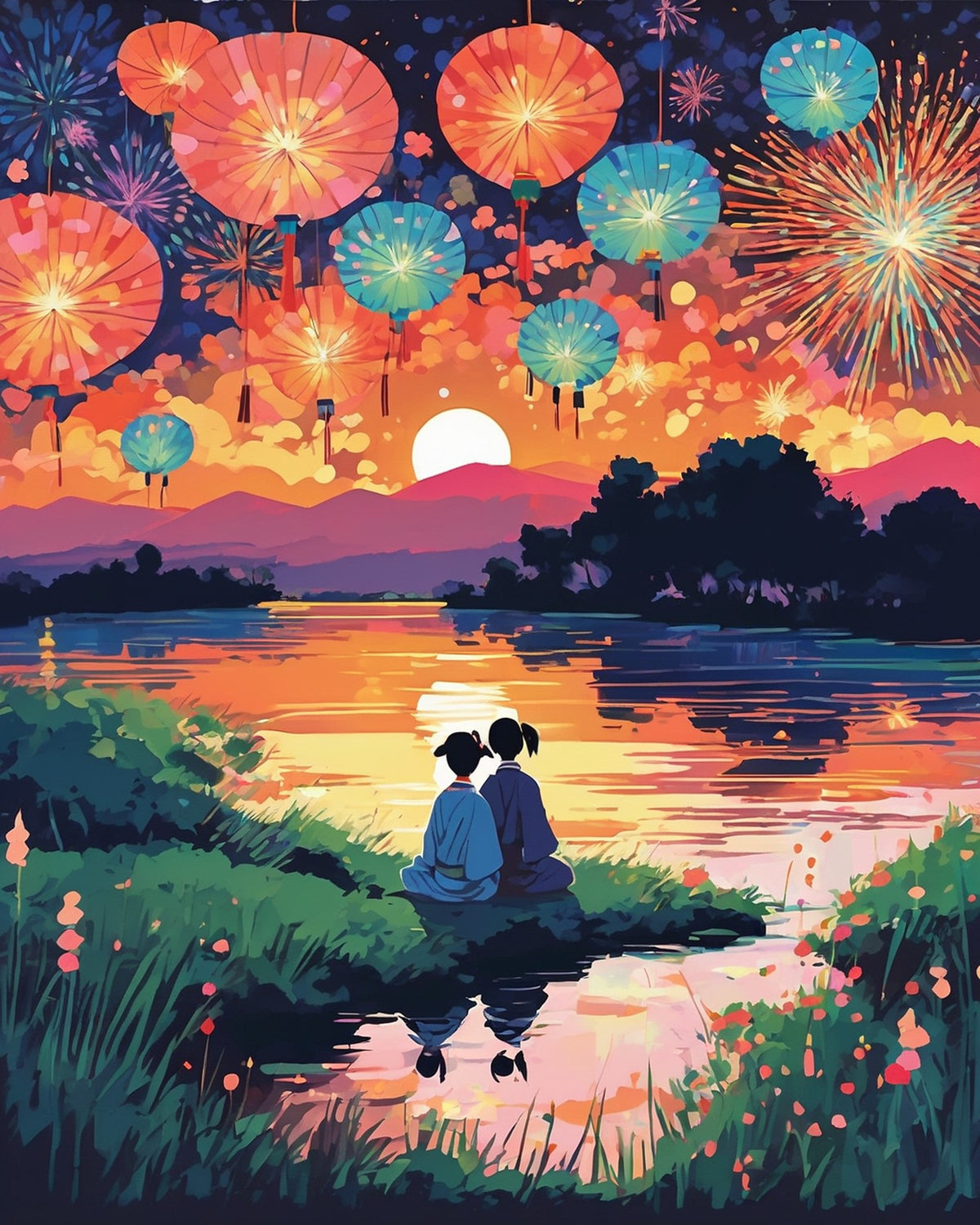
Still water under a night sky has the two properties that matter here: broad zones you can fill in long slow strokes, and colors close enough that mistakes do not show. Customers who bought it for exactly this reason tend to describe it as the one they return to.
Our pick for a calm, low-decision session
- Aurora Reflections paint by numbers kit (from $19.95) . water and sky, 36 colors recommended
- Dreamy Pastel Clouds paint by numbers kit (from $19.95) . even softer, good at 24 colors
Sources: Curry & Kasser, "Can Coloring Mandalas Reduce Anxiety?", Art Therapy 22(2), 2005. Kaimal, Ray & Muniz, "Reduction of Cortisol Levels and Participants' Responses Following Art Making", Art Therapy 33(2), 2016.
Shipping is free to the US, Canada, the UK, the EU, Australia and New Zealand, with no minimum. Orders leave the workshop within 1 to 3 business days and arrive in 7 to 15. Put two kits in the cart and the third one is taken off at checkout, no code to type.