Most articles on this subject will tell you that art in an office raises productivity by some percentage. We are not going to, because the studies behind those numbers measure offices with plants and daylight and control over the thermostat, and the painting is along for the ride. Hang a canvas because the wall behind your desk is blank and you look at it forty hours a week. That is reason enough.
What does have a measurable effect is narrower and more practical: what the canvas does on camera.
The wall behind you on a video call
If you take calls, the wall behind your chair is the most seen surface you own. Three things go wrong there.
A glossy finish catches the ceiling light and shows up as a white blown out patch on camera, usually right over the middle of the painting. Varnish matte, not gloss. This is the single most common mistake and it is invisible in the room and obvious on screen; the varnishing guide covers which finish to buy.
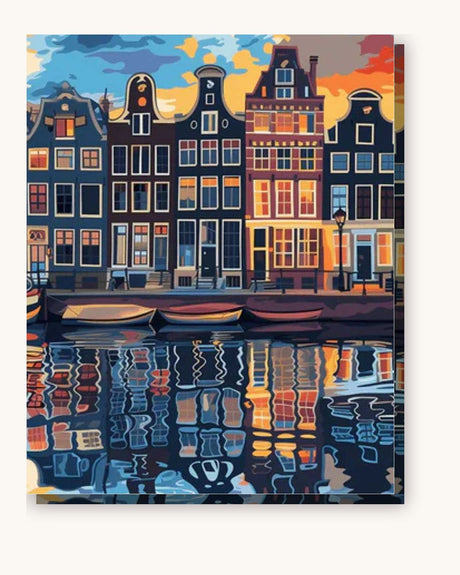
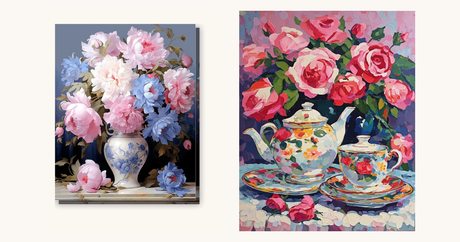
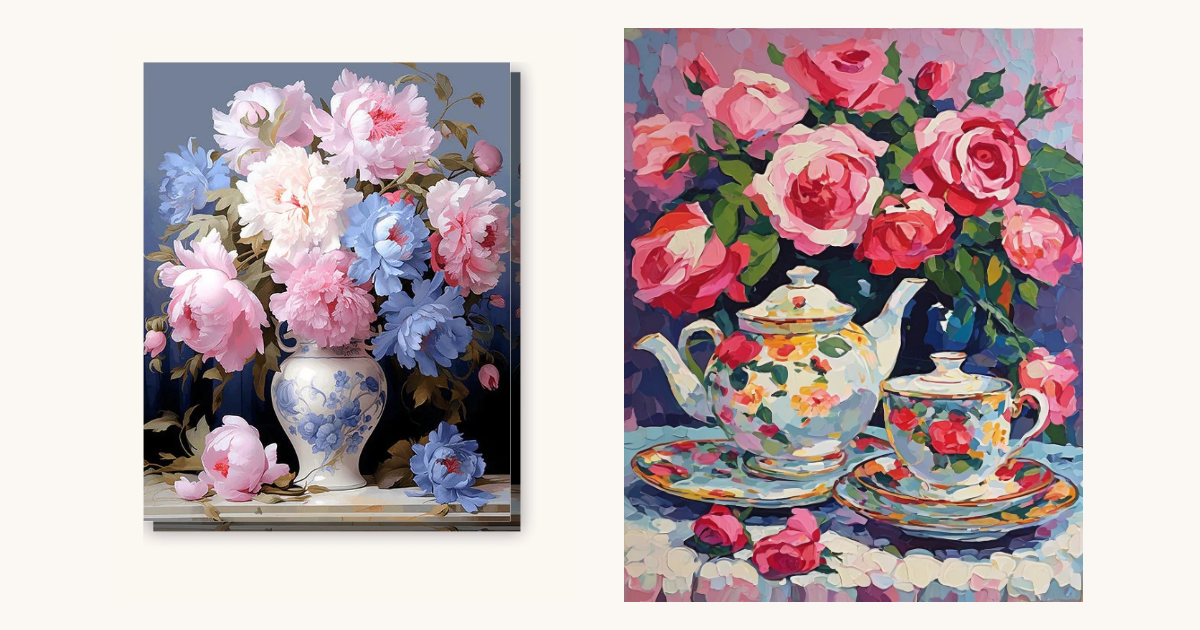
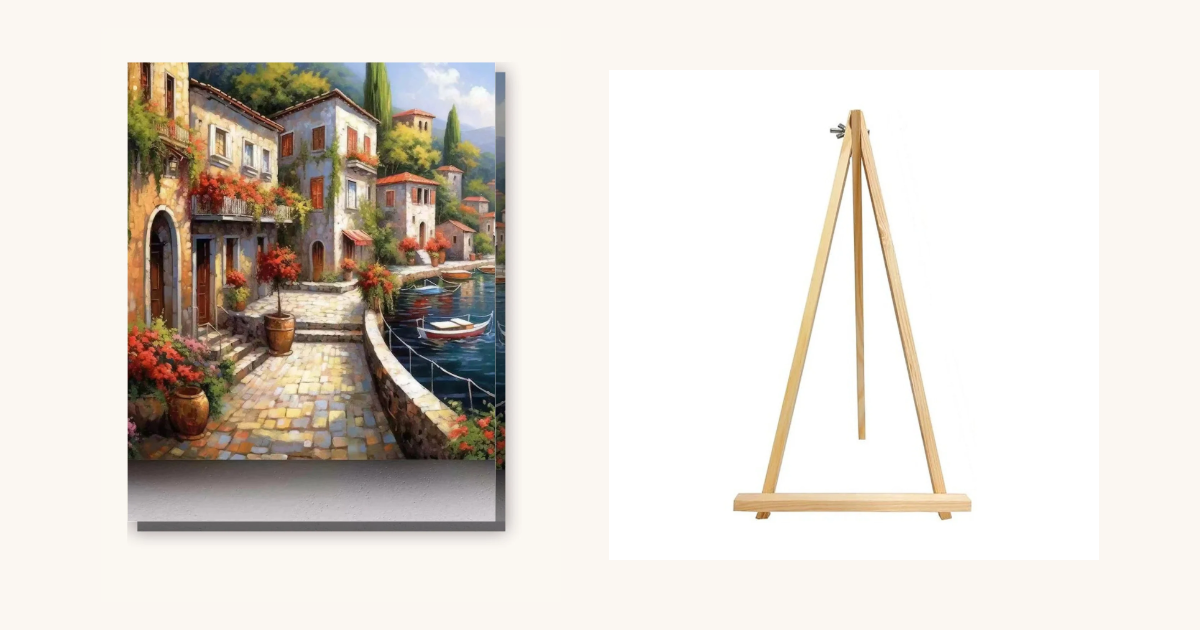
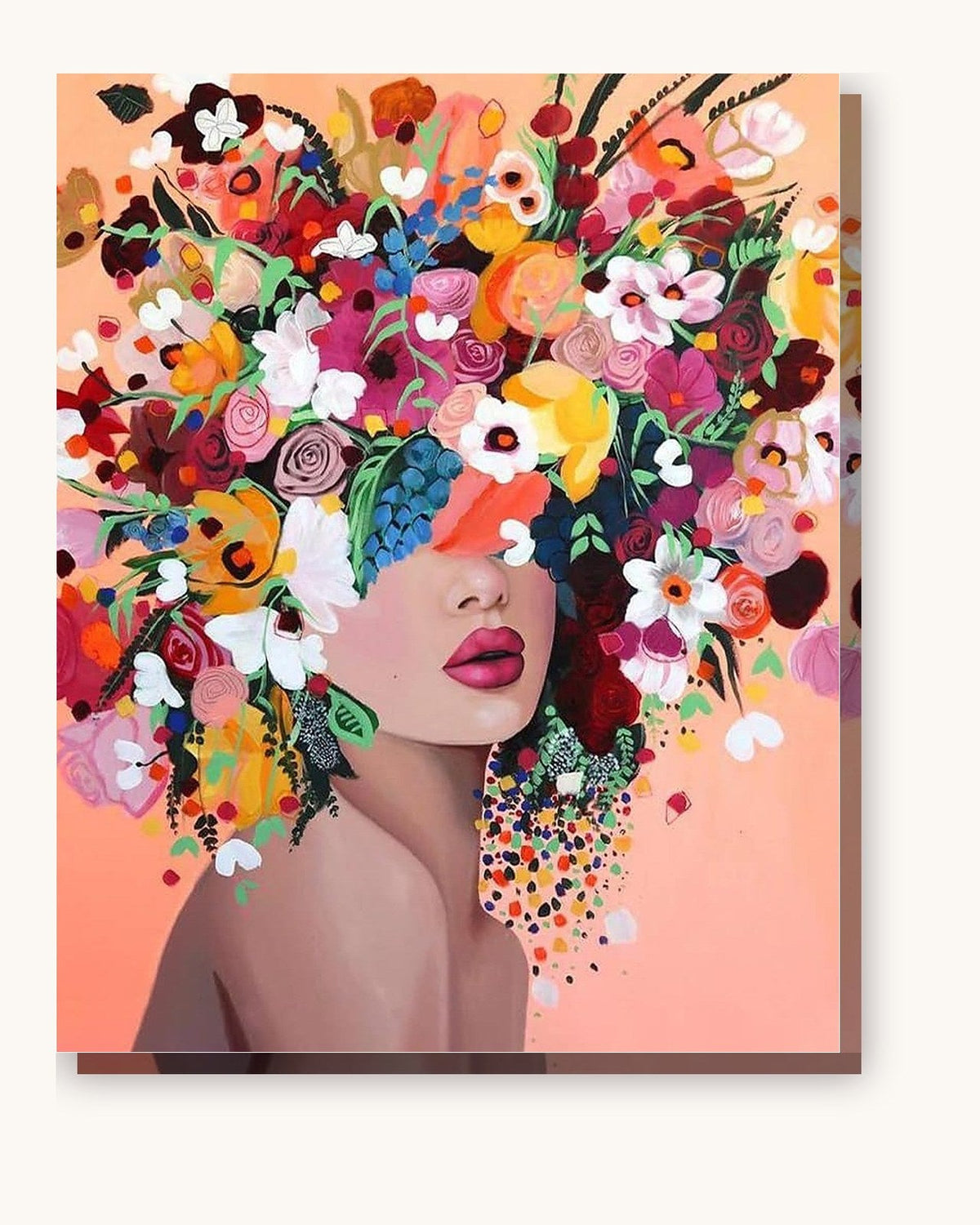
Busy canvases turn to noise at video bitrates. A scene built from hundreds of small high contrast regions compresses badly and shimmers when you move. Large flat shapes survive compression. This is why a cityscape at dusk works on camera and a dense floral does not.
And the canvas should be off centre behind you, not directly over your head. Centred, it reads as a halo and the eye keeps going to it instead of to your face.
Canvases that hold up on camera
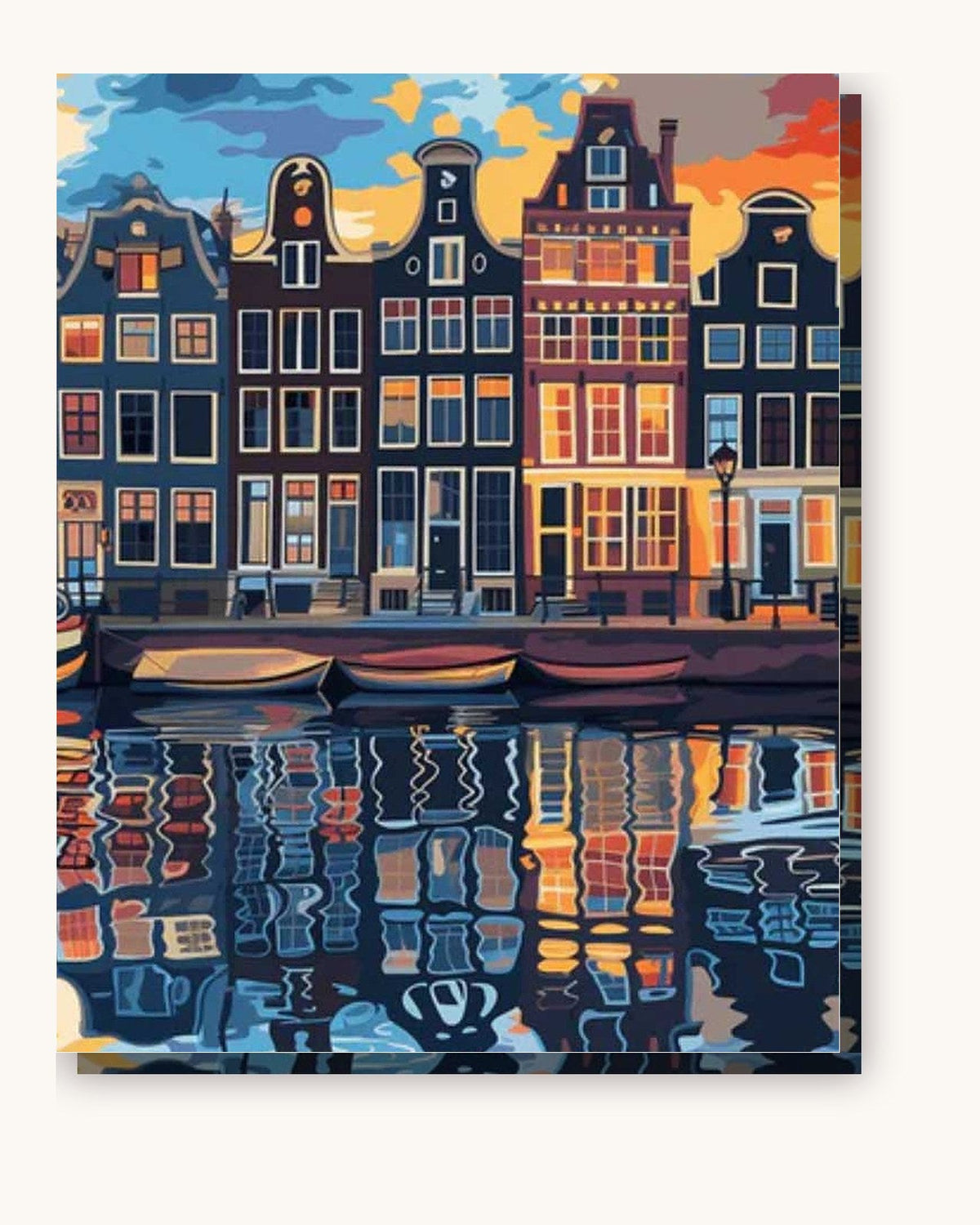
Minimalist Amsterdam is the safest choice of anything we stock for this. Few colours, big shapes, nothing that shimmers. Harmonic Geometry does the same job if you would rather have no subject at all behind you.
Vertical Metropolis and LA Skyline both read clearly at low resolution because the structure is vertical blocks. Heritage Crossing is the warmer option if the room is warm and a city skyline would feel cold in it.
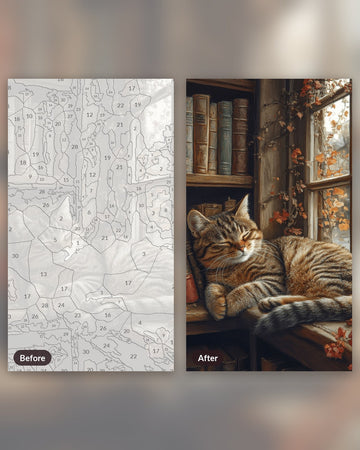
Parisian Bookstore is the one to avoid behind a camera and the one to hang beside the desk instead. It is full of small detail, which is a pleasure to look at from a metre away and a mess at 720p.
A shared office is a different problem
In a room that is not only yours, the constraint is that the painting has to be defensible to someone who did not choose it. Abstract and architectural work passes this test. Anything with a strong mood, anything religious, anything anyone might read as a statement, does not, and you will end up taking it down.
The cities collection runs to just under 80 designs and is the most reliable source for this, because a recognisable skyline is a subject nobody objects to. The abstract collection, just over 70 designs, is the other one.
If the office is buying rather than an individual, the version of this that actually gets people talking is everyone painting a panel of the same set. We wrote that up in the team building piece.
Sizes against a desk
Above a standard desk, the 16x20 inch canvas is the right size and the one most people buy, $24.95 at 24 colours and $39.95 at 48. Go to the 20x26 only if the wall is wide and empty, because over a desk a large canvas crowds the monitor.
Hang the bottom edge about 20 to 25 cm above the desk surface. Higher and it floats away from the furniture, lower and you will knock it with a laptop lid. In a rented or shared office where drilling is not an option, the nail free methods hold this size without trouble.
Painting it is the other half
The reason to paint the thing yourself rather than buy a print is that an hour with a brush is an hour not looking at a screen, which for most desk jobs is the scarce thing rather than wall decoration. Twenty minutes at the end of a working day, same table, screen off. We made that case at length elsewhere.
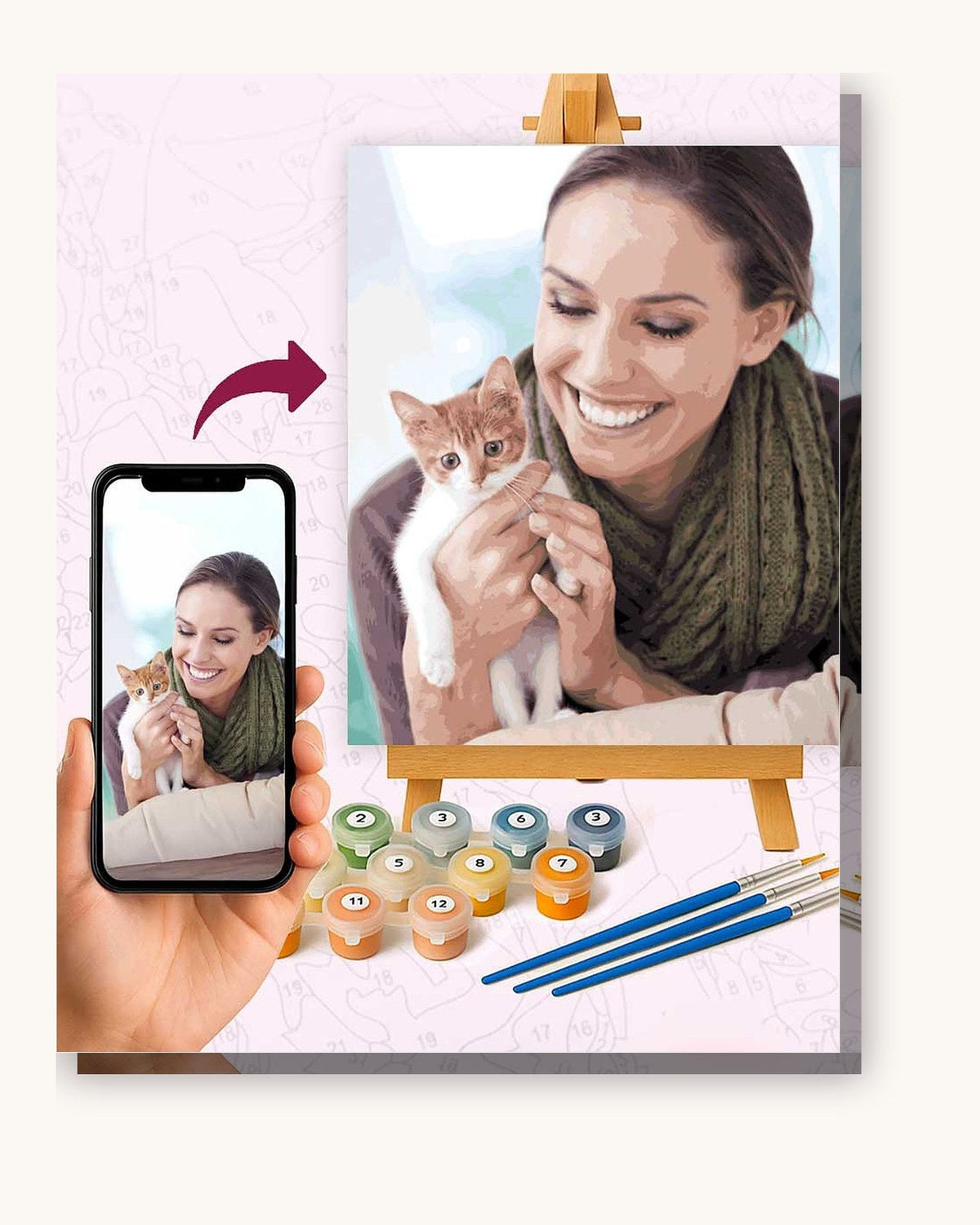
Every kit ships with the canvas, numbered acrylics, three brushes and a printed reference. Shipping is free to the US, Canada, the UK, the EU, Australia and New Zealand with no minimum, and the thirty day guarantee covers the kit with a prepaid return label and a full refund including original shipping.