Two paint pots marked 7 do not give you enough information to swap them between kits. Treat each number as belonging to the canvas and paint set it arrived with. Before you open a second project, give both kits a name and keep their pots and reference materials in separate trays or bags.
The aim is to preserve that connection through every painting session. You should be able to stop halfway through a color, put everything away and return knowing which canvas the paint belongs to.
The useful label has two parts: the project identity and the original pot number. For example, A-07 means pot 7 from project A. B-07 means pot 7 from project B. These are organization examples, not a claim that the two paints match.
Give each kit a name before unpacking it
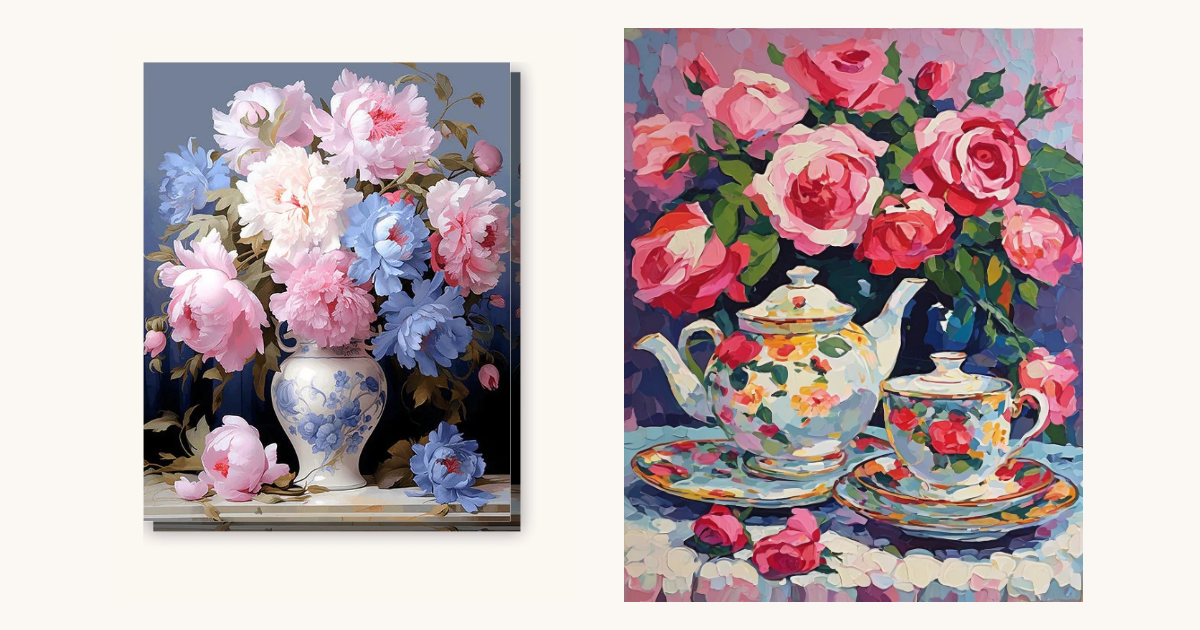
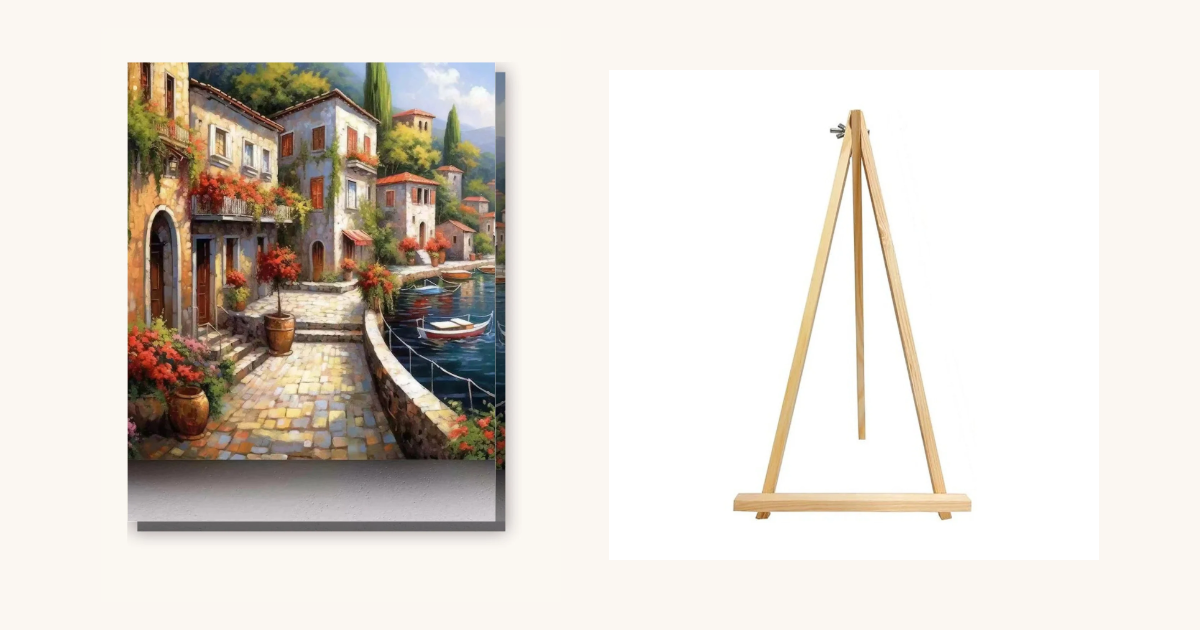
Use a short name you can recognize without seeing the finished picture. “A: Tabby and Books” is more useful than “mine,” especially if several people share a table. A second painter can use “B: Garden Scene,” or any title that identifies their own kit.
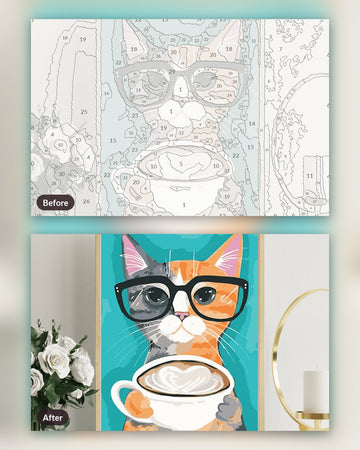
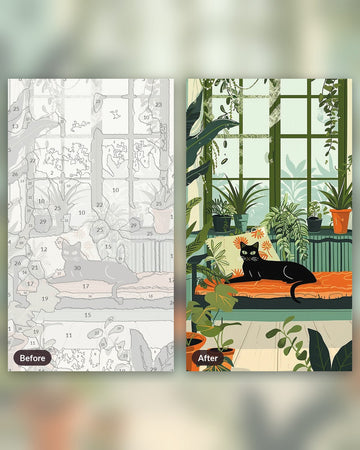
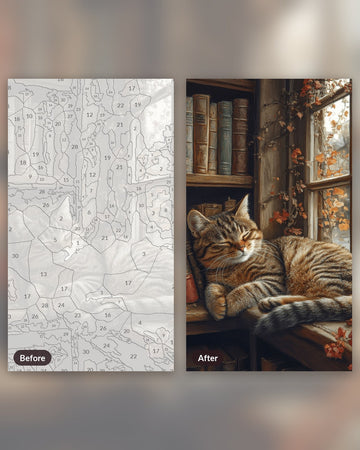
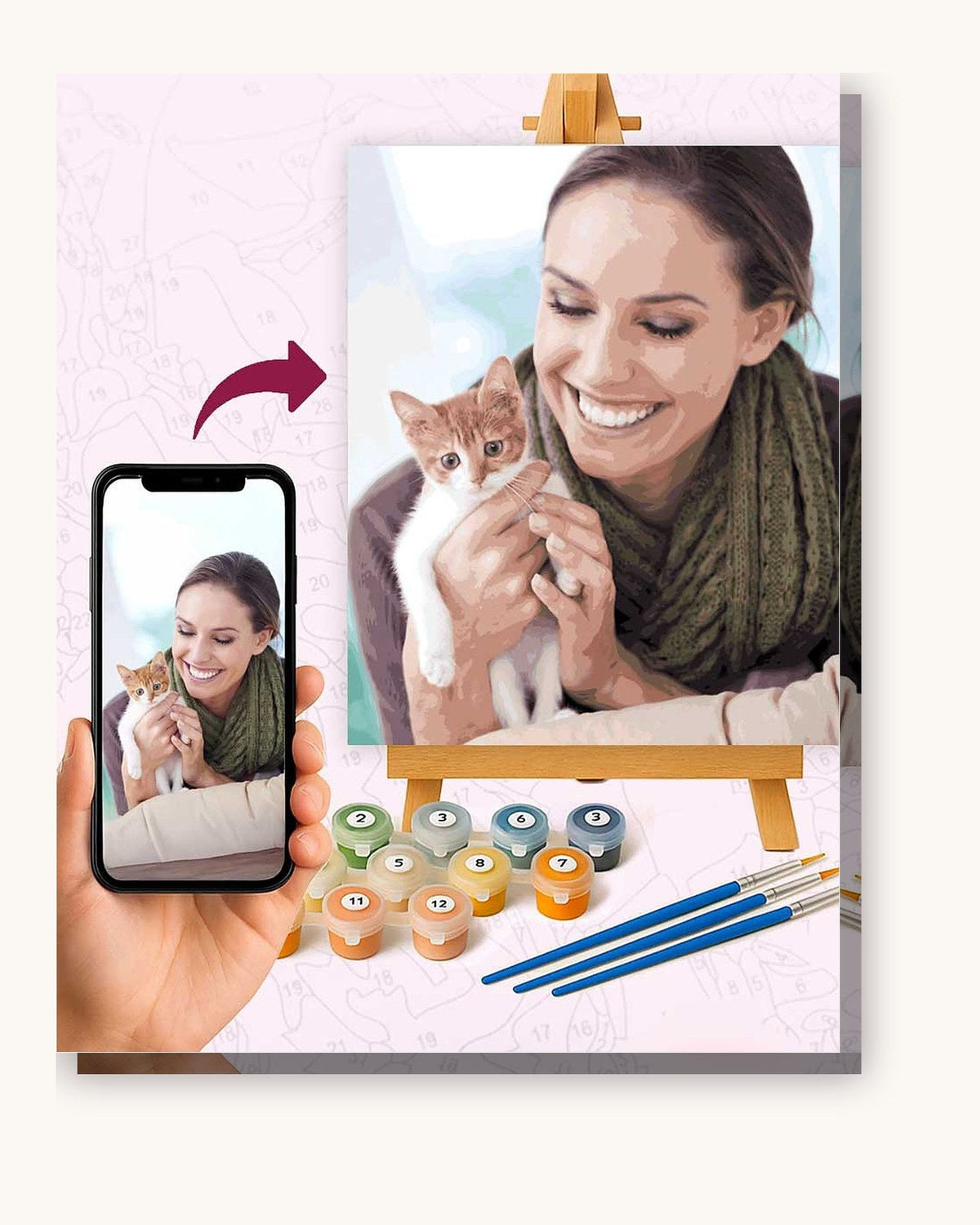
The current Tabby Cat and Books kit, for example, includes its numbered canvas, matched acrylic paints, brushes, a miniature reference image and instructions. Keep that reference with that paint set. Your own second kit may have a different reference format; retain whatever actually arrives rather than assuming every kit contains a numbered paper chart.
Write the same project name on the storage container and on a separate card kept with the canvas. Keep the packaging or order details until you have checked the contents. If two people bought the same design, add the painter's initials or the order reference to distinguish their sets.
For the basic relationship between printed regions and paint pots, see how to read a paint by numbers canvas. Adding a project letter preserves that original system.
Keep the original numbers visible
Do not replace the manufacturer's pot numbers with a new sequence. Add the project name to a spare area of the container or keep the pots in a clearly identified bag. If there is no sensible space for an extra label, the separate tray and a photograph are better than covering the original number.
The same rule applies to reference sheets. Keep their printed key intact. A note saying “A-07” means “look up 7 in project A,” not “look up a new color called 07 in both projects.”
| Your working note | What it means | What stays with it |
|---|---|---|
| A-07 | Original pot 7 from project A | Project A canvas and reference |
| B-07 | Original pot 7 from project B | Project B canvas and reference |
| A: number unclear | A pot belongs to A, but its number needs checking | A's unidentified items, kept apart from usable pots |
| B: pot not found | A gap to investigate in B's set | B's contents record and order information |
There is no need to relabel every brush. Brushes can be shared once properly cleaned. The important distinction is between reusable tools and the paint-to-canvas match.
Use one tray per project and one active paint set
A shallow container with a lid, a box or a resealable bag can hold each kit's closed pots and reference. Choose something that fits what you have. You do not need a new storage system to start a second painting.
Keep only the paint set for the active canvas within reach. When changing projects, close its pots, return them to their own container and put that container aside before opening the next. This small handover matters more than keeping the desk perfectly tidy.

If two people paint at the same table, give each workspace its own container and a clear place for active pots. A shared pile in the middle makes the project labels work harder than they should. The workspace setup guide covers lighting and table preparation; here, the extra step is keeping two project boundaries visible.
Keep wet canvases out of the pot containers. Let the work sit somewhere suitable while you close and return the materials. Packing away paint does not mean the painting is ready to be stacked or wrapped.
Photograph the contents and leave a session note
Before painting, take a picture of each set with its project card and original numbers visible. If one photograph cannot show all the labels clearly, take several. Save them in separate phone albums or folders named for the project.
Add a short written record of anything that needs attention. “B: pot 12 not found during unpacking” is useful. “Something missing” is difficult to act on later. Record what you observed without assuming whether the item was omitted, misplaced or already used.
At the end of a session, write down where you stopped. For example:
Project A: worked on the lower book edges with pot 7. Check the remaining unpainted 7s before marking that color complete. Reference and pots returned to A's tray.
This is a sample note, not an instruction that a particular numbered shade belongs on the books in your kit. Use the numbers printed on your own canvas. If someone else will continue the painting, add any uncertain region rather than silently guessing at its color.
Close the pots without turning this into a storage project
Project identity stays useful only if the paints remain in their own containers. Clean paint from the closing surfaces and close each pot securely after use. GOLDEN's manufacturer guidance on acrylic storage explains the importance of clean closures and limiting evaporation. Its lifespan statements concern GOLDEN products; they do not establish a shelf life for the paints in your kit.
Keep labels legible and containers upright when moving them. For longer breaks, the separate leftover-paint storage guide covers that topic. The immediate job here is simpler: return A's pots to A and B's pots to B.
If the pots have already been mixed together
Stop swapping them by eye. Similar-looking wet paints are not enough to reconstruct the original sets with confidence, and matching numbers alone does not resolve the missing project identity.
Set the uncertain pots aside. Check unpacking photographs, original packaging and project notes before doing anything irreversible. Do not pour similar colors together or repaint a conspicuous area to test a guess.
If you still cannot identify them, gather the product titles, order details, photographs of the pot numbers and the reference materials you have. Use the contact page to explain exactly which connection is missing. Support can assess the information; a replacement shade or set is not something to assume in advance.
Once the next session starts with one identified canvas, its own paint set and its own reference, the system is working. Leave those three together when you stop.