














A stag with a full rack of antlers standing in morning mist is one of those images that just belongs on a wall. Cabin, farmhouse, a masculine study, a Christmas mantel. Deer kits sell hard in autumn and winter for exactly that reason, and they are more beginner-friendly than most people assume.
The range covers a lot of ground. There is the proud forest stag, antlers spread, usually in blues and greys with a foggy background. There is the gentle doe or the spotted fawn, softer and warmer, popular for nurseries. And there is the modern low-poly or watercolor stag, all geometric facets or loose color washes, which fits contemporary rooms that would look odd with a realistic animal.
Want to paint this yourself?
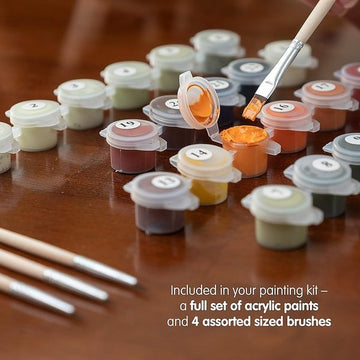
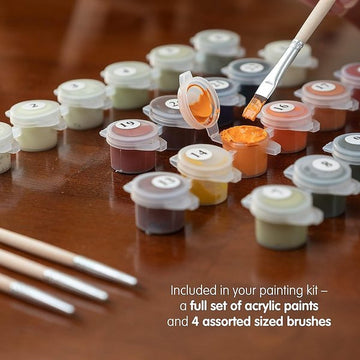
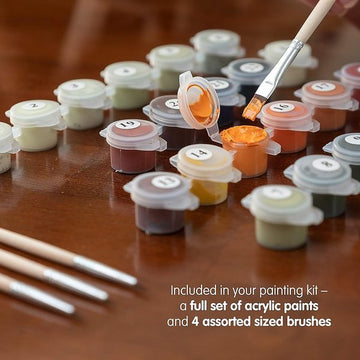
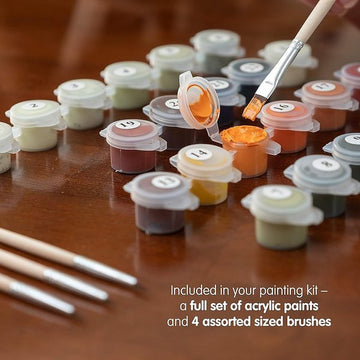
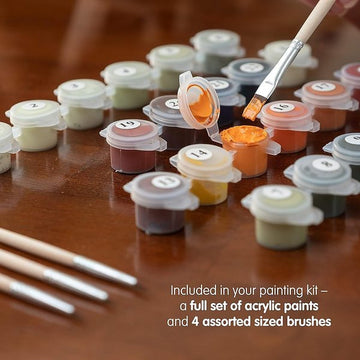
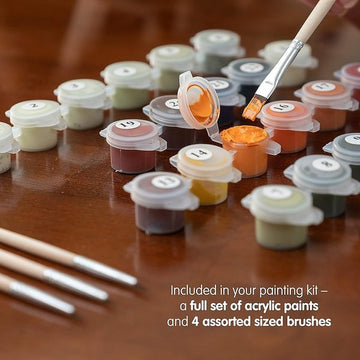
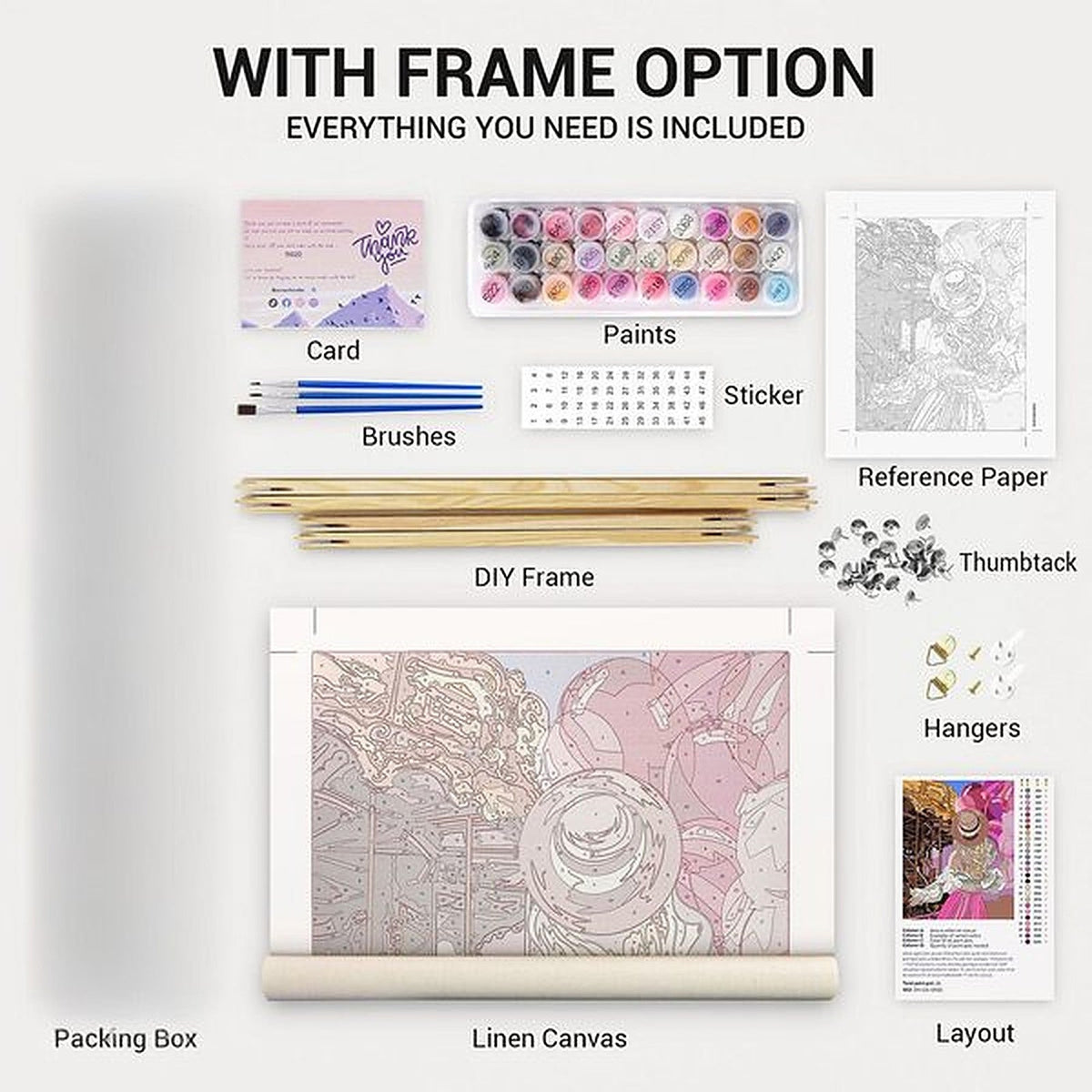
Turn one of your own photos into a numbered canvas (from $19.95). We trace it, mix the paints to match, and ship the kit with brushes.
Or pick a ready-made design:
- Artistic Mr Deer Painting by Numbers Kit (from $19.95)
- Deer in Snow Premium Collection Canvas Art Kit (from $19.95)
- Sunset Over the Great Wall Art Painting Kit (from $19.95)
Backgrounds do the heavy lifting
Here is why deer kits are easier than they look. The classic misty stag has a huge, simple background, soft graded blues and greys, few color changes. You can knock out half the canvas in an evening and feel like a hero. A 40x50cm deer kit usually carries 24 to 32 colors and takes 10 to 16 hours, on the lower end for wildlife because the body and background are broad open fields rather than dense fur.
The antlers are the fun part. They are branching, pale, and set against a darker background, so they pop. Paint them carefully because the numbered sections are thin, but the contrast means small imperfections vanish once it is framed.
One more thing about deer that people underestimate. They frame beautifully. A stag in a simple black or dark walnut frame looks expensive, far beyond what the kit costs, because the misty palette already reads as moody and considered. If you are painting one for a mantel or a cabin wall, budget a little for a real frame rather than leaving it bare. The jump in how finished it looks is worth it, and a stag is exactly the kind of piece guests comment on.
Keeping the browns from turning to mud
Deer coats run through a lot of close browns and tans. In the pots they look nearly identical, and that is the number one place people go wrong, dipping into the wrong shade and flattening the fur. Keep your pots in numbered order, rinse between colors, and if two neighboring browns fight each other visually, soften the seam. Our walkthrough on smooth color blending is the one to read before you start the body.
Picking the right one
Total beginner? The misty forest stag is honestly a great first wildlife project. Big background, high contrast, forgiving. If you are still unsure where you sit, this difficulty guide will place you. The geometric low-poly stags are also friendly, since every facet is a clean flat shape with hard edges, no blending required.
You will find the deer, stag, and fawn designs in our animals and wildlife collection. If you are drawn to woodland and forest scenes generally, they pair beautifully with our landscape kits for nature lovers, so a stag next to a mountain scene makes a coordinated set without matching too obviously.
Buying for a hunter, an outdoorsy dad, or someone decorating a cabin? A stag is close to a sure thing. The gift-boxed versions live in our gift kits and need no extra wrapping fuss.
My take
Of all the wildlife subjects, deer give the best result-to-effort ratio for a newer painter. You get a striking, framable piece without the punishing feather or fur density of an owl or a tiger. Start with a 40x50cm misty stag from the wildlife collection, do the background first to build momentum, and save the antlers for when you are warmed up and enjoying it.
Common questions
Are deer and stag kits good for beginners?
Yes. The classic misty forest stag has a large, simple graded background and high contrast antlers, so it is one of the more forgiving wildlife subjects for a first project.
How long does a deer paint by numbers kit take?
About 10 to 16 hours for a 40x50cm design, on the lower end for wildlife because the body and background are broad open fields rather than dense fur.
How do I stop the browns from looking muddy?
Deer coats use several close browns and tans. Keep the pots in numbered order, rinse your brush between shades, and soften the seams where two neighboring browns meet so the fur reads as depth.