
















The first rose I finished had one petal that looked like a crumpled tissue and the rest looked, well, like a rose. That one petal taught me more than the good ones did. Roses reward patience in a way sunflowers or poppies don't, because the whole flower is built out of overlapping curves, and your eye notices instantly when a curve goes flat.
So here is how to keep those curves alive, kit choice and all.
Want to paint this yourself?
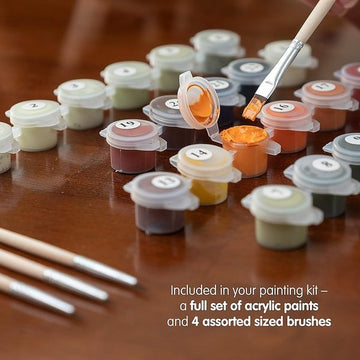
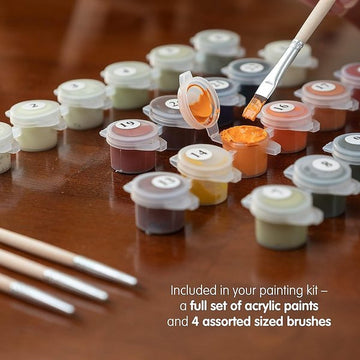
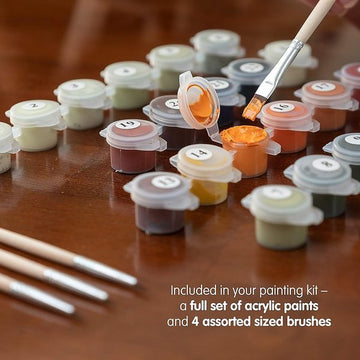
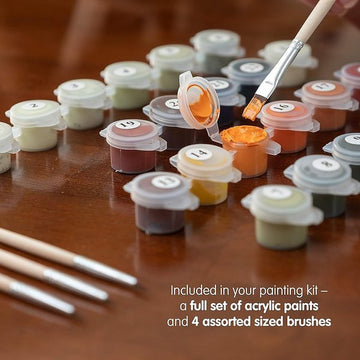
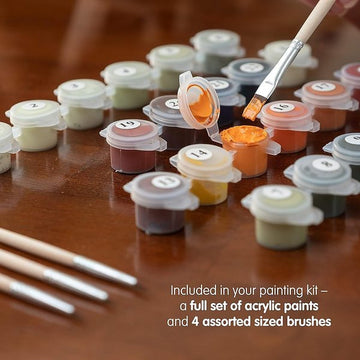
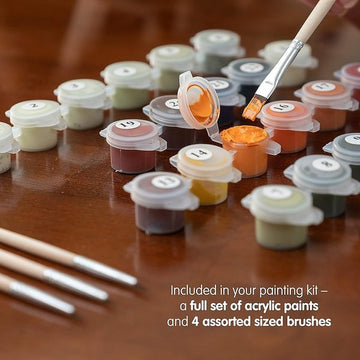
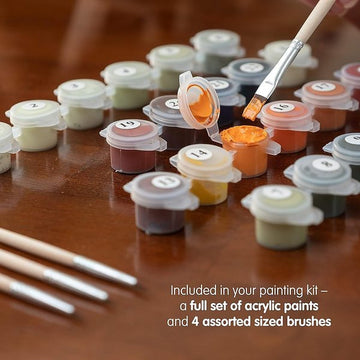
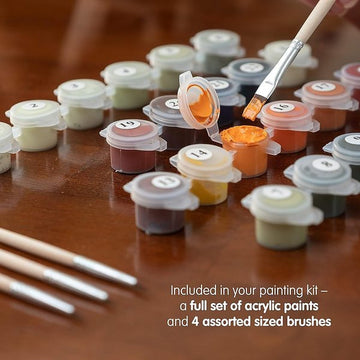
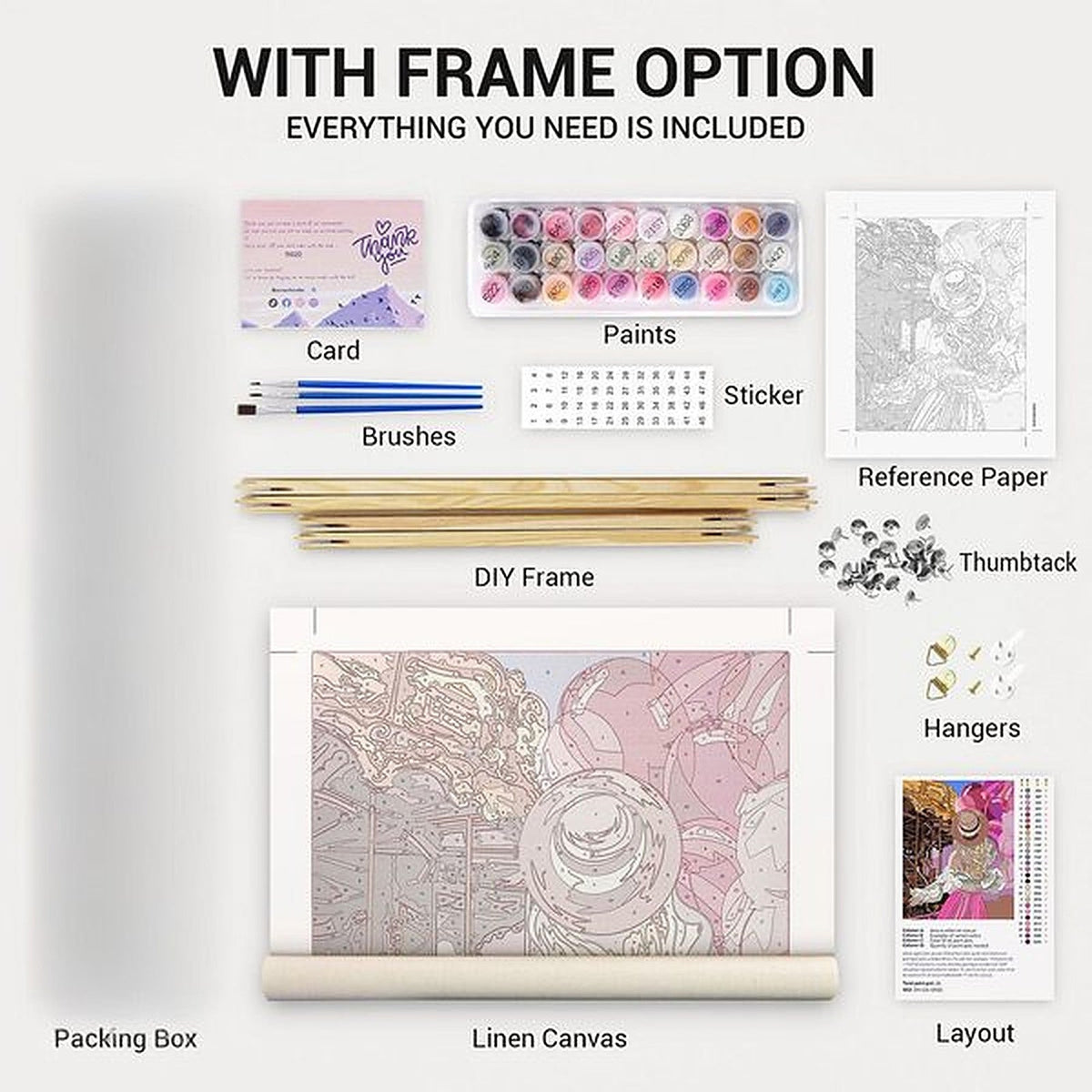
Turn one of your own photos into a numbered canvas (from $19.95). We trace it, mix the paints to match, and ship the kit with brushes.
Or pick a ready-made design:
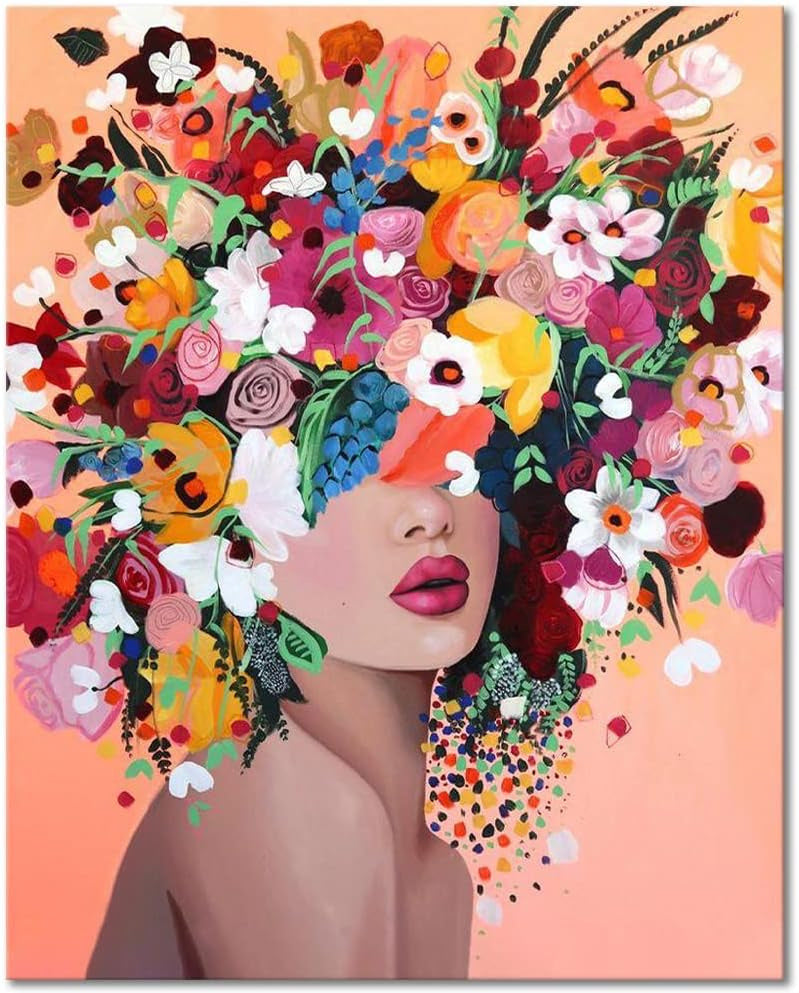
- Vibrant Petals Painting by Numbers Premium Kit (from $19.95)
- Galactic Petals Painting by Numbers Premium Kit (from $19.95)
- One with Nature Painting by Numbers Premium Kit (from $19.95)
Pick the right rose before you pick the paint
Not every rose design is beginner turf. A single bloom, or a loose bouquet of three, on a 40x50cm canvas is the gentle way in. The petals come out large, the number borders are easy to read, and you get real shading practice without going cross-eyed. Climbing roses tumbling over a wall look gorgeous framed, but they cram dozens of tiny numbered slivers into every square inch. Save those for kit number two or three.
Most rose kits land in the 24 to 36 color range. That count matters more than it sounds. A rose petal is rarely one pink. It slides from a hot magenta in the fold to a pale blush at the curled edge, and the kit uses four or five closely-related pinks to fake that gradient. If you want to see how the whole flower category is built, the floral and botanical collection is where I'd start browsing.
Work the shadows first, not the bright petals
Everyone wants to paint the pretty light pinks right away. Resist. Lay down the darkest reds and burgundies at the base of the petals first. Those shadow tones are the skeleton of the flower. Once they are down, the mid pinks have something to lean against, and you stop second-guessing where one petal ends and the next begins.
A quick order that works for me: darkest shadows, then the greens of the leaves and stem, then mid pinks, then the brightest highlights last. Leaving the light petals for the end keeps them clean, since you are not dragging a brush loaded with dark paint across them.
The petal-edge trick
Here is the thing that turns flat color blocks into a rose that looks like it might smell nice. When two neighboring pinks meet along a petal fold, paint both zones, wait maybe sixty seconds, then take a nearly-dry brush and feather the seam while both are still a touch wet. You are not repainting. You are just softening the hard line so the shades melt into each other. That feathered gradient is the whole game with petals.
Acrylics dry fast, which is a blessing and a curse. Blend in small sections and don't flood the canvas. If you want a deeper dive on this, my notes on mixing colors for smooth blending go past just roses. A dab of retarder medium, or honestly just a lightly misted canvas, buys you a few extra seconds of working time.
How long it actually takes
A 40x50cm single-rose kit runs me about 8 to 14 hours, usually four or five evenings with tea going cold beside me. The leaves eat more time than people expect because green petals, sorry, leaves have their own light-and-shadow logic. Detailed rose-garden scenes can climb past 20 hours. If you like knowing what you're in for, the breakdown in how long a kit takes to complete is worth a read before you buy.
A note on color, because roses are sneaky
Red is the hardest color to photograph and the hardest to paint convincingly. If your finished rose looks a little dull, it is almost always the highlight that's missing, not the red. That top-edge cream or pale pink is what makes the red read as velvet. Same principle as sunflowers, funny enough, where the brightest yellow does all the lifting. If bold single-flower kits are your thing, the sunflower kits use the exact same highlight logic.
Color theory sounds fussy but it saves you here. Knowing that a touch of green sits opposite red on the wheel explains why the leaves make the bloom pop. If that clicks for you, color theory basics is a short, useful read.
Framed on the wall
A finished rose is one of the few paint by numbers pieces that looks expensive. Deep reds in a thin gold or black frame read like something out of a gallery, not a craft kit. It makes a genuinely good gift, too, especially for an anniversary or a wedding.
Ready to try one? Browse the roses and the rest of the floral and botanical kits, and if you want the easiest possible starting point, filter into the beginner-friendly range first. Your one crumpled petal is coming, and it will teach you more than the perfect ones.
Frequently Asked Questions
Is a rose paint by numbers kit good for beginners?
A single rose or a small bouquet on a 40x50cm canvas is very manageable for a first-timer. The petals are large, curved shapes with clear number borders. Skip the dense multi-rose scenes until you have one kit under your belt.
How long does a rose paint by numbers take to finish?
Expect roughly 8 to 14 hours for a 40x50cm rose kit, usually spread over four or five evening sessions. Detailed climbing-rose scenes with lots of small numbered areas can push past 20 hours.
How do I paint smooth petal shading?
Paint each numbered zone first, let it set for a minute, then drag a barely-damp brush along the seam between two neighboring shades while both are still slightly wet. That soft feathering is what turns flat color blocks into a petal that looks like it curls.
What size should I buy for a rose?
40x50cm is the sweet spot. It gives the petals room without shrinking the numbers to a size that strains your eyes. Go 50x65cm only if you want a statement piece and don't mind the extra hours.