













Not every canvas needs to be a moody blended sky. Sometimes you want bold shapes, flat color, and a finish that looks like it belongs in a modern apartment. Geometric abstract kits are exactly that, and they happen to be the easiest paint by numbers you can buy. No feathering, no gradients, no agonizing over which of six near-identical dark blues you're holding.
Why these are the gentlest kits going
A geometric design is built from clean shapes, triangles, arcs, blocks, each one a single flat color. There's usually no blending at all, which removes the one thing that trips up most beginners. Color counts run lower too, often 18 to 30 pots, because the style leans on bold contrast instead of subtle shifts. If you've been intimidated by realistic kits, this is where I'd start people. It builds brush control without punishing you.
Want to paint this yourself?
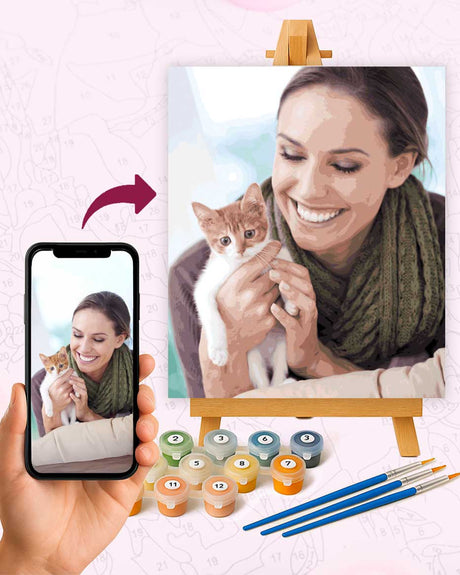
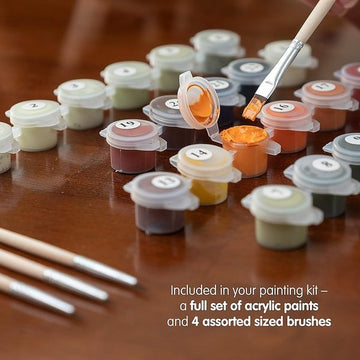
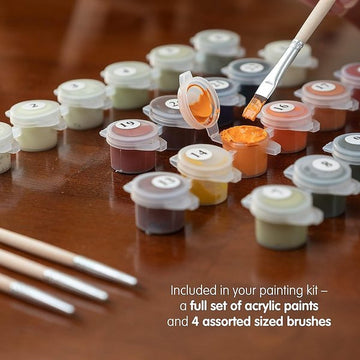
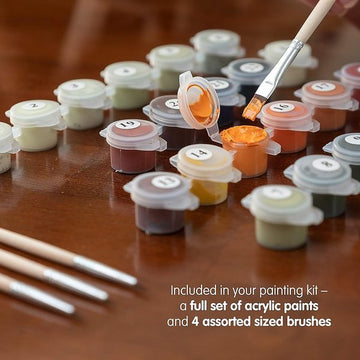
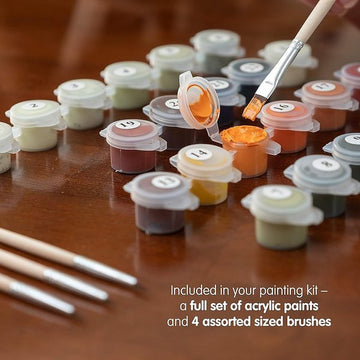
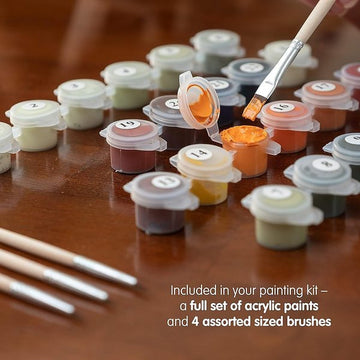
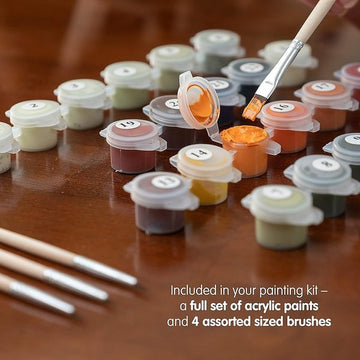
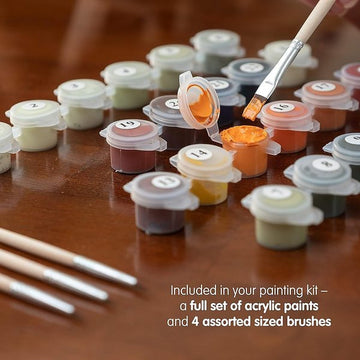
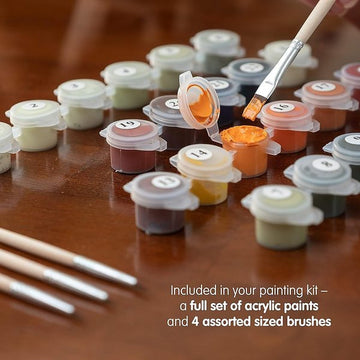
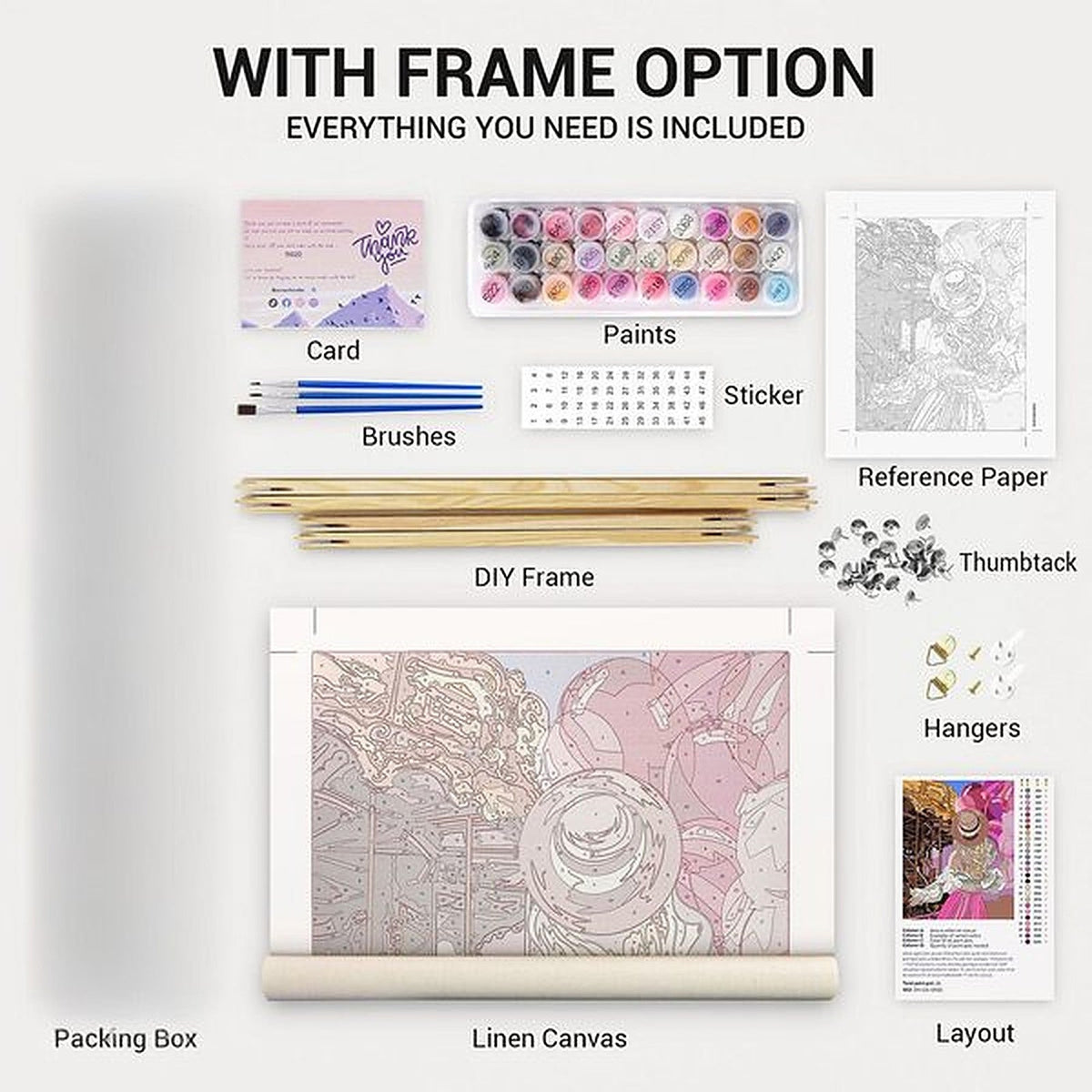
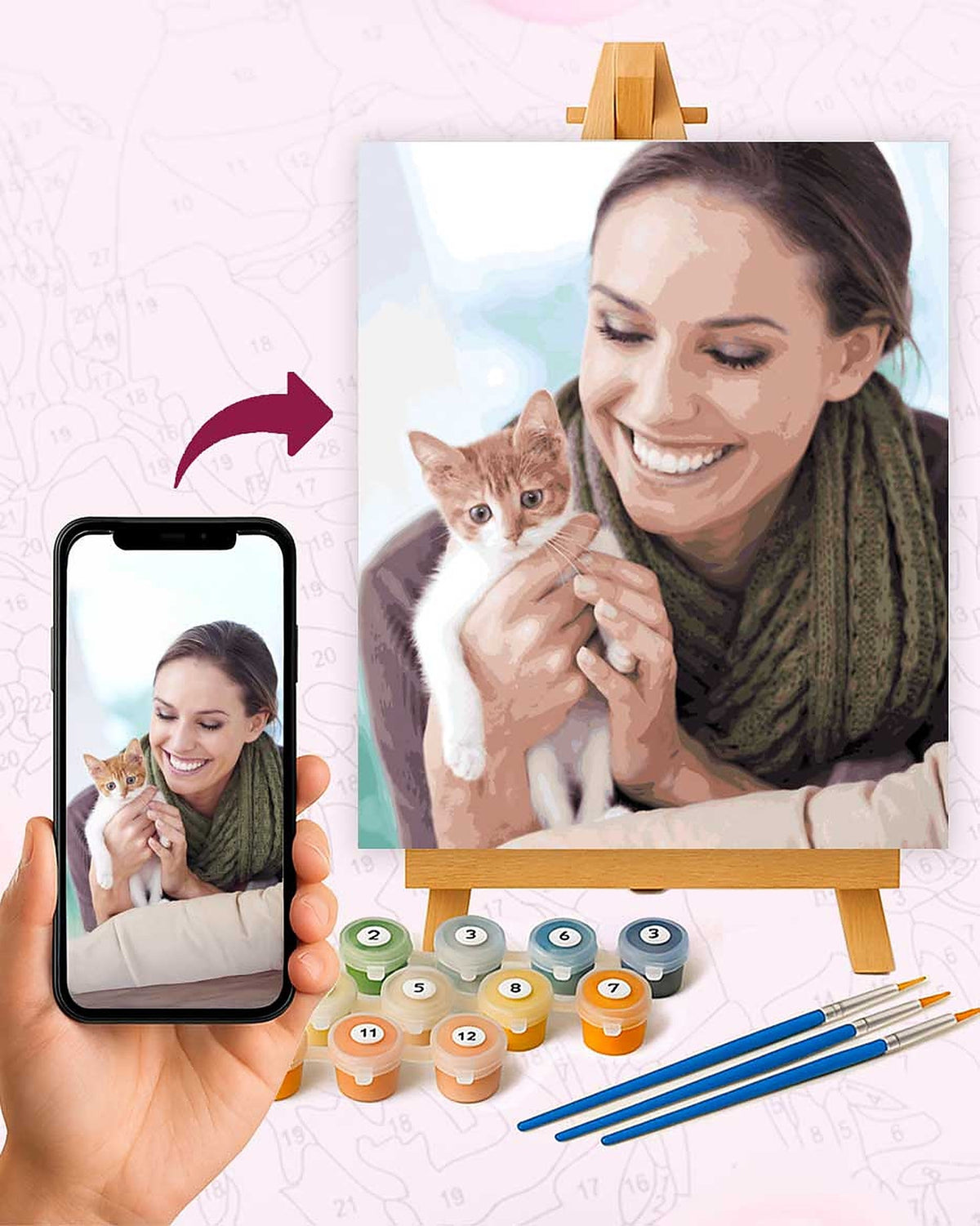
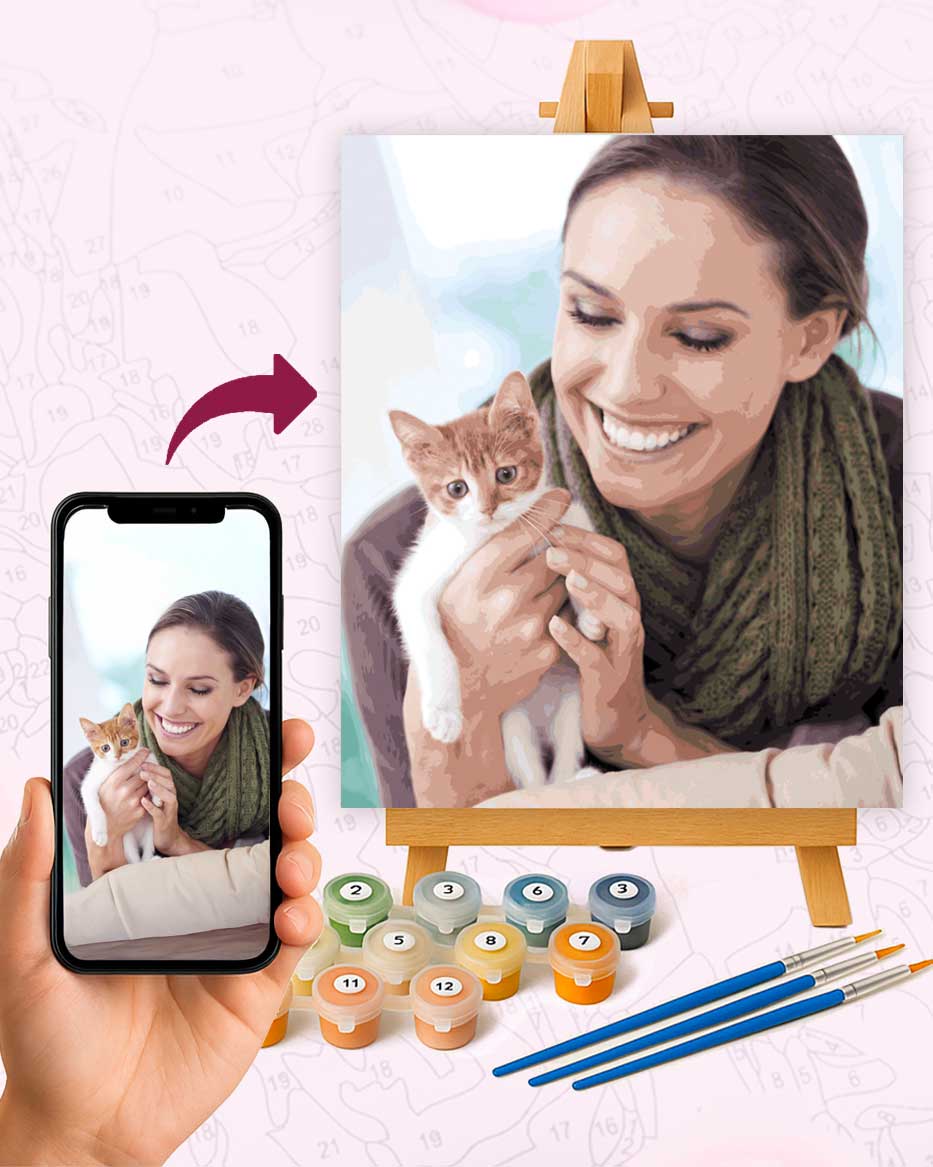
Turn one of your own photos into a numbered canvas (from $19.95). We trace it, mix the paints to match, and ship the kit with brushes.
Or pick a ready-made design:
- Geometric Rupture Painting by Numbers Kit (from $19.95)
- Bold Dawn Painting by Numbers Premium Kit (from $19.95)
- Bold and Free Painting by Numbers Premium Kit (from $19.95)
If you're brand new to the hobby entirely, the broader abstract paint by numbers overview is worth a read for how this style fits next to looser, painterly abstracts.
The one skill that matters: crisp edges
Since there's no blending to hide behind, sharp borders are everything. Sloppy edges are the only way a geometric piece goes wrong. Two habits fix that. First, outline each shape before you flood the middle, using a small flat or angled brush loaded lightly so it doesn't pool at the line. Second, let a shape dry before you paint the color next to it. Wet-against-wet on a crisp border bleeds, and once two blocks bleed into each other the whole clean look is gone.
An angled brush is worth buying if your kit only came with rounds. It hugs straight edges far better and cuts your outlining time in half.
Color choices and contrast
The kits are designed so the blocks sit next to each other with real punch, deep navy against mustard, terracotta against sage. That contrast is doing the heavy lifting, so paint the colors at full strength; don't water them down. A little grounding in color theory helps you understand why those pairings pop, and it'll make you appreciate the design choices as you fill them.
Two coats beat one on flat blocks
Large flat areas are where thin acrylic betrays you, because a single coat over a printed number grid often lets the lines and numbers ghost through, especially under pale colors like yellow or sky blue. Do a first thin coat, let it dry fully, then a second. It sounds tedious but each coat on a big block goes fast, and two thin coats look far cleaner than one thick gloopy one that dries with ridges. Darker colors usually cover in one, so save your patience for the light blocks where it actually matters.
Finishing for a modern look
Geometric pieces look their best clean and flat, so a light matte varnish suits them better than a glossy one that catches glare on all those big color fields. They also shine as a set. Two or three geometric canvases in a row make a strong feature wall, and they're quick, a 40x50cm geometric fills in about 6 to 10 hours, faster than almost anything realistic. Because the style is so graphic, it slots easily into a modern room; if you're matching art to your decor, the same logic that works for pairing colors in a space applies here, bold blocks read best against a plain wall where nothing competes with them.
Where to start
Have a look through the abstract collection for geometric designs, and if this is your first canvas, cross-check the beginner-friendly kits so you land on something with larger shapes. If you like bold, graphic color, the pop art kits scratch a similar itch with flat blocks and high contrast.
Common questions
Are these good for beginners? The best, honestly. Flat blocks, no blending, crisp lines.
How do I keep edges sharp? Outline first with a small flat or angled brush, and let neighbors dry before painting against them.
How many colors? Usually 18 to 30, fewer than realistic kits.
Want a modern piece you can finish this weekend? Pick a geometric design from the abstract collection and keep those edges crisp.
Frequently Asked Questions
What makes geometric abstract kits good for beginners?
The shapes are large and clearly outlined with no blending required, so you fill flat blocks of color and stay inside crisp lines. It's the most forgiving style of paint by numbers.
How do I keep the edges of geometric shapes sharp?
Use a small flat or angled brush, load it lightly, and paint the outline of each shape first before filling the middle. Let neighboring colors dry before painting against them to avoid bleeding.
How many colors are in a geometric abstract kit?
Often fewer than realistic kits, around 18 to 30, since the style relies on bold flat blocks rather than gradients.