















A nebula is the most forgiving space subject and the most unforgiving at the same time. Forgiving because there's no wrong shape; clouds of gas don't have a correct outline. Unforgiving because the whole effect rests on how the colors melt into each other. Paint the sections as separate blocks and you get a stained-glass window. Blend them and you get something that looks lit from inside.
Why the edges matter more than the shapes
On most nebula canvases you'll count 28 to 40 colors, heavy on pinks, magentas, teals, deep blues, and a few warm golds near the bright core. The numbers hand you the placement. What they can't do is tell you to soften every border you paint. That part is on you, and it's the single thing that separates a nebula that looks like a poster from one that looks like paint sitting on top of paint.
Want to paint this yourself?
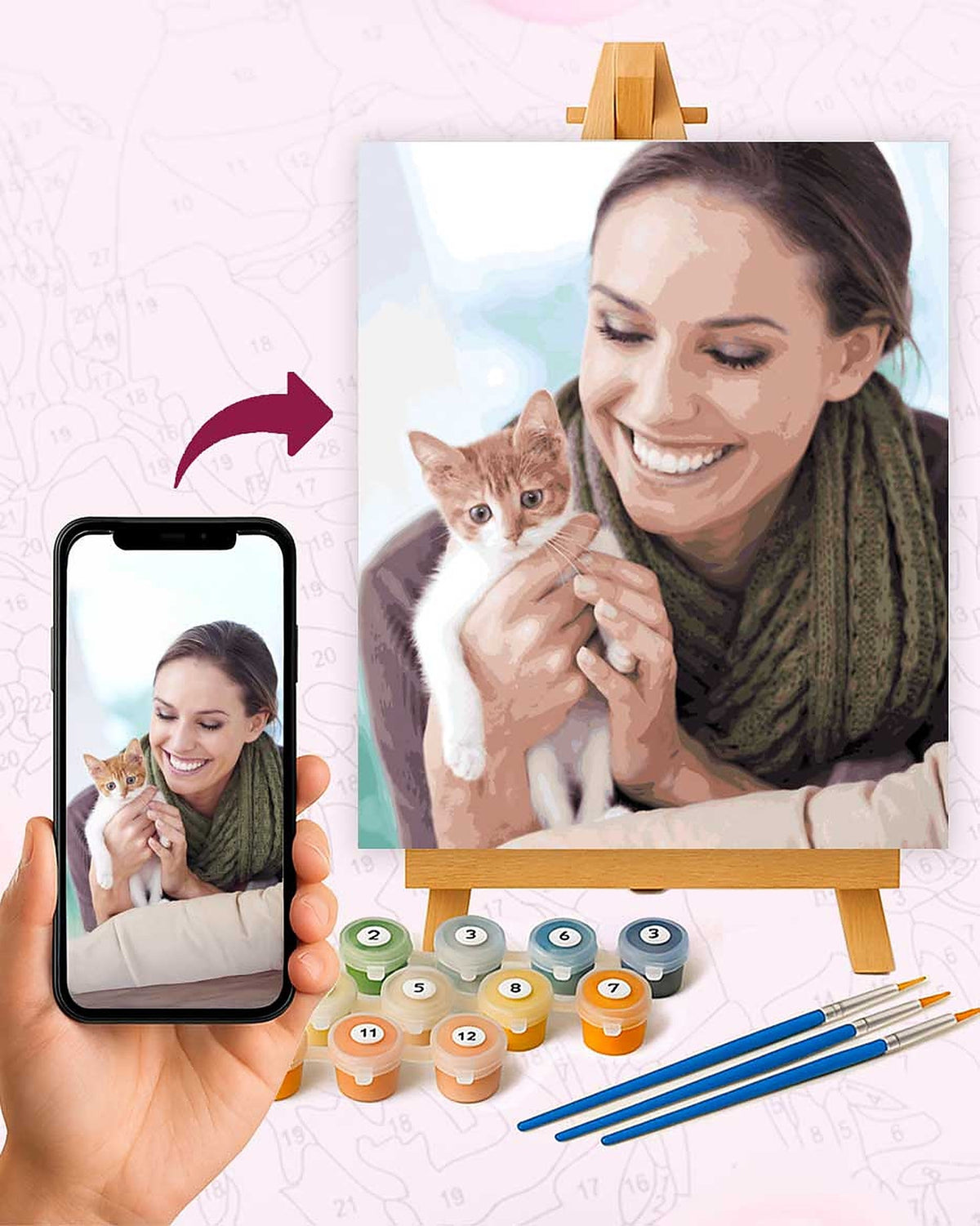
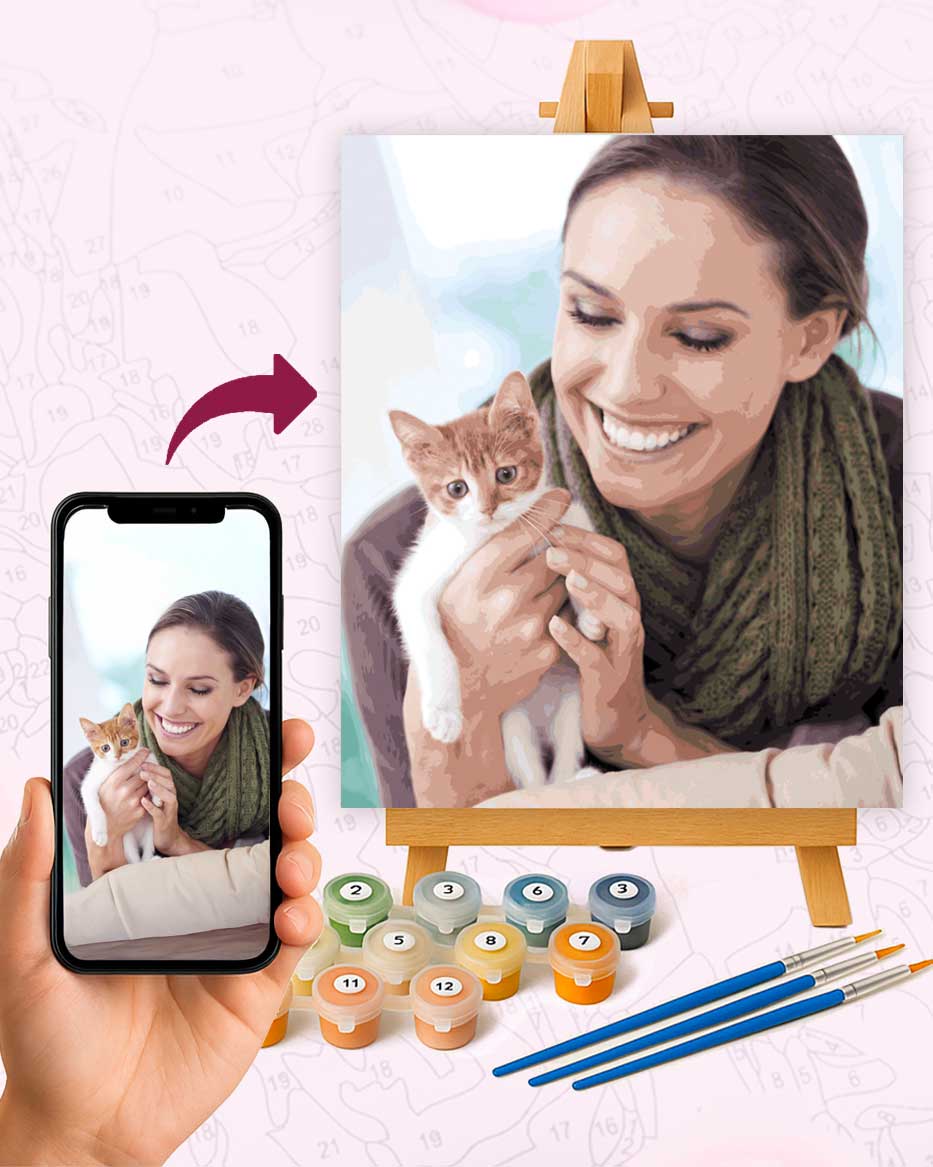
Turn one of your own photos into a numbered canvas (from $19.95). We trace it, mix the paints to match, and ship the kit with brushes.
Or pick a ready-made design:
- Dreamy Pastel Clouds - Premium Art Collection (from $19.95)
- Vibrant Nebula Painting by Numbers Premium Kit (from $19.95)
- Twilight Between Clouds - Paint by Numbers (from $19.95)
Work adjacent colors while they're wet. Fill one section, fill its neighbor, then run a barely-loaded small brush along the seam with light back-and-forth strokes until the hard line disappears. It's slow. On a 40x50cm nebula I'll spend 15 to 22 hours, most of it on these seams.
The core is your light source
Real nebulae usually have a bright heart where new stars are forming. Treat that spot as your light source and let everything get darker and cooler as it moves outward. If the kit gives you a pale yellow or near-white for the center, save it for near the end and build up to it in thin layers rather than one thick blob. Thin acrylic layers glow; thick ones look chalky.
For the coverage side of layering, the walkthrough on layering paint for better coverage is genuinely useful here, because a nebula wants several thin passes, not one heavy one.
Dark first, sparkle last
Same rule as any night sky. Lay in the deep background and the darkest cloud edges first, let them dry, then work inward toward the glow, and add stars dead last. If you're unsure which end to start from, the piece on painting light to dark or dark to light settles the debate for space subjects: dark background down, light built on top.
Pick a size that gives you room
I'll say it plainly: don't buy a small nebula. The blend zones are the whole point, and on a cramped canvas they turn into fiddly little slivers you can't feather. Go 40x50cm or bigger. You'll find a good range in the space collection, and the popular sizes tend to sit in the best sellers for a reason.
A note on patience
Nebulae reward people who slow down. If you fill it like a coloring book you'll be disappointed, and honestly you'd have more fun with a bold, flat-color subject instead. But if you like the meditative rhythm of feathering one seam at a time with acrylic that smells faintly like a school art room, a nebula is one of the most satisfying things you can paint by numbers.
Manage your paint or it'll dry on you
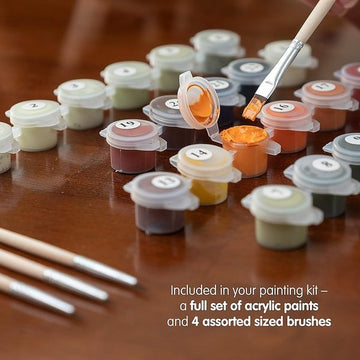
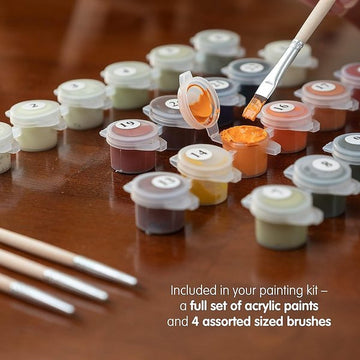
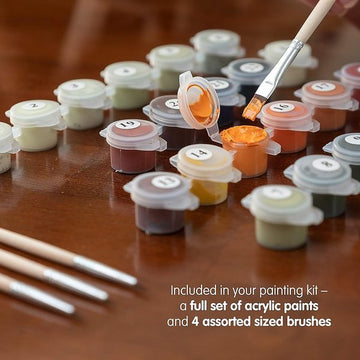
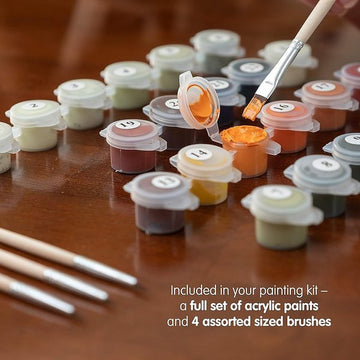
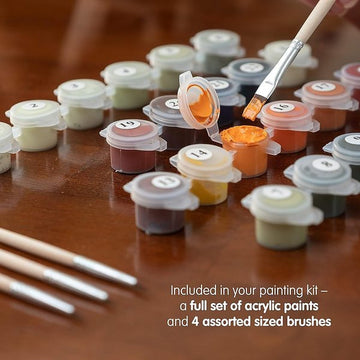
Because you're working wet-on-wet, the pots dry out fast if you leave the lids off. Only open the two or three colors you're actively blending, and mist them with a spray of water if a session runs long. Acrylic skins over in about ten minutes on a warm day. I keep a damp paper towel over the open pots between strokes, an old trick that saves you from tossing half a pot of magenta that turned to rubber. Work one region of the nebula at a time rather than jumping around, so you're never fighting drying edges in three places at once.
How to frame it so the glow survives
A finished nebula deserves better than a clip frame. The dark background can look muddy under glass that catches glare, so a simple floating frame with no glass, or a light satin varnish and a slim black frame, keeps the colors reading true. Hang it somewhere with soft side lighting rather than a harsh overhead, and the core will genuinely seem to glow across the room.
Common questions
Why are nebulae harder? No hard edges in real life, so everything hinges on blending the sections together.
Can a beginner do one? Yes, on a larger canvas, after a little feathering practice on scrap.
Best brush? A size 0 to 2 round for the clouds; the wide flat brush only for big dark areas.
Want to try one? Start with a mid-to-large nebula from the space and galaxy kits and give yourself two relaxed weeks with it.
Frequently Asked Questions
What makes nebula kits harder than other space paintings?
The color clouds have no hard edges in real life, so a nebula kit lives or dies on how well you blend the numbered sections into each other. It's more about soft transitions than staying in the lines.
Can a beginner paint a nebula kit?
Yes, but pick a larger canvas so the blend zones aren't cramped, and practice feathering on a scrap first. A 40x50cm nebula is friendlier than a tiny 30x40cm one.
What brush works best for a nebula?
A small round brush, size 0 to 2, for feathering the color transitions. The wide flat brush from the kit is fine for the big dark areas but too clumsy for the clouds.


