












A tiger is the show-off of the wildlife shelf. That orange practically glows, the stripes give it instant graphic punch, and a finished tiger commands a wall the way few animal pieces do. It is also, I will be straight with you, one of the more demanding kits in the range. Worth it, but not a lazy Sunday.
The popular designs: the head-on portrait, all intensity and eyes, which is the big statement piece. The Bengal in tall grass, more of a scene with a busier background. The white tiger, cooler palette, blues and greys instead of orange, striking in a modern room. And the cub, softer and cuter, the one people gift to kids.
Want to paint this yourself?
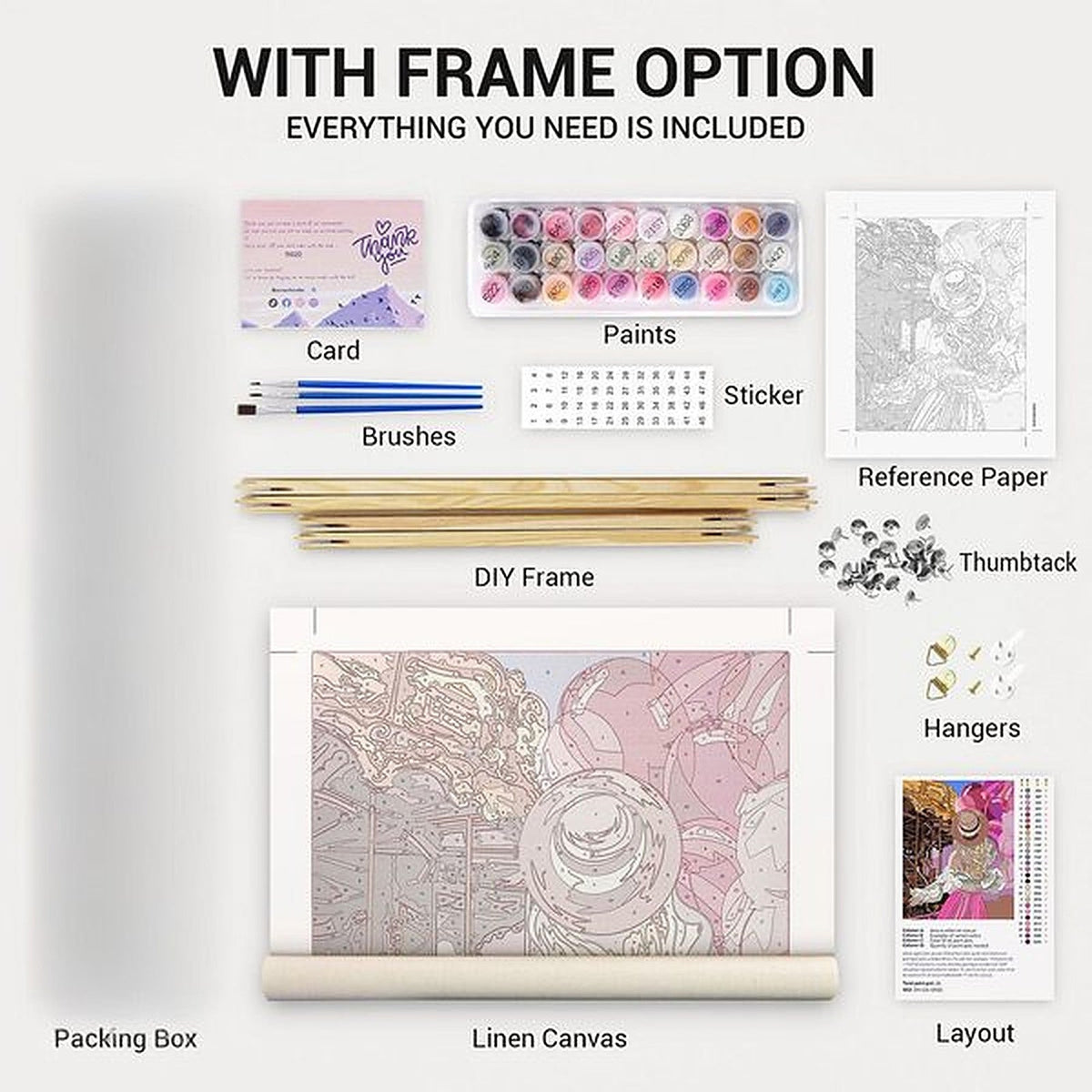
Turn one of your own photos into a numbered canvas (from $19.95). We trace it, mix the paints to match, and ship the kit with brushes.
Or pick a ready-made design:
- Tiger's Kingdom Premium Collection Canvas Art Kit (from $19.95)
- One with Nature Painting by Numbers Premium Kit (from $19.95)
- The Orange Coast Painting by Numbers Kit (from $19.95)
Stripes and fur, up close
A tiger portrait at 40x50cm usually comes with 30 to 42 colors, and a lot of them are the oranges, ambers, browns, and creams that build the fur. The stripes are the signature and they are also where beginners struggle, because the black shapes wind through the orange in narrow numbered slivers. Paint the orange base fields first, let them dry, then lay the black stripes over the dried edges so nothing bleeds. If your black keeps creeping past the lines, slow down and read our tips on painting small areas cleanly first.
Time-wise, expect 16 to 24 hours for a detailed tiger. This is a proper intermediate to advanced project. If that number makes you nervous, either size down to 30x40cm or start on something gentler and work up. There is no medal for suffering through a kit that is above your level.
The eyes and nose seal it
Tiger eyes are pale gold, almost glowing, with a sharp black rim. Like every wildlife portrait, they go on near the end over a dry face, with the white catchlight last. The pink nose and the white muzzle whiskers do a surprising amount too. Get those three details right and the animal looks like it could turn its head.
A quick word on the white tiger, because it deserves its own mention. Instead of the fiery orange, you get a palette of whites, pale blues, and cool greys, with the black stripes even more dramatic against the pale coat. It is a touch easier than the orange version, since there are fewer warm shades to juggle, and it suits a modern, monochrome room better than a classic Bengal. If your walls are already gray and blue, the white tiger drops in without a fight.
Which tiger to buy
If you have painted a few kits and want a challenge that shows off, the head-on orange portrait is the one. Newer to this but set on a tiger? The cub or the grass-scene version spreads the difficulty out with bigger background areas. Not sure? Check how to choose your difficulty level before committing.
Tigers sit in our animals and wildlife collection next to the other big cats. If you are a cat person at heart, the same feline attitude runs through our cat lover kits and our lion designs, and a tiger-and-lion pairing makes a genuinely bold statement wall.
Because a finished tiger looks so impressive, it is also a strong gift for a confident painter. The boxed sets are in our gift kits.
Bottom line
The tiger rewards effort more than almost anything else we sell. It takes real hours and a steady hand on those stripes, but the finished piece looks like gallery work. If you are ready for it, grab a 40x50cm tiger portrait from the wildlife collection, block in the orange first, and treat the stripes and eyes as the main event. Rush those and you lose the whole animal.
Common questions
Are tiger paint by numbers kits difficult?
A tiger portrait is an intermediate to advanced project. The stripes wind through the orange fur in narrow sections and the kit can carry 30 to 42 colors. Beginners set on a tiger should start with a cub or a grass-scene design.
How long does a tiger kit take to complete?
Expect 16 to 24 hours for a detailed 40x50cm tiger. Sizing down to 30x40cm reduces both the time and the density of the stripe work.
How do I paint tiger stripes cleanly?
Paint the orange base fields first and let them dry, then lay the black stripes over the dried edges. Working wet-into-wet is what causes the black to bleed into the orange.