















There is something almost meditative about painting a lavender field, which is fitting, since the real thing is supposed to calm you down. Row after row of purple, a Provence farmhouse in the distance, maybe a lavender sky at dusk. It is the kind of scene that looks like a vacation you keep on your wall.
It is also sneakier than it looks. All that purple can turn into a flat lilac mush if you don't respect the gradient. Let me save you that mistake.
Want to paint this yourself?
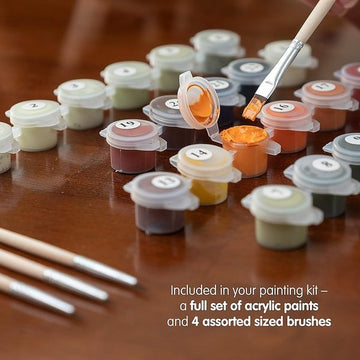
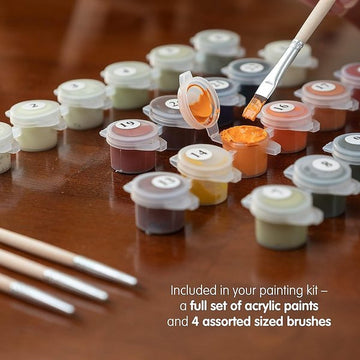
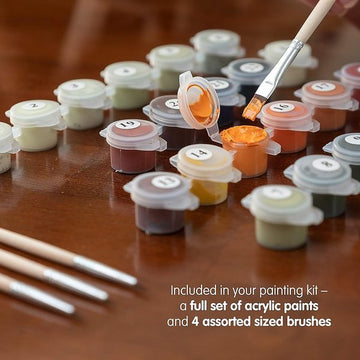
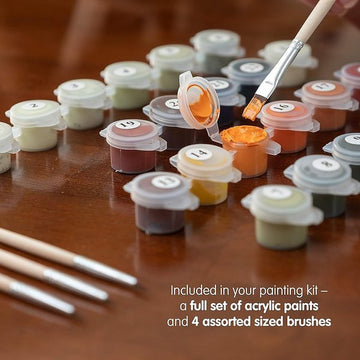
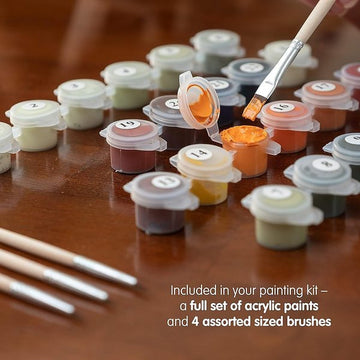
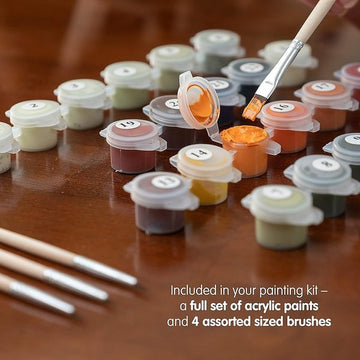
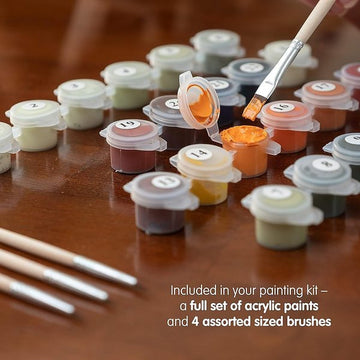
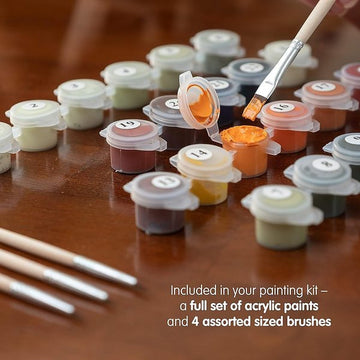
Turn one of your own photos into a numbered canvas (from $19.95). We trace it, mix the paints to match, and ship the kit with brushes.
Or pick a ready-made design:
- One with Nature Painting by Numbers Premium Kit (from $19.95)
- Coastal Lavender Painting by Numbers Kit (from $19.95)
- Purple Horse Painting by Numbers Premium Kit (from $19.95)
Purple is never just one purple
A convincing lavender field uses somewhere between five and eight shades of purple, from a deep violet in the shadowed rows to a dusty gray-lilac where the field meets the horizon. Most lavender kits ship with 28 to 36 colors precisely because of this. The rows closest to you are darker and more saturated. The ones near the farmhouse fade toward gray. Paint them in that order, front to back, dark to light, and the field suddenly has distance in it.
If you get that atmospheric fade wrong, the whole thing looks like a purple carpet. Get it right and people ask if you painted it freehand. The floral and botanical collection has a few different lavender compositions, and the ones with a visible horizon line teach this fade best.
The rows are the whole trick
Lavender fields are painted in stripes, and those stripes need to converge slightly toward the vanishing point. The kit handles the drawing for you, thankfully. Your job is to keep the rows distinct. Let one row dry before painting the neighbor, or the purples bleed together and you lose the corduroy texture that makes a lavender field read as a lavender field.
Use a small flat brush for the rows and a rounder one for the fluffy tops. The individual lavender stalks near the foreground are the fun part, little dabs of lighter violet flicked over the darker base once it is dry.
Don't forget the green and the sky
New painters get tunnel vision on the purple and rush the rest. But the thin strips of green between the rows are what make the purple pop, and the sky sets the entire mood. A warm sunset sky with peach and gold makes the field feel like a summer evening. A cool blue sky makes it feel like fresh morning. Both are lovely, just commit to one temperature and let the field agree with it. If color relationships like this interest you, color theory basics explains why the green-purple pairing works so well.
Time and size
A lavender field on a 40x50cm canvas runs about 12 to 18 hours. The rows are repetitive, which some people find soothing and others find tedious, so know yourself. If you want the calm without the marathon, go for a tighter composition, a single lavender bundle or a small bouquet in a jar, which cuts the time roughly in half. For a bigger statement piece over a couch, size up to 50x65cm, though check the time expectations in how long a kit takes before you commit a month of evenings.
Why lavender is the ultimate calm-down project
I keep coming back to lavender kits when work is loud. The repetitive rows quiet my brain the same way the actual scent is supposed to. There is a reason people lean on this hobby for stress, and a slow purple field is about as gentle as it gets. If that appeals, the wellness angle in the stress relief guide matches the mood of this subject perfectly.
A finished lavender field looks incredible in a bedroom or a bathroom, anywhere you want a soft, restful feel. The dusty purples work with almost any neutral decor. It also makes a thoughtful gift for anyone who loves Provence, gardening, or just needs a bit of calm on their wall. Tuck one into a gift set and you are giving someone a few quiet evenings.
Pick your lavender from the floral and botanical kits and put on something slow. This is the one flower I'd tell you to paint on purpose when you need to unwind.