








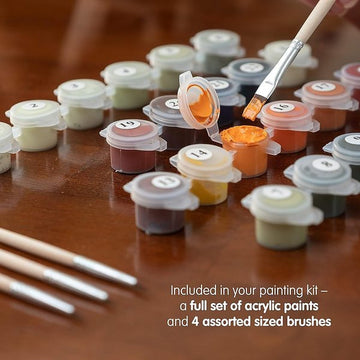






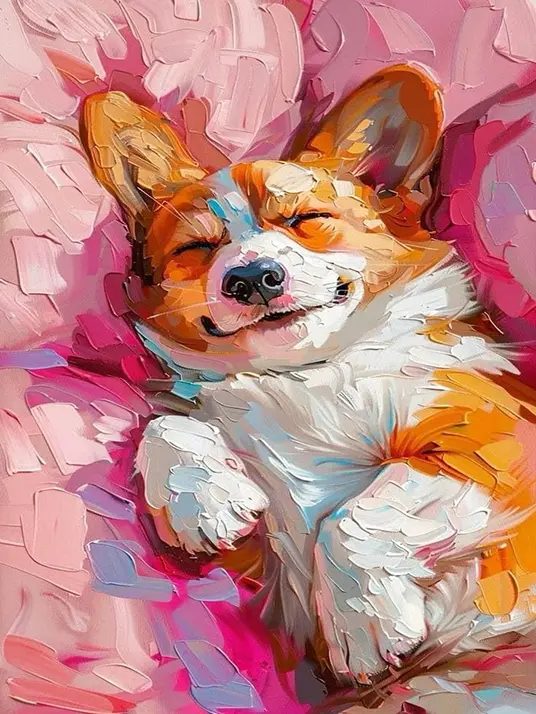




A streaky paint by numbers usually comes down to three things: paint that is too thin, a coat that dried before you smoothed it, or a brush dragging half-empty across the canvas. The fix is almost always a second, thicker, more patient coat. Streaks are the single most common complaint from new painters, and they are also one of the easiest problems to solve once you know what is causing them.
Why streaks happen in the first place
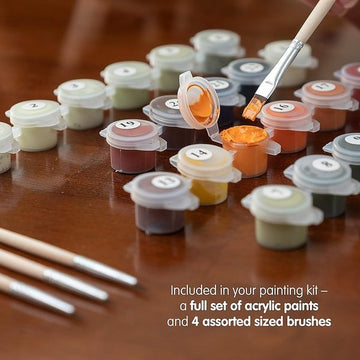
Acrylic paint is opaque, but only when you give it enough body. When the paint is too watery, whether because the pot came thin or you added too much water, light passes through it and the printed lines and canvas texture show through as streaks. The same thing happens when your brush is running dry. You are dragging pigment rather than laying it down, so it goes on unevenly. And because acrylic dries fast, if you go back to blend a spot that has already started to set, you tear the surface and leave drag marks.
Want to paint this yourself?
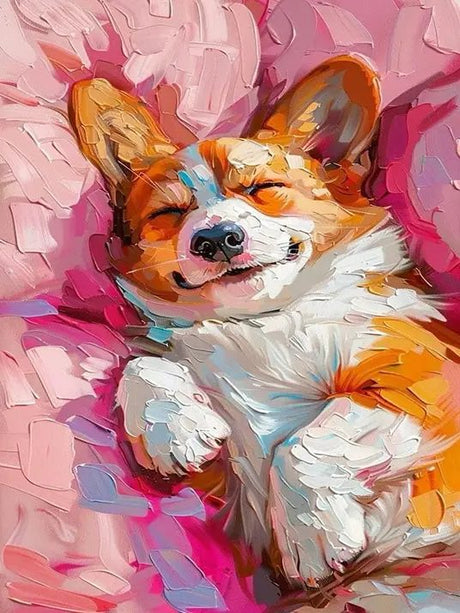
Turn one of your own photos into a numbered canvas (from $19.95). We trace it, mix the paints to match, and ship the kit with brushes.
Or pick a ready-made design:
- Perpetual Look Painting by Numbers Premium Kit (from $19.95)
- Ocean's First Light Painting by Numbers Kit (from $19.95)
The fixes, in order of what to try first
Start with a second coat. This alone solves most streaking. Let the first pass dry fully, 20 to 30 minutes, then apply a fresh, even layer of the same color. Two coats of a mid-range acrylic will cover almost anything. Do not try to fix streaks while the paint is still tacky, because you will only make it worse.
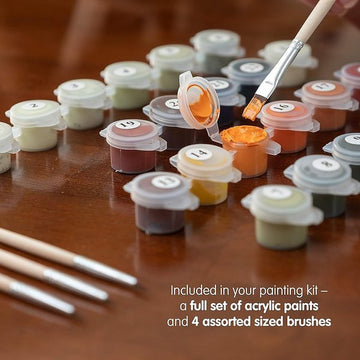
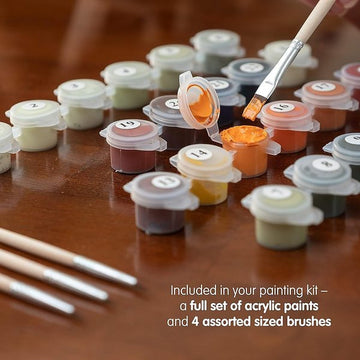
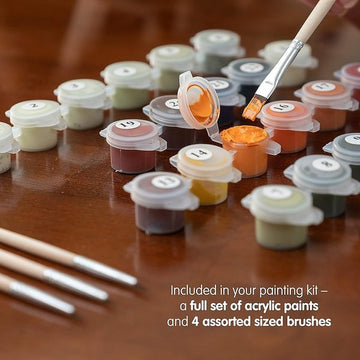
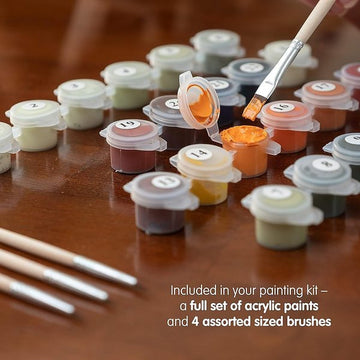
Next, check your paint consistency. It should feel like soft yogurt, thick enough to hold a slight ridge from the brush that then settles flat. If it is watery, leave the pot open for a minute or two to thicken slightly, or skip the water entirely. If it has gone too thick or dried out, our guide on reviving dried paint shows how to bring it back.
Then load your brush properly. A common beginner habit is starving the brush to make the paint last. Dip enough that the bristles carry a full, even amount, and reload before the brush runs dry. You want to float the paint on, not scrub it in.
Technique that prevents streaks before they start
Direction matters more than people expect. Lay your strokes in one consistent direction within each region, and on larger areas like skies, work in the same orientation across the whole section. Mixed, crisscrossing strokes catch the light differently and read as streaks even when coverage is fine. For big background areas, thin, layered coats beat one thick gloopy pass every time. We go deep on this in layering for better coverage.
Brush choice plays a part too. A brush that is too big for a region forces you to overwork the edges, and a splayed, worn brush leaves tracks. If your streaks cluster in small detailed spots, the brush is often the culprit rather than the paint.
When streaks are actually the kit's fault
Sometimes it is not you. Cheap kits ship low-pigment paint that will streak no matter how carefully you work, because there simply is not enough pigment to cover in one or even two coats. If you are fighting streaks on every single color, the kit is the problem, not your technique. This is one of the clearest tells of a budget kit versus a quality one. Our collections are stocked with high-coverage acrylic for exactly this reason, and if you want a smoother experience from the start, the beginner-friendly kits are the safest bet. For your next upgrade, the best sellers use thicker, higher-pigment paint that covers in a single confident coat. Want to raise your whole game? Our guide on going from beginner to pro pulls the rest together.
Frequently Asked Questions
Why does my paint by numbers look streaky?
Streaks are usually caused by paint that is too thin, a brush running dry, or trying to blend a coat that has already started to dry. Thin paint lets the printed lines and canvas texture show through, and a starved brush drags pigment unevenly.
How do I fix a streaky paint by numbers?
Apply a second coat. Let the first coat dry fully for 20 to 30 minutes, then lay down a fresh, even layer of the same color. Two coats of quality acrylic cover almost any streaking. Do not try to fix streaks while the paint is still tacky.
What consistency should paint by numbers paint be?
It should be about the consistency of soft yogurt, thick enough to cover in one coat but smooth enough to spread evenly. Watery paint streaks because light passes through it. Avoid adding water unless the paint has dried out and needs thinning.
Can a cheap kit cause streaking no matter what I do?
Yes. Budget kits often ship low-pigment paint that will not cover in one or two coats regardless of technique. If every color streaks despite proper coats and consistency, the kit itself is the problem, and a higher-pigment kit will solve it.