












If a full galaxy feels like too much blending for one project, the moon is your way in. It's still a night sky, still that satisfying dark-canvas drama, but the moon itself is mostly grays and the work is steady rather than nerve-wracking. My mother-in-law, who swore she couldn't paint, finished a lunar kit in a week and now it's framed over her stairs.
The surface is grays, and there are more than you'd think
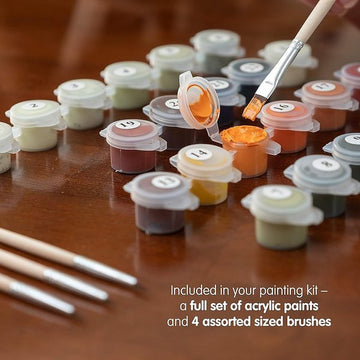
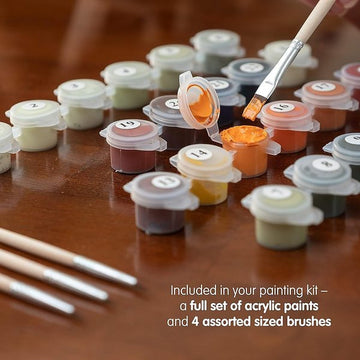
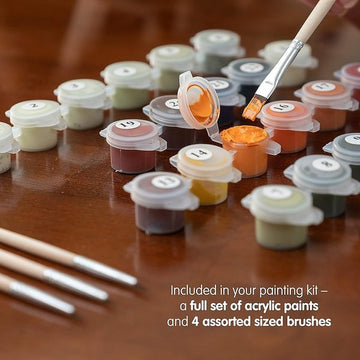
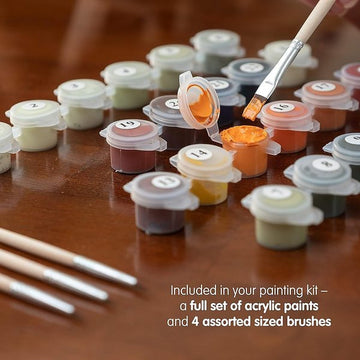
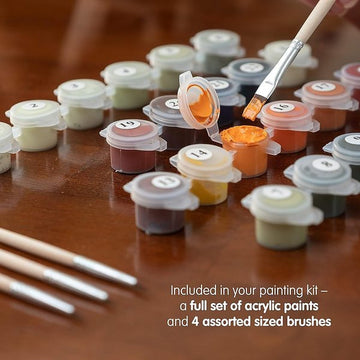
Pop the lid on a moon kit and you'll find a surprising run of grays, warm grays, cool grays, a few near-whites, and darker charcoals for the crater shadows. A standard canvas has maybe 20 to 28 colors, lighter than a galaxy. The numbered sections already do the hard part by mapping every crater as a pattern of light and shadow. Your only job is to keep the borders between grays a touch soft instead of razor sharp, so the surface reads as rounded rock and not a flat map.
Want to paint this yourself?
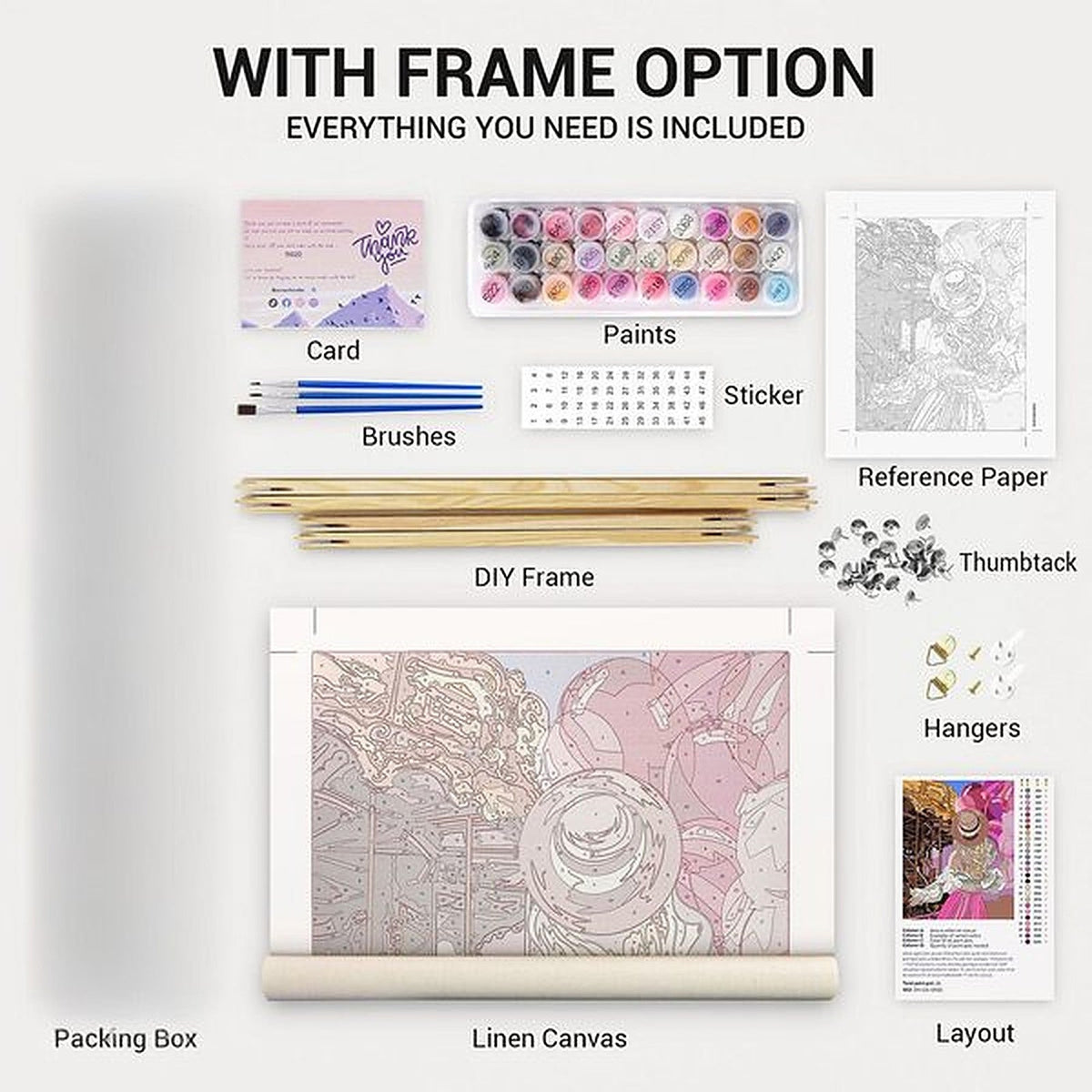
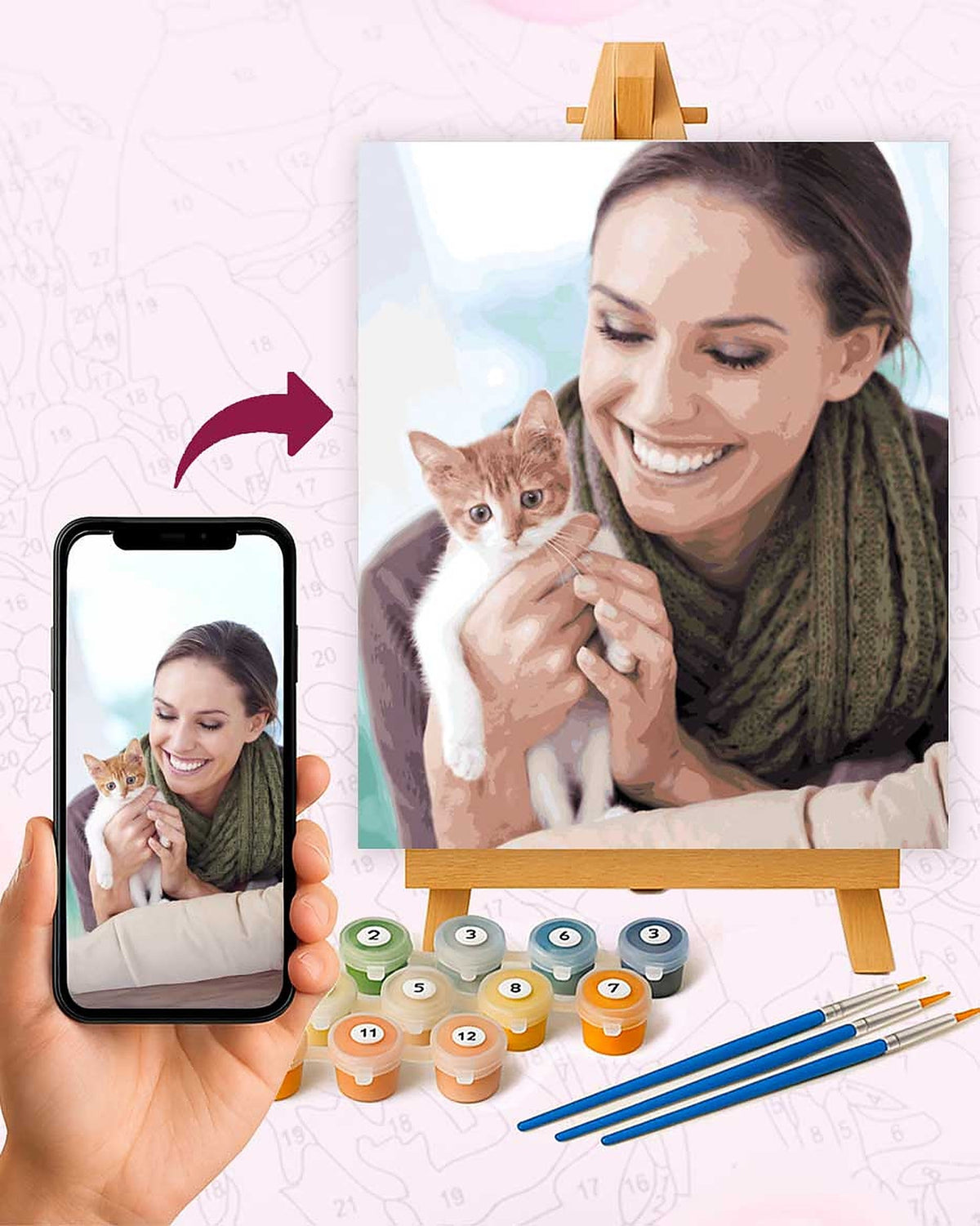
Turn one of your own photos into a numbered canvas (from $19.95). We trace it, mix the paints to match, and ship the kit with brushes.
Or pick a ready-made design:
- City of Night Glow Painting by Numbers Kit (from $19.95)
- Lunar Princess Painting by Numbers Premium Kit (from $19.95)
- Red Lunar Eclipse Painting by Numbers Kit (from $19.95)
Shadows carry the depth
People tend to paint crater shadows too timid. Let them go as dark as the chart says, even when it looks like a lot. The contrast between a bright rim catching light and a deep shadowed bowl is what makes the moon look three-dimensional. If you're nervous about it, glance at color theory basics for why that light-and-shadow relationship matters so much.
The glow around the moon
A moon floating in a flat black sky looks pasted on. Most kits build a faint halo into the numbers, a ring of slightly lighter blue-gray fading out from the edge of the moon into the dark. Paint that ring while the surrounding sky is still wet and feather it outward so there's no visible line. A number 2 round brush and a light touch. That soft halo is the difference between a sticker and a moon.
Stars and the deep sky
Do the dark sky first, let it dry, add the halo, then finish with stars on the smallest brush. Keep stars sparse near the moon; its glow would wash them out in real life anyway. If you enjoy the night-sky feel and want to go bigger next, a Starry Night kit is a natural step up in swirl and drama.
Getting the grays to read as one surface
Here's a subtle thing that separates a good moon from a great one. All those grays should feel like they belong to the same rock, so keep your brush clean between colors and don't let a warm gray get muddied by leftover charcoal on the bristles. Rinse and blot every time you switch. If a couple of adjacent gray sections look almost identical on the chart, trust the numbers anyway; the tiny shift is deliberate and it's what gives the surface its gentle roll. Work the lighter grays with slightly thicker paint and the shadow grays a touch thinner, so the highlights sit up and the shadows sink back.
Two moods you can paint
Moon kits tend to come in two flavors. There's the crisp, clinical full moon on near-black sky, almost photographic, and there's the softer romantic version with a warm halo, a few clouds, maybe a silhouette of trees or a mountain along the bottom. The first is all about clean gray detail. The second leans on that glowing halo and forgives a looser hand. Pick based on how you like to paint. If you enjoy precise little sections, go clinical. If you'd rather blend a soft glow and relax, go romantic.
Who it suits
The moon is genuinely beginner-appropriate, more so than a nebula or galaxy. There's no wild color blending, just steady gray work and one soft halo. Plan for 8 to 14 hours on a 40x50cm, and go with that size or larger so the crater sections aren't tiny. You'll find lunar and full-moon designs in the space collection, and it makes a genuinely nice gift, the kind of thing that ends up in the best sellers around the holidays.
Common questions
How do I paint the craters? Follow the numbered light-and-shadow shapes, keep edges slightly soft, and don't be shy with the dark rims.
What size? 40x50cm or larger so the surface detail has room.
How long? Around 8 to 14 hours of steady work.
Want a calm night-sky project to start with? A lunar kit from the space collection is about the gentlest way into painting the dark canvas.
Frequently Asked Questions
How do you paint the moon's craters in a paint by numbers kit?
The numbered sections already map the craters as light and shadow shapes. Keep the borders slightly soft rather than sharp, and let the shadowed rims sit a shade darker than you think; that's what gives the surface depth.
What size moon kit should I get?
A 40x50cm gives the surface detail room to read. Smaller canvases squeeze the crater shapes into tiny sections that are harder to paint cleanly.
How long does a moon paint by numbers take?
Usually 8 to 14 hours. The moon surface itself is a lot of small gray sections, which is steady work rather than difficult work.