














Leonardo da Vinci started the Mona Lisa around 1503 and, depending on which historian you trust, was still fiddling with it years later. He never handed it over to the man who commissioned it, a Florentine silk merchant named Francesco del Giocondo, whose wife Lisa is almost certainly the woman in the frame. Leonardo carried it around with him instead. It ended up in the French royal collection, which is how a small Italian portrait wound up behind bulletproof glass at the Louvre with a crowd of phones pointed at it every single day.
It is smaller than people expect, about 77 by 53 centimeters, painted on a poplar panel. The magic is a technique Leonardo more or less pioneered called sfumato, from the Italian for smoke. No hard lines anywhere. The edges of her face, the corners of her mouth, the shadows under her eyes, they all dissolve into one another with no visible transition. That is why the smile seems to change. Your eye cannot find the exact edge of it.
Want to paint this yourself?
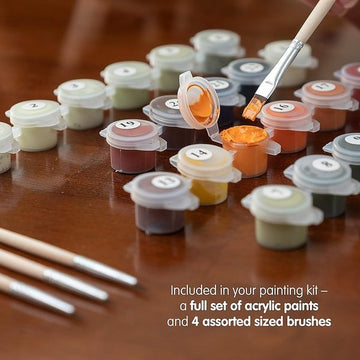
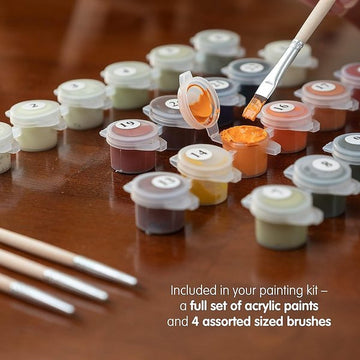
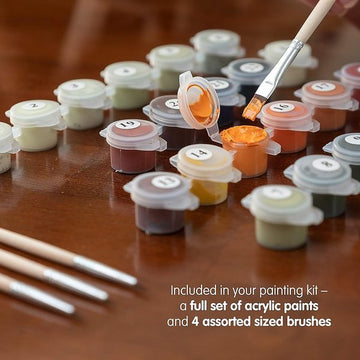
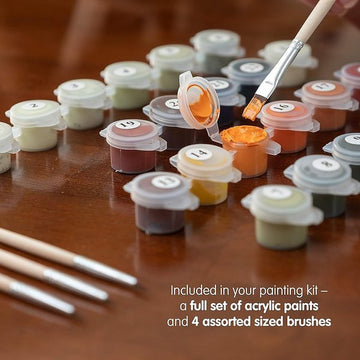
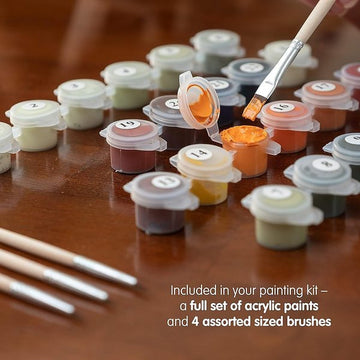
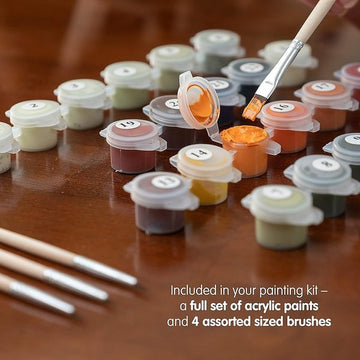
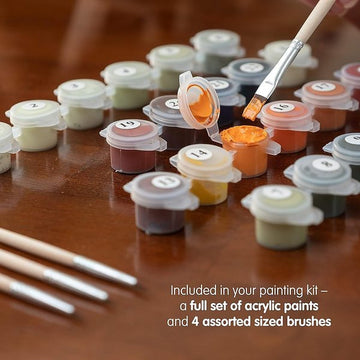
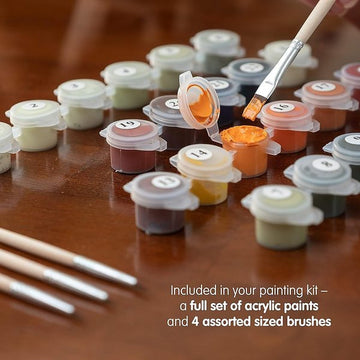
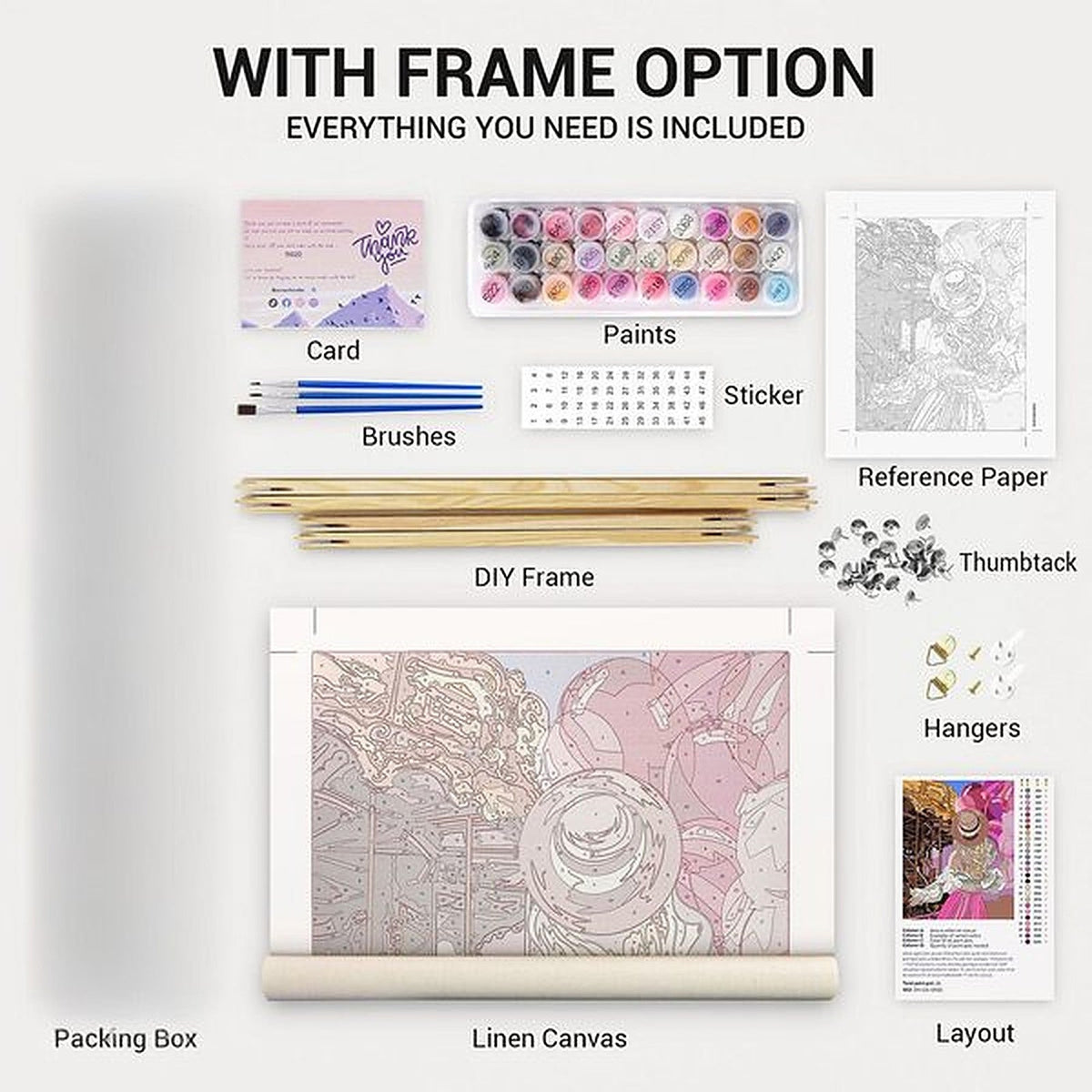
Turn one of your own photos into a numbered canvas (from $19.95). We trace it, mix the paints to match, and ship the kit with brushes.
Or pick a ready-made design:
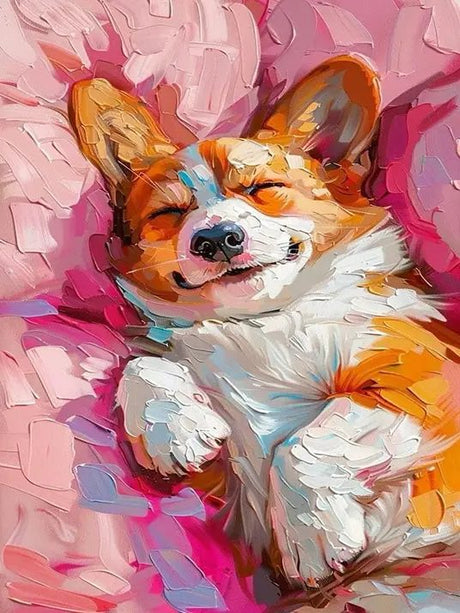
- Dogs Walking Around Painting by Numbers Kit (from $19.95)
Is it even a good candidate?
Honestly, the Mona Lisa is one of the trickier masterpieces to do justice to, and I would not hand it to someone on their very first kit. Sfumato is the opposite of what paint by numbers naturally produces. The format gives you defined shapes, and Leonardo's whole point was to hide the shapes. But a well-designed kit gets you most of the way, because the section boundaries are placed to look right when blended, and the reward for the extra effort is real.
Color-wise you are looking at a muted, earthy palette, lots of browns, ochres, olive greens, and warm skin tones, usually 28 to 40 shades with very little that is bright. That subtlety is exactly what makes it hard and what makes it good. A 40x50cm canvas keeps the face large enough to work on comfortably. Give it 20 to 30 hours and do not paint her tired.
The face is the whole game
The background, that dreamy blue-green valley with the winding road, is the easy warm-up. Do it first. The face is where you earn the painting. The trick is to soften every border between skin tones while the paint is still workable, dragging a clean, nearly dry brush along the seams so no line survives. Our guide to blending for smooth transitions is basically required reading before you touch her cheeks.
Two areas make or break the result. The corners of the mouth, where the famous ambiguity lives, and the soft shadow at the edge of the eyes. Keep those transitions feather-light. If you build up the skin tones a hair thinner than the pot gives you, you get more control over the blend. For the eyes, brows, and lips specifically, the small-brush discipline in our faces and portraits walkthrough saves a lot of frustration.
Do not chase perfection on the hands, either. Leonardo's are famously relaxed and slightly soft. Loose is correct here.
Living with her
A home Mona Lisa is a conversation piece by definition. It suits a study, a bookshelf wall, anywhere that carries a bit of old-world weight. A warm wood or antique-gold frame leans into the Renaissance feel. Because the palette is so restrained, she goes with almost any room without shouting.
There is a quiet trick in the background worth knowing before you paint it. Leonardo built that landscape using aerial perspective, which means the distant hills are painted cooler and hazier than the foreground, while the nearer ground runs warmer and browner. The numbers already account for this, but understanding why the far ridges are that milky blue helps you resist the urge to make them more colorful than they should be. Keep the distance soft and low in contrast. Save your sharpest edges and darkest darks for the figure. That gap between a crisp foreground and a dissolving background is a big part of why she seems to sit in real, deep space.
If you finish her and want another challenge from the canon, our list of famous paintings worth recreating points you at what to try next. You will find the Mona Lisa and other portraits in our people and portrait collection, and the full range of ready-to-start canvases in the best sellers. Fair warning: once you have painted her smile yourself, you will never look at the Louvre crowd the same way.