

















Georgia O'Keeffe got tired of people rushing past flowers. So in the mid-1920s she started painting them enormous, a single bloom cropped so close and blown up so large that it filled the entire canvas and spilled off the edges. Jimson weed, poppies, calla lilies, black irises. Her Jimson Weed / White Flower No. 1 sold in 2014 for 44.4 million dollars, still a record for any female artist at the time. She lived to 98, painted the New Mexico desert for decades, and pretty much invented what an American modernist flower could be.
People loved to read the flowers as symbols, and O'Keeffe spent her whole life batting that reading away. She insisted she just wanted you to actually look. Fill your field of vision with a petal and you stop skimming. That is the effect, and it is why her work still feels modern a century later.
Want to paint this yourself?
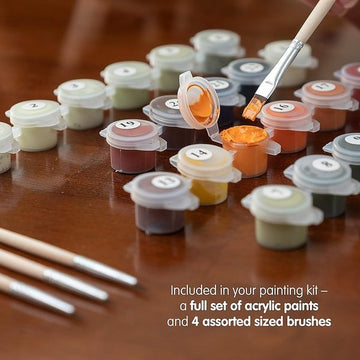
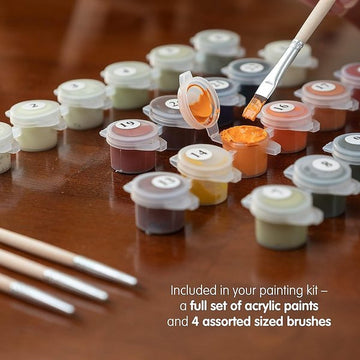
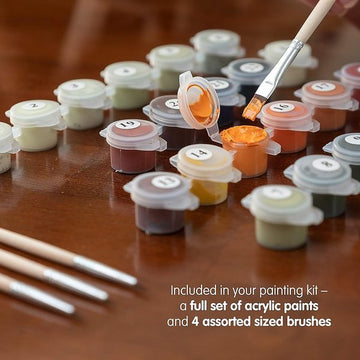
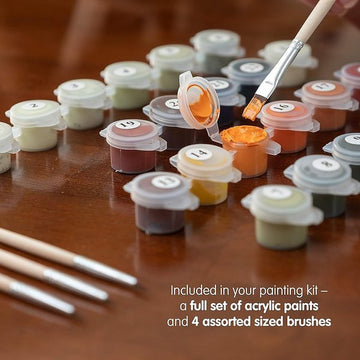
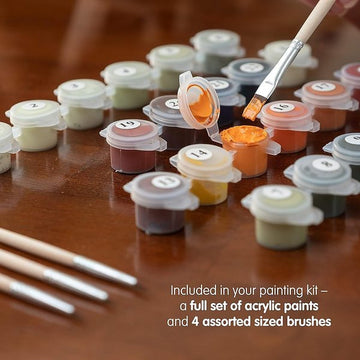
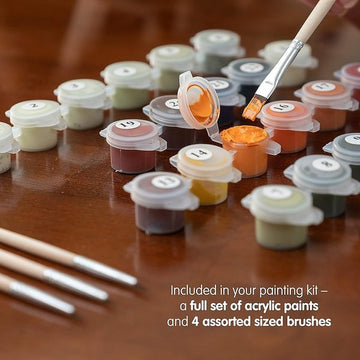
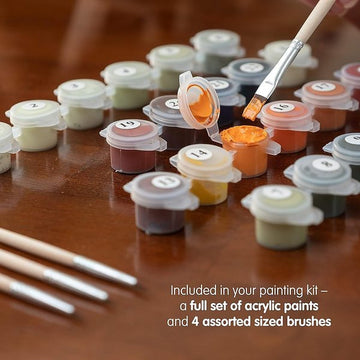
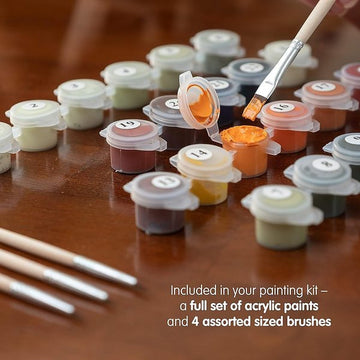
Turn one of your own photos into a numbered canvas (from $19.95). We trace it, mix the paints to match, and ship the kit with brushes.
Or pick a ready-made design:
- Bicycle with Flowers - Premium Art Collection (from $19.95)
- Wave of Flowers Painting by Numbers Premium Kit (from $19.95)
- Lilac Flowers Painting by Numbers Premium Kit (from $19.95)
Made for the format
O'Keeffe's florals might be the single best fit for paint by numbers of any famous artist. The subject is huge and simple, one flower, no fiddly background, no faces, no architecture. The forms are smooth and curving, built from gradual shifts of color as a petal turns from light into shadow. Those graded transitions map naturally onto numbered sections, and the payoff, a petal that seems to glow from inside, feels far beyond what a beginner expects to manage.
Because the color moves so gently across each petal, kits often carry a generous palette, 30 to 40 shades, with long runs of closely related pinks, or reds, or the creamy whites of a calla lily. A 40x50cm canvas lets the bloom fill the frame the way she intended. Reckon on 15 to 22 hours.
Getting the petals to breathe
Everything in an O'Keeffe depends on the blend. The numbers will hand you five or six near-identical shades across one petal, and if you leave hard edges between them, the flower looks like a contour map. Soften every seam while the paint is still open. The full method is in our guide to layering for coverage, and it matters more here than on almost any other subject.
Work petal by petal rather than color by color. Finish one petal completely, blends and all, before moving to the next, so you keep each transition wet enough to work. Chasing a single number all over the canvas leaves you with dried edges you cannot rescue.
The deep centers, the dark throat of an iris or the shadowed core of a poppy, are where the drama lives. Do not be timid with the darkest darks. That contrast against the pale petal edges is the entire effect. If you have painted bold blooms before, you already know the feeling from something like our sunflower kits, where the same rule applies: commit to the dark center and the light petals sing.
On the wall
A big O'Keeffe flower is a room-changer. The scale reads as confident and modern, and a single bloom over a bed or a sofa does more than a cluster of small prints ever could. Her palettes tend to be soft, so the canvas warms a space without clashing. A slim frame or none at all suits the clean modern look.
If you are choosing which O'Keeffe to paint, the flower itself changes the difficulty more than you would think. The red poppies and pink roses are the friendliest, warm and forgiving. The white calla lilies and pale morning glories are harder, because a white flower is not really white, it is a hundred faint greys, creams, and lilacs, and the numbers will push you toward differences so subtle you simply have to trust them. Paint whites in good daylight or you will not see the shifts at all. Get them right and a white bloom is the most quietly impressive thing you can hang, all shadow and glow and almost no actual color.
Because her flowers sit right on the line between botanical and abstract, you will find these kits in both our floral and botanical collection and the abstract collection. Have a look through the full best seller range, pick a bloom that stops you in your tracks, and paint it big enough that nobody can walk past it.