














Edvard Munch was walking with two friends along a fjord outside Oslo at sunset when, as he wrote later, the sky turned blood red and he felt an infinite scream passing through nature. That was the moment. He made the first version of The Scream in 1893, and then, being Munch, he made it again, and again. There are four versions, two painted, two in pastel, plus a lithograph he printed so the image could spread. One of the pastels sold for nearly 120 million dollars in 2012, which for a while made it the most expensive artwork ever auctioned.
The figure everyone pictures, the wavy skull-like head with hands clamped to the cheeks, is not screaming. Munch was clear about that. The person is hearing the scream, hiding from it, while the two friends walk on ahead across the bridge, oblivious. The whole landscape bends and ripples in sympathy. It is one of the founding images of Expressionism, art that cares more about what an experience feels like than what it looks like.
Want to paint this yourself?
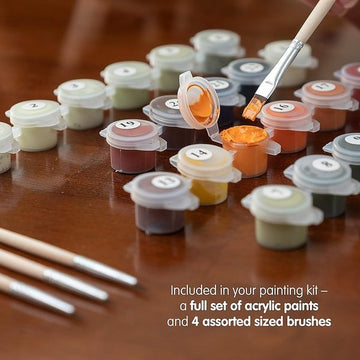
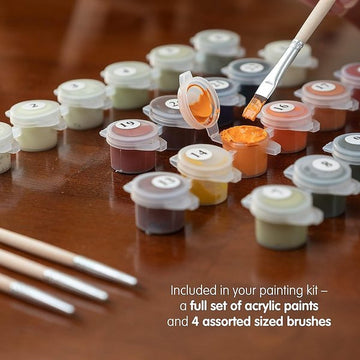
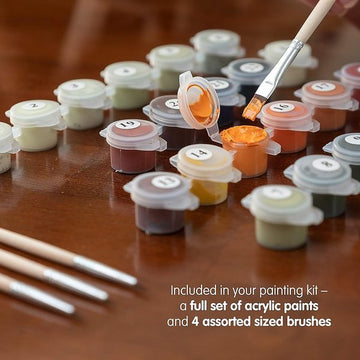
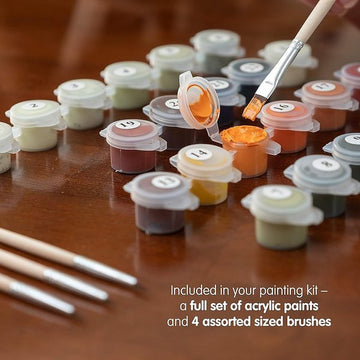
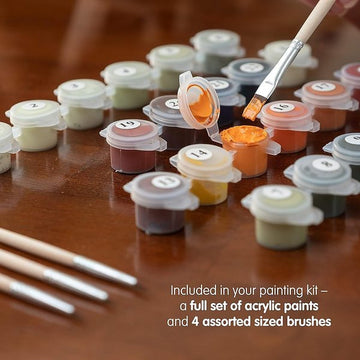
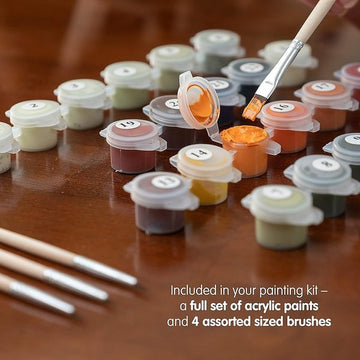
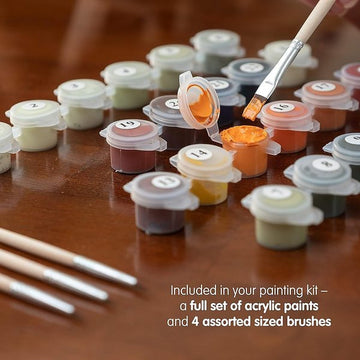
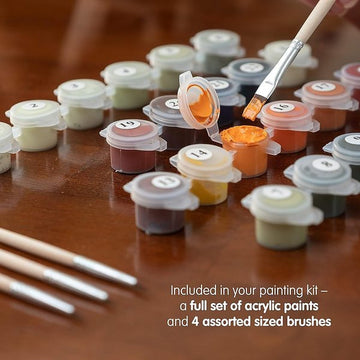
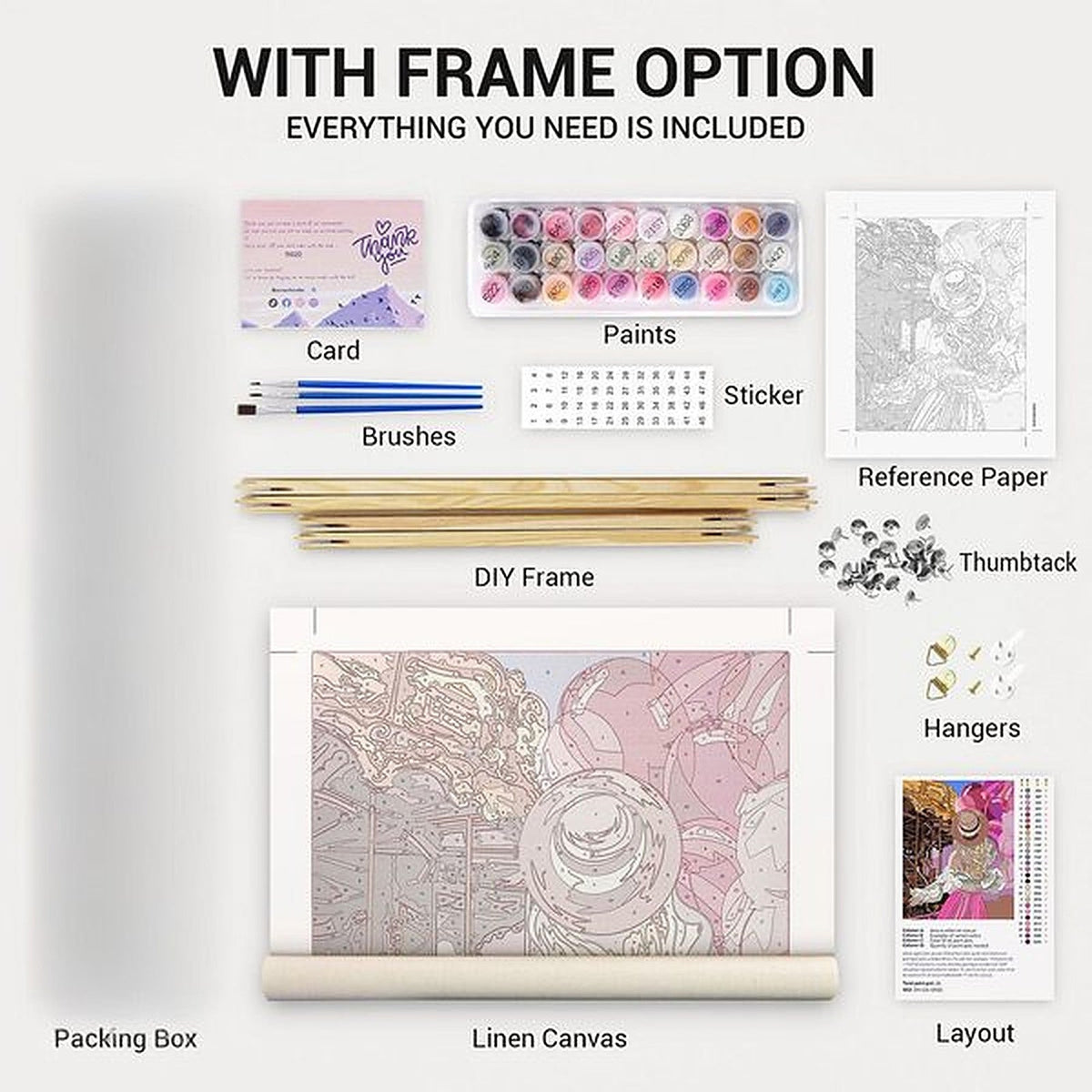
Turn one of your own photos into a numbered canvas (from $19.95). We trace it, mix the paints to match, and ship the kit with brushes.
Or pick a ready-made design:
- One with Nature Painting by Numbers Premium Kit (from $19.95)
Why the format fits
The Scream is built from big, flowing bands of color. The orange and yellow sky, the blue-black fjord, the brown bridge. There is no fine detail to sweat over, no realistic faces, no crisp architecture. Those long undulating stripes turn into large, satisfying numbered zones, which makes this a genuinely approachable kit even though the original looks wild. It is a great pick if you want a famous painting without the portrait-level precision.
Color counts are usually modest, around 20 to 30 shades, heavy on hot oranges and reds up top and cool blues and greens below. A 40x50cm canvas suits the sweeping composition. Most people finish in 10 to 16 hours. It moves fast because the shapes are large.
Keeping the swirls alive
The danger with The Scream is that all those big flat zones can end up looking like a coloring book if you paint each one as an isolated block. Munch's power comes from the way the colors seem to flow into each other. So after you fill the numbered bands in the sky, go back while they are still slightly wet and soften the borders between the orange and the yellow, and the yellow and the red, so the whole sky pulses instead of stacking like a layer cake. The approach we use for abstract kits is exactly right for this, since The Scream is really an emotional abstraction dressed as a landscape.
The swirling energy has a lot in common with another famous night sky, and the brushwork lessons carry straight over. If you have not tried it, our walkthrough on painting Van Gogh's Starry Night covers the same problem: how to make a sky move.
The central figure is the one spot to slow down. Keep the wavy outline confident. A shaky edge on that face kills the whole thing. Load a small brush, take a breath, and pull each curve in one motion rather than dabbing your way around it.
Where it lands at home
This is not a soothing bedroom piece, and that is the point. The Scream works in a studio, a creative space, a room where you want a jolt of color and a bit of drama. The orange is loud, so give it a plain wall and let it own the space. A simple black frame keeps the focus on the color.
The bridge and its hard diagonal are easy to underrate. That straight walkway cutting across all the wavy chaos is what gives the picture its tension, so keep its edges crisp even though everything around it swirls. Paint the bridge and the two distant figures cleanly, then let the landscape go wild by comparison. One caution with the oranges and reds up top: they are opaque and they stain, so rinse your brush hard between the sky and the cooler water below, or a smear of hot orange will creep into your blues and dull the whole lower half. Bold color rewards a clean brush more than any other palette does.
You will find it, and other kits that lean into mood over realism, in our abstract paint by numbers collection. Browse the wider range of ready-to-paint canvases in the best sellers, pick your version of that red sky, and go make something that feels like it is about to shout.