












Table of Contents
- Why Your First Kit Choice Matters More Than You Think
- Understanding Difficulty Levels in Detail
- Choosing the Right Subject for Your Personality
- Canvas Size Guide: Which Dimensions Work Best
- Canvas Types: Rolled vs Pre-Stretched Frame
- Paint Quality: What Separates Good Kits From Bad Ones
- How Many Colors Is the Right Amount?
- Budget Guide: What to Spend on Your First Kit
- Red Flags: Signs of a Low-Quality Kit
- Best First Kit Recommendations by Interest
- Optional Accessories That Improve Your Experience
- Frequently Asked Questions
How to choose your first paint by numbers kit is the most important decision in this creative hobby, because a bad first kit will convince you that paint by numbers is frustrating and unrewarding — when the real problem was the kit, not you. Picking the right paint by numbers kit means matching the design complexity to your patience level, the subject to your personal taste, and the kit quality to your expectations. Thousands of people abandon paint by numbers after a single disappointing experience with a cheap kit. This buyer's guide walks you through every factor that matters so you invest your time and money in a kit you will actually enjoy finishing — and proudly hang on your wall.
Why Your First Kit Choice Matters More Than You Think
Your first paint by numbers experience sets the tone for everything that follows. A kit that is too difficult leads to frustration, abandoned canvases, and the conclusion that "paint by numbers is not for me." A kit that is too simple produces a painting you are not proud of and leaves you wondering why people enjoy this hobby at all.
The ideal first kit sits in a sweet spot: complex enough to feel challenging and produce an impressive result, but accessible enough that you can finish it without special skills or excessive time investment. That sweet spot depends on your personality, patience level, and aesthetic preferences — all of which this guide helps you identify.
Think of it this way: your first kit is your audition for the hobby. Get it right, and you will be ordering your second kit before the first one is dry. Get it wrong, and you will have a half-finished canvas collecting dust in a closet. The difference between those two outcomes almost always comes down to kit selection, not artistic ability.
Understanding Difficulty Levels in Detail
Most reputable kit manufacturers categorize their designs into three difficulty levels. Here is what each level actually means in practical terms:
Beginner (Easy):
- 15 to 20 different colors in the acrylic paint set
- Larger sections (most sections are at least 1cm across)
- Simple compositions with a clear focal point and open background areas
- Fewer sections that require the fine detail brush
- Completion time: 8 to 15 hours for a standard 40x50cm canvas
- Best for: people who have never painted before, impatient painters, younger teens, anyone testing whether they enjoy the hobby
Intermediate (Medium):
- 20 to 30 different colors with some subtle shade variations
- Mix of large and small sections across the canvas
- More complex compositions with multiple focal points and layered depth
- Moderate use of the fine detail brush required for faces, small elements, and fine lines
- Completion time: 15 to 25 hours
- Best for: people who have completed one beginner kit and want more challenge, patient beginners, adult hobbyists who enjoy precision work
Advanced (Hard):
- 30 to 40+ different colors with very subtle gradients between similar shades
- Many tiny sections (some as small as a few millimeters across)
- Complex compositions with fine gradients, realistic textures, and detailed subjects like animal fur, feathers, or architectural elements
- Heavy use of the fine detail brush — often 50% or more of all sections require it
- Completion time: 25 to 40+ hours
- Best for: experienced painters who enjoy precision work, people with exceptional patience, hobbyists who have completed 3+ intermediate kits
Recommendation for your first kit: Start with a beginner or low-intermediate design. You can always increase difficulty with your second kit. Starting too hard and giving up is far worse than starting easy and wanting more. Many experienced paint by numbers enthusiasts still enjoy beginner kits as relaxing palate cleansers between complex projects.
Ready to start painting? Browse our best sellers — Buy 2 Get 1 Free with free worldwide shipping.
Choosing the Right Subject for Your Personality
Subject matter is just as important as difficulty level. You will spend 10 to 30 hours looking at this canvas, so choose something you genuinely want to see on your wall when it is finished.
Landscapes — Best for relaxation seekers. Scenic views with broad sky sections, gentle color gradients, and natural beauty. Landscapes are the most forgiving subject for beginners because the organic shapes of nature do not require perfect precision. A slightly uneven brushstroke in a mountain range still looks like a mountain range. Landscape paintings also fit naturally into almost any room decor, making them safe choices when you are not sure where the finished piece will hang.
Animals and Wildlife — Best for pet lovers and nature enthusiasts. Dog portraits, cats, horses, birds, and exotic animals. Animal kits require more precision (especially around eyes and facial features) but produce paintings with strong emotional impact. If you have a pet, a custom kit of your own animal is incredibly rewarding. Animal portraits also make outstanding gifts for fellow pet owners.
Floral and Botanical — Best for color lovers. Vibrant flower arrangements, garden scenes, and botanical illustrations. Floral kits use bright, cheerful color palettes and produce wall art that brings energy to any space. The rounded shapes of petals and leaves are satisfying to paint, and minor imprecision in organic shapes looks natural rather than wrong.
Abstract — Best for modern decor enthusiasts. Geometric patterns, color fields, and artistic compositions. Abstract kits are uniquely forgiving because imprecision in individual sections actually enhances the artistic effect. The finished paintings look like contemporary art gallery pieces and suit modern, minimalist interiors perfectly.
Famous art reproductions — Best for art appreciation. Paint your own version of Van Gogh's Starry Night, Monet's Water Lilies, or Klimt's The Kiss. These kits satisfy both the painting process and the desire to connect with art history. Displaying a painting you painted yourself — even a guided reproduction — carries a pride that a store-bought print never matches.
Canvas Size Guide: Which Dimensions Work Best
Canvas size affects both the painting experience and the visual impact of the finished piece. Here is a practical breakdown with honest pros and cons for each size:
20x30cm (8x12 inches): Compact and quick to complete. Good for trying out a new subject or as a practice run before a larger investment. The finished painting is small — better suited for a desk or shelf than a wall. Sections are tiny, which can be challenging for beginners despite the faster completion time. Not recommended as a first kit unless you specifically want something quick.
30x40cm (12x16 inches): A solid starter size that bridges the gap between compact and standard. Large enough for noticeable wall art in smaller rooms, small enough to finish in a week of casual painting. Sections are a comfortable size for beginners. Works well for bathrooms, hallways, and grouped gallery displays.
40x50cm (16x20 inches) — Most popular and recommended: The sweet spot for most painters and the size we recommend for your first kit. Sections are large enough to paint comfortably, the finished piece makes a strong visual statement on a wall, and the completion time (10 to 20 hours) feels substantial without being overwhelming. If you are unsure about size, go with 40x50cm — you will not regret it. Starting at just $19.95 at ArtistryByNumbers.
50x65cm (20x26 inches): Large format for dramatic wall art. More sections, more detail, and a longer completion time. Best for people who enjoy extended projects and want a statement piece. Save this size for your second or third kit after you have established your painting rhythm.
60x75cm and larger: Gallery-sized canvases for serious hobbyists. These are commitments — 30+ hours of painting. The result is stunning wall art that fills a room, but only tackle this size after completing smaller kits first and confirming your enjoyment of longer projects.
Canvas Types: Rolled vs Pre-Stretched Frame
When ordering a paint by numbers kit, you typically choose between two canvas options. Each has distinct advantages:
Rolled canvas: The canvas ships flat or rolled in a tube. You paint it on a table, then stretch it on a frame or have it professionally framed afterward. Pros: lower cost, easier to ship, lighter packaging, you choose your own frame style. Cons: requires flattening before painting (creases from shipping need ironing or pressing), needs framing afterward which adds cost and effort, painting on a flexible surface can feel less stable than a stretched canvas.
Pre-stretched canvas (framed): The canvas arrives already stretched and mounted on a wooden frame. You can start painting immediately and hang it directly on the wall when finished. Pros: ready to paint and display, no framing needed, the taut surface makes painting easier and more enjoyable, feels more professional. Cons: higher kit price, bulkier packaging, frame style is predetermined.
Recommendation for your first kit: Pre-stretched canvas is worth the small extra cost. Eliminating the framing step means you go straight from finished painting to wall display, which gives you maximum satisfaction from the experience. The taut canvas surface is also easier to paint on, which matters when you are still developing brush technique.
Ready to start painting? Browse our best sellers — Buy 2 Get 1 Free with free worldwide shipping.
Paint Quality: What Separates Good Kits From Bad Ones
The paint quality is the single biggest differentiator between a satisfying kit and a frustrating one. Here is what to evaluate:
Opacity: Good acrylic paint covers the printed numbers in one or two coats. Cheap paint is translucent and requires four or five coats, which is tedious, uses up the paint supply too quickly, and leaves a thick, uneven surface.
Consistency: Quality paint has a smooth, creamy texture straight from the pot. It flows off the brush evenly without being runny or globby. Cheap paint is often too thick (requiring water to thin, which is tricky to get right) or too watery (requiring excessive coats for decent coverage).
Color accuracy: The paint colors should match the reference image closely. Some budget kits include paints that are noticeably different from the colors shown in the preview — your "ocean blue" comes out as a dull grey-blue, and the entire painting looks washed out and disappointing compared to what was advertised.
Quantity: A good kit includes enough paint for full coverage plus a margin for error and second coats. Budget kits often include just barely enough, meaning one thick coat or a small spill leaves you short and scrambling for a matching color at a craft store.
Drying behavior: Quality acrylics dry to a uniform matte or satin finish. Cheap paints dry unevenly — some sections look shiny, others look chalky — giving the finished painting a patchy, inconsistent appearance that no amount of varnish fully corrects.
How Many Colors Is the Right Amount?
More colors does not automatically mean a better painting. The right color count depends on the design complexity, the subject, and your skill level.
15 to 20 colors: Simple designs with bold color blocks. Quick to complete, easy to manage, and produces clean, striking results. Ideal for beginners, simple subjects, and anyone who prefers a straightforward painting session without managing dozens of pots.
20 to 28 colors: The sweet spot for most designs and most painters. Enough colors for smooth gradients, realistic shading, and detailed subjects without overwhelming the painter with 30+ pots to track and manage. This range produces the best balance of realism and paintability.
30 to 40+ colors: Maximum detail and realism for advanced painters. The gradients between shades are so subtle that the finished painting approaches photographic quality from normal viewing distance. But managing this many colors is time-consuming, the difference between similar shades (like "medium blue #23" and "medium blue #24") can be nearly impossible to distinguish in anything less than perfect lighting, and the risk of using the wrong shade increases significantly.
Budget Guide: What to Spend on Your First Kit
Paint by numbers kits range from under $10 to over $60. Here is what you get at each price point and what we recommend:
Under $15: Budget kits with thin paint, rough canvas texture, and blurry number printing. These exist on marketplace sites, but they produce frustrating experiences that do not represent what modern paint by numbers can be. The paint runs out before you finish, the numbers are hard to read, and the canvas wrinkles. Avoid for your first kit — a bad experience here will kill your interest in the hobby.
$15 to $25 — The value sweet spot: At this price, you get quality acrylic paint with good opacity, clear number printing, decent canvas texture, and functional brushes. ArtistryByNumbers standard kits start at just $19.95 and include all supplies with free worldwide shipping. This is the price range we recommend for first-time buyers.
$25 to $45: Premium kits with linen-textured canvas, pre-stretched frames, enhanced paint opacity, more color options, and upgraded brush quality. This range is ideal for gift purchases and painters who want the best possible experience from day one.
$45 and above: Large format and custom photo kits. Custom kits cost more because they require individual design work for each order. Large canvases (50x65cm and above) use more materials. The quality ceiling for standard designs is reached around $35-40 — above that, you are paying for size, customization, or premium framing.
Ready to start painting? Browse our best sellers — Buy 2 Get 1 Free with free worldwide shipping.
Red Flags: Signs of a Low-Quality Kit
Watch for these warning signs when shopping for paint by numbers kits online:
- No customer reviews or photos: Reputable kits have extensive reviews with photos of completed paintings from real customers. No reviews usually means the product is new, unproven, or sold under constantly changing brand names to avoid accumulating negative feedback.
- Blurry or AI-generated preview images: If the product listing uses low-resolution or obviously computer-generated preview images instead of actual photographs of completed kits, the seller may be hiding the real quality level.
- Unrealistic pricing: A complete kit with canvas, 24+ paint pots, and brushes for $5 to $8 cannot include quality materials. The paint alone costs more than that at wholesale. Extremely cheap kits cut corners on every component.
- No canvas material specified: Quality kits specify linen blend or cotton canvas. If the listing does not mention the canvas material, it is likely cheap synthetic fabric that does not hold paint well.
- Generic or rotating brand names: Kits sold under names like "Art Fun Kit 2024" or "Happy Paint Set" are typically mass-produced with minimal quality control and no brand reputation to protect.
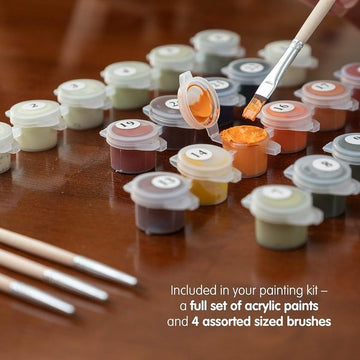
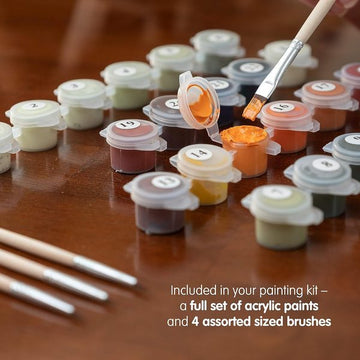
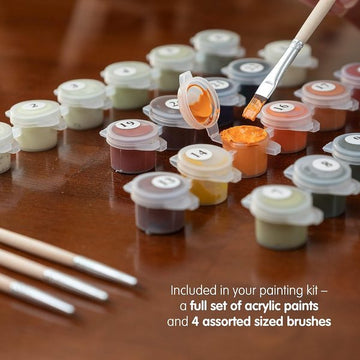
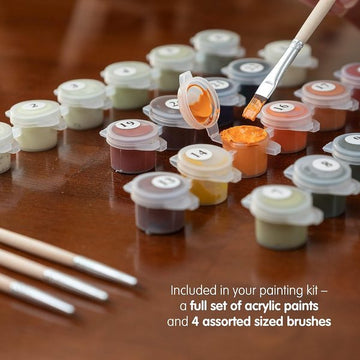
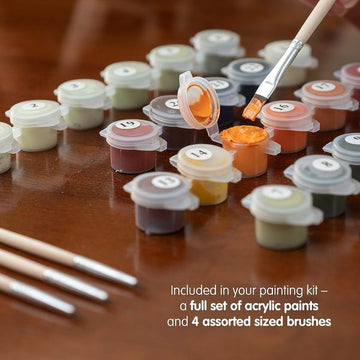
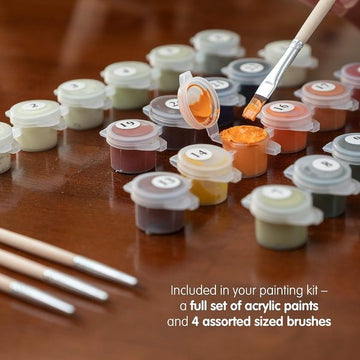
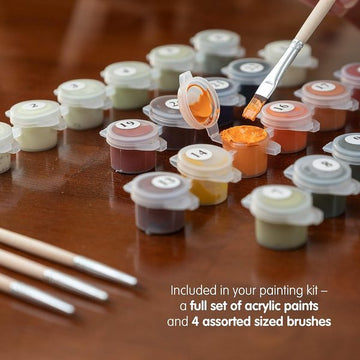
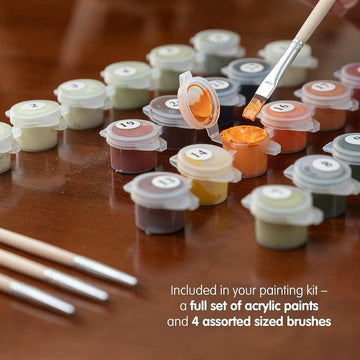
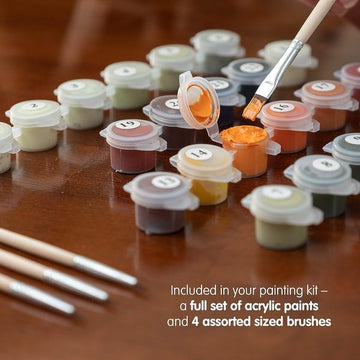
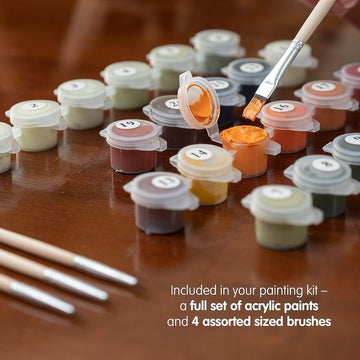
- Missing supplies: Some budget kits do not include brushes, include only one brush size, or leave out the reference image. A complete kit should include canvas, all paint pots, at least three brush sizes, and a reference image.
- Shipping from unknown origins with 3-6 week delivery: Extremely long shipping times combined with rock-bottom prices often indicate the cheapest possible product shipped from the cheapest possible source. You get what you pay for.
Best First Kit Recommendations by Interest
Based on thousands of customer reviews and completion rates, here are the best starting points organized by interest:
If you want the easiest possible start: Choose a landscape with a sunset or beach scene. Large sky sections build confidence quickly, and the warm color palette is forgiving of slight color inaccuracies.
If you love animals: Start with a single animal portrait (one dog, one cat, one horse) rather than a complex multi-animal scene. Single-subject animal kits have a clear focal point and manageable complexity.
If you want colorful wall art: Floral arrangements with large, vibrant blooms. Sunflowers and roses are particularly popular first-kit choices because they produce eye-catching results with relatively forgiving brushwork requirements.
If you prefer modern decor: An abstract design with bold geometric shapes. These produce gallery-style wall art and are extremely forgiving of imperfect brushwork — abstract art celebrates intentional imprecision.
If you want a meaningful gift to paint: A custom photo kit using a personal photograph. Choose a high-quality image with good contrast, clear subject, and simple background for the best results.
If you cannot decide: Browse our best sellers. These kits have the highest purchase volume and customer satisfaction scores. They are popular for good reason — they deliver consistently excellent experiences for first-time painters.
Optional Accessories That Improve Your Experience
While a complete kit includes everything you need to paint, a few optional accessories can improve your first experience:
- Daylight desk lamp ($15-30): Bright, neutral-white light (5000K-6500K) makes colors accurate and numbers easy to read. This is the single most impactful accessory you can add.
- Magnifying glass ($5-10): Helpful for reading tiny numbers on complex designs. Not essential for beginner kits with larger sections.
- Acrylic varnish ($8-15): A clear protective coat applied after finishing. Available in matte, satin, or gloss. Protects against dust and UV fading while enhancing color depth.
- Paper palette ($5): A disposable palette for mixing small amounts of paint. Not necessary for beginners who paint directly from the pots, but useful as you advance.
- Canvas stand or easel ($15-40): Holds the canvas at a comfortable angle. A table works fine, but an easel improves posture during long painting sessions.
Ready to start painting? Browse our best sellers — Buy 2 Get 1 Free with free worldwide shipping.
Frequently Asked Questions
Should my first paint by numbers kit be framed or rolled?
Pre-stretched framed canvas is recommended for your first kit. It is ready to paint immediately, maintains tension across the surface for smoother brushwork, and can be hung directly on the wall when finished. The small extra cost eliminates the framing step entirely.
Is 40x50cm too big for a first kit?
Not at all — 40x50cm is actually the ideal size for beginners. Larger canvas means larger sections, which are easier to paint with less precise brush control. Smaller canvases (20x30cm) actually have tinier sections that require more precision despite being quicker to complete. The 40x50cm size also produces impressive wall art that justifies the time investment.
How do I know if a design is too difficult for me?
Look at the color count and the section sizes in the preview image. If the design has 30+ colors and you can see hundreds of tiny sections in the preview, it is advanced-level. Stick with designs under 25 colors for your first kit. You can always increase difficulty after finishing one or two simpler kits.
Can I paint a custom kit as my first project?
Custom kits can be suitable for beginners if the source photo is high-quality with clear, contrasting subjects and a simple background. Avoid custom kits from complex group photos, dark/low-light images, or photos with busy backgrounds for your first attempt. A clear pet portrait or landscape photo works well even for first-timers.
Do I need to buy anything else besides the kit?
A complete kit includes everything required to start painting. For the best experience, also have a cup for water, paper towels, and a bright desk lamp if your painting area is not well-lit. Acrylic varnish for the finishing coat is the only additional supply that makes a significant difference in how professional the final result looks.
What if I choose a kit and do not like it halfway through?
It is perfectly fine to set a kit aside and start a different one. Many experienced painters have two or three kits going simultaneously, switching between them based on mood and available time. An unfinished kit is not a failure — it is a project that will be there whenever you want to pick it up again. The paint stays usable for months as long as the pots are sealed.