










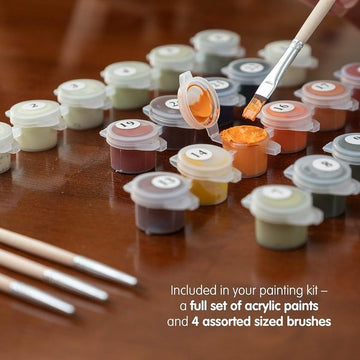

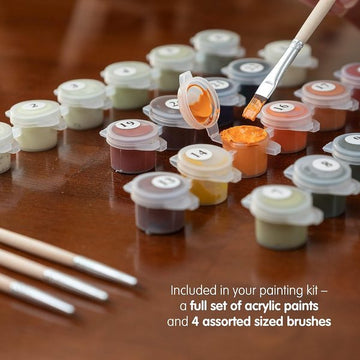

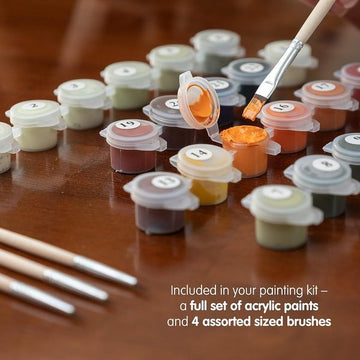



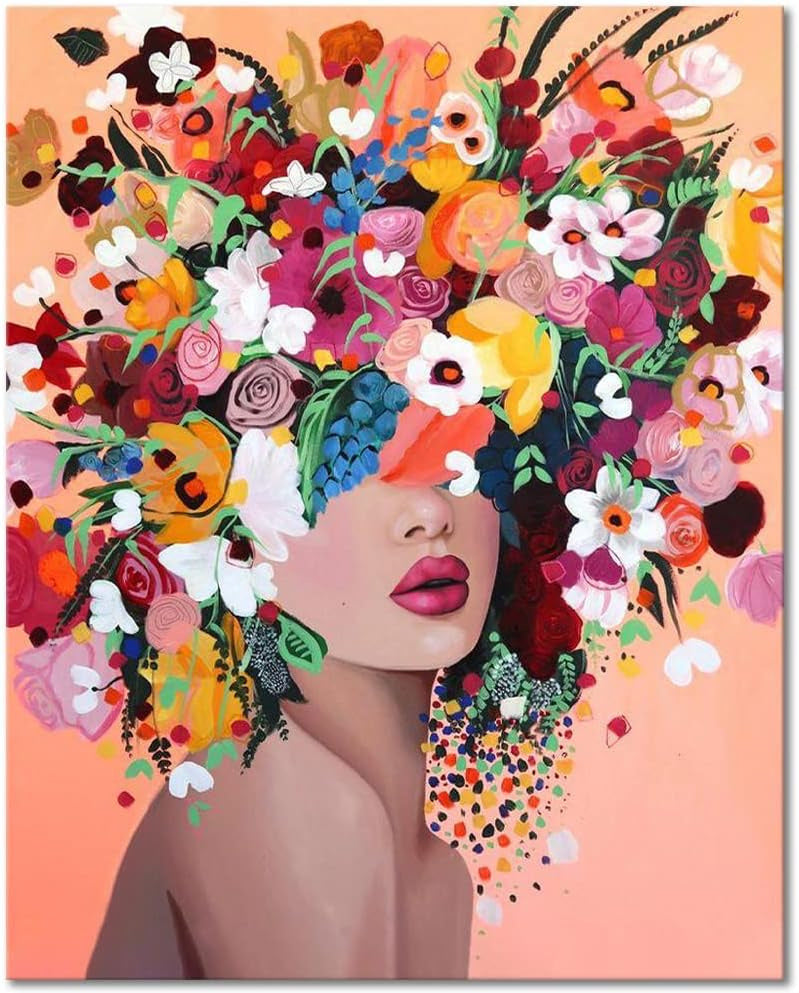



You have invested hours of focused attention, carefully matching colors to numbers, building an image brushstroke by brushstroke, and watching a painting emerge from a printed canvas. The final section is complete, the last brush is rinsed, and you are looking at a finished paint by numbers painting. What happens next determines whether your creation lives up to its full potential as a piece of wall art or sits propped against a wall gathering dust.
Proper finishing and framing transforms a completed paint by numbers canvas from a hobby project into a professional-looking piece of art that visitors assume was purchased from a gallery. This guide covers every step from the final brushstroke to the mounted, displayed, and admired masterpiece.
Want to paint this yourself?
Turn one of your own photos into a numbered canvas (from $19.95). We trace it, mix the paints to match, and ship the kit with brushes.
Or pick a ready-made design:
- Sunset Over the Great Wall Art Painting Kit (from $19.95)
Before You Frame: Essential Finishing Steps
Complete Drying Time
Patience is critical at this stage. Acrylic paint may feel dry to the touch within an hour, but it needs 24 to 48 hours to cure fully, depending on how thickly it was applied and the humidity in your environment. Premature handling can smudge detail sections, leave fingerprints, or transfer paint to framing materials. Set the canvas in a dust-free area with good air circulation and resist the temptation to handle it before it has cured completely.
Touch-Up Inspection
Once the paint is fully dry, examine the canvas in good light. Look for sections where the underlying numbers still show through, areas with uneven coverage, or spots where colors may have accidentally overlapped into adjacent sections. A fine-tipped brush and the relevant paint colors can address any of these issues. Small touch-ups at this stage make a significant difference in the finished presentation.
Pay particular attention to edges where different colors meet. Clean, defined edges between color sections give the painting a polished, professional appearance. A steady hand with a small brush can refine any boundaries that look rough or uncertain.
Applying Varnish
Varnishing is the single most impactful step you can take to elevate your finished painting. A clear acrylic varnish serves multiple purposes:
- UV protection: Prevents colors from fading when exposed to sunlight over months and years.
- Surface unification: Different paint colors can dry to slightly different sheens. Varnish creates a consistent surface finish across the entire canvas.
- Color enhancement: Varnish deepens colors and adds richness, making the painting appear more vibrant and professional.
- Physical protection: Creates a barrier against dust, moisture, and accidental contact.
Choosing Your Varnish Finish
Varnish is available in three finishes, and the choice affects the visual character of your painting:
- Gloss: Creates a shiny, reflective surface that maximizes color vibrancy. Best for paintings with rich, saturated colors. The disadvantage is glare from direct lighting, which can obscure sections of the painting depending on viewing angle.
- Matte: Produces a non-reflective surface with a soft, contemporary feel. Eliminates glare entirely but can slightly mute bright colors. Well-suited to modern interiors and minimalist decor.
- Satin: The middle ground. A gentle sheen that enhances color without creating strong reflections. Satin is the most versatile choice and works in virtually any display environment.
How to Apply Varnish
Use a wide, soft-bristle brush dedicated to varnishing. Apply in thin, even coats working in one direction across the canvas. Avoid over-brushing, which can create bubbles or streaks. Allow each coat to dry completely, typically four to six hours, before applying a second coat if desired. Two thin coats provide better results than one thick coat.
Work in a dust-free environment and avoid varnishing on extremely humid days, as moisture can cause the varnish to appear cloudy. A warm, dry room with good ventilation is ideal.
Framing Options
Stretched Canvas: No Frame Required
If your paint by numbers canvas is already mounted on stretcher bars, you have the option of displaying it unframed. This contemporary presentation style works well in modern interiors and allows the painting to be the sole visual element without the addition of a frame border.
For the cleanest unframed presentation, paint the canvas edges. You can extend the painted design around the edges by carefully painting the side surfaces to continue the color pattern, or paint the edges a solid color. Black edges add drama and definition. White edges create a clean gallery look. A color pulled from the painting creates a subtle, cohesive border.
Traditional Frames
A traditional frame with a border that overlaps the canvas edges slightly creates the most familiar art presentation. This works for any decor style from classic to contemporary, depending on the frame material and color chosen.
- Wood frames: Natural wood in oak, walnut, or pine tones suits landscapes, nature scenes, and warm-toned paintings. Black or espresso-stained wood works universally.
- Metal frames: Slim aluminum or steel frames in black, silver, or gold add a modern edge and work particularly well with abstract and geometric designs.
- Ornate frames: Detailed carved or gilded frames suit classical subject matter like still life, portraits, and traditional landscapes. They make a statement and can elevate the perceived value of the painting significantly.
Floating Frames
Floating frames are designed specifically for stretched canvas. They create a visible gap between the canvas edge and the frame, giving the impression that the painting floats within its border. This contemporary style highlights the dimensional quality of the canvas and adds a premium gallery feel to the presentation.
Floating frames require the canvas to sit within the frame at a specific depth, so measure your stretcher bar dimensions before purchasing. Most standard paint by numbers canvases fit common floating frame depth sizes.
DIY Framing vs Professional
Ready-made frames from home decor and craft stores offer good quality at accessible prices. Ensure you know your exact canvas dimensions before shopping, as even small measurement discrepancies result in poor fit. For standard sizes like 40x50cm or 50x65cm, finding off-the-shelf frames is straightforward.
Professional framing from a specialist shop offers custom sizing, premium materials, and expert mounting. While more expensive, professional framing is worth considering for custom pieces or paintings you are particularly proud of. The framer can also advise on the best frame style, matting options, and glass type for your specific painting.
Hanging and Display
Choosing the Right Location
Display your painting where it will be seen and appreciated. Living rooms, hallways, bedrooms, and home offices are popular choices. Consider the following when selecting a spot:
- Lighting: Avoid direct sunlight, which can fade colors over time even with varnish protection. A spot with indirect natural light or adjustable artificial lighting allows you to showcase the painting without risking UV damage.
- Height: The center of the painting should be at approximate eye level, which is typically 145 to 155 centimeters from the floor. Above furniture, adjust so the bottom of the frame sits 15 to 25 centimeters above the furniture surface.
- Background: A neutral wall color allows the painting's colors to stand out. Avoid hanging vibrant paintings against busy wallpaper or strongly colored walls that compete for visual attention.
Hanging Hardware
For canvases under 2 kilograms, a single nail or adhesive hook centered on the wall is sufficient. For heavier framed pieces, use two wall anchors spaced apart for stability and level alignment. A wire attached to D-ring hangers on the frame back provides easy adjustment for perfect leveling.
Always use a level when marking hanging points. Even a slight tilt is noticeable on a wall and undermines the professional presentation you have worked to achieve.
Building a Collection
One framed paint by numbers painting is a conversation piece. A collection is a personal gallery that tells visitors who you are and what you value. As you complete more paintings, consider how they will work together on your walls. Consistent framing across all pieces creates gallery-level cohesion even when the subjects and styles vary.
Our Buy 2 Get 1 Free offer at Artistry By Numbers makes building a collection economical. Plan a series of three, five, or seven paintings with complementary themes or colors, and the free kit with every pair purchased reduces the investment significantly.
Whether you are framing your first finished canvas or your twentieth, the effort you put into presentation honors the time and attention you invested in creating the painting. A well-framed, properly displayed paint by numbers canvas is indistinguishable from purchased art to the casual observer, and it carries a story of personal creation that purchased art never can.
Browse our full collection or create a custom kit from your own photo to start your next masterpiece. With Free Worldwide Shipping and premium materials in every kit, the only thing between you and a gallery-worthy wall is a few evenings of satisfying, meditative painting.